

Victoria GillScience correspondent for BBC News
 WWF
WWFScientists say subtle differences in the color of seawater will allow them to count Antarctica's tiny but hugely important sea creatures from space.
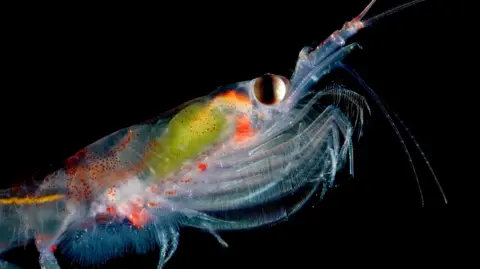
New research targets Antarctic krill, which are just a couple of inches long and are one of the most abundant and important animals on the planet.
Marine wildlife, including whales, penguins, seals and seabirds, feed on these diminutive creatures.
However, environmental scientists are concerned that fishing and climate change could have a negative impact on them and say we need new ways to monitor these creatures.

 WWF
WWF“Antarctic krill are the superheroes of the Southern Ocean,” said Rod Downey, chief polar adviser for the UK charity WWF.
“These are the tiny, unsung heroes who support incredible marine life, but climate change and unsustainable fishing are putting them at risk.”
Researchers from the University of Strathclyde, WWF and the British Antarctic Survey (BAS) are developing a new way to use satellites to measure the amount of krill in the ocean around Antarctica.
 WWF
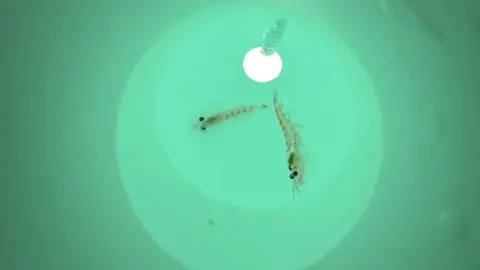
WWFThe key lies in subtle differences in how much light seawater absorbs, depending on how much krill is swimming in it.
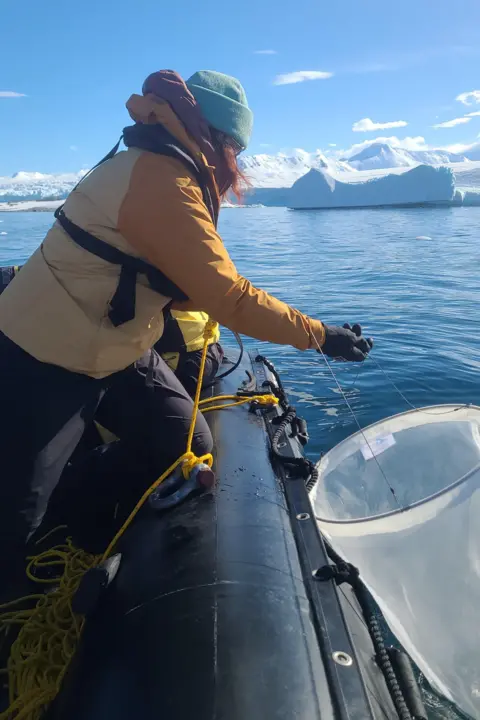
Dr Kate McCarry from the University of Strathclyde has just returned from a trip to Antarctica where she fished for krill to measure this effect.
“We start with seawater, then add krill and measure [of how much light the water absorbs]”, she explained. “Then we add another krill and take another measurement.”
The researchers say this analysis of exactly how krill density changes the color of the ocean will allow them to take satellite images of the krill population and monitor the population from space.
 Victory Gill/BBC
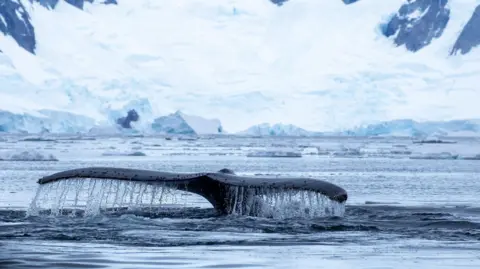
Krill are food for some of the largest animals on the planet, including giant whales, which migrate thousands of kilometers to Antarctica to feed on them.
They are also the foundation of a healthy ocean—part of a virtuous cycle: whales eat krill, krill eat microscopic plants living in sea ice, and those plants absorb planet-warming carbon as they grow. When whales defecate (in huge quantities), it fertilizes planet-cooling marine plants.
However, as ocean temperatures rise due to global warming, environmental scientists are concerned that this cycle may be disrupted and that krill may become vulnerable.
Mr Downey said: “We urgently need to better manage the fishery and protect krill habitat in the network of marine protected areas.
“[This project could] give us a new tool to help control and protect this vital species.”



