Microsoft's main focus for Windows is AI Integration. Meanwhile, Valve has not-so-quietly snatched the entire PC gaming ecosystem from Microsoft, turning Linux-based SteamOS into a true Windows competitor. In a few years, gaming laptops will be able to use SteamOS instead of Windows. And Microsoft has no one to blame but itself.
Valve's great success in the field of computer games is more than Portable Steam Deckwith the new Steam engine PC in the living room. Computer games – even computer games designed and written primarily for Windows – are now much more popular than Windows.
Surprise, Microsoft: while you were focused on Xbox consoles and cloud gaming, Valve stole your crown jewel.
Valve began developing SteamOS back in 2013.
For years, PC gaming has been one of the main reasons to use a Windows PC. Let's be honest: Apple has never been serious about gaming on the Mac. Google wasn't much better either: Steam support for Chromebooks will be ending soon. Microsoft has put so much energy into the Xbox consoles as a separate platform from Windows.
Valve's first major attempt to separate PC gaming from Windows was the original Linux-based version of the SteamOS operating system, released back in 2013. A wave of Steam Machine consoles from living room partners followed soon after. SteamOS launched during the Windows 8 era, when it looked like Windows might become a locked-down iPad-style operating system with a focus on touchscreens, preventing Valve from offering Steam on Windows. (Steam has never run on Arm Windows RT. Only Microsoft's own desktop applications, such as Microsoft Office, ran on this platform.)
Asus/Valve
Valve had ported its own games—Half-Life 2, Portal, and other good stuff—to Linux, and Valve focused on convincing game developers to port their games to Linux.
In 2013, SteamOS did not become popular. People didn't want to buy Steam Machine PCs from partners, and most game developers didn't want to invest resources into porting their games to an operating system that few people used. But SteamOS helped increase industry pressure on Microsoft, and the company was forced to change the situation and keep Windows an “open” operating system that was not tied to its own Store, as was Windows RT. Microsoft has discontinued Windows RT.
But while Steam Machines disappeared from shelves and Microsoft seemed to be playing catch with Windows, Valve continued to work on Linux. And Valve had a better plan.
Valve's Proton changed the entire industry
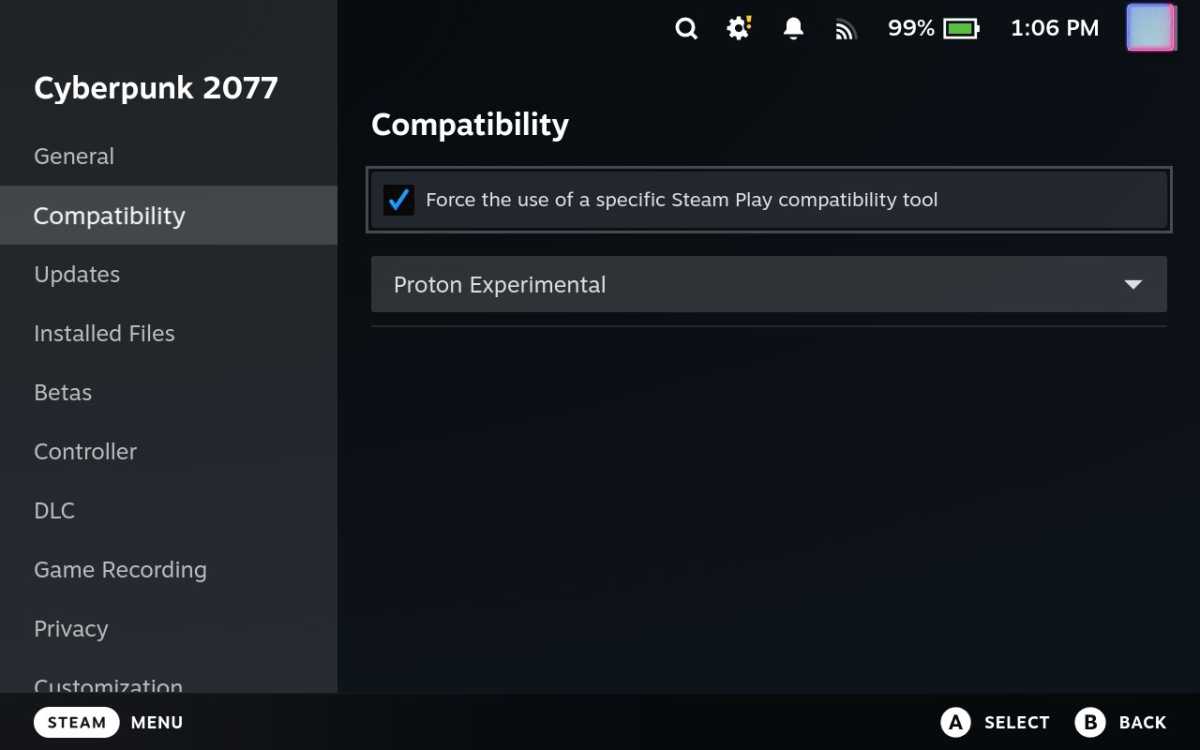
The turning point was Valve Compatibility Level with Protonoriginally released in 2018. This is software built into Steam that allows Windows games to run on SteamOS and other Linux-based operating systems. Proton is based on Winea layer of Windows compatibility for Linux and macOS that has been around for decades.
The Proton was intriguing at the time, but the original version wasn't exactly stunning. I've been using Wine since the early 2000s and it has always been unstable. Many companies tried to work with Wine, but Valve made a serious effort and stuck to its guns.
Chris Hoffman / Foundry
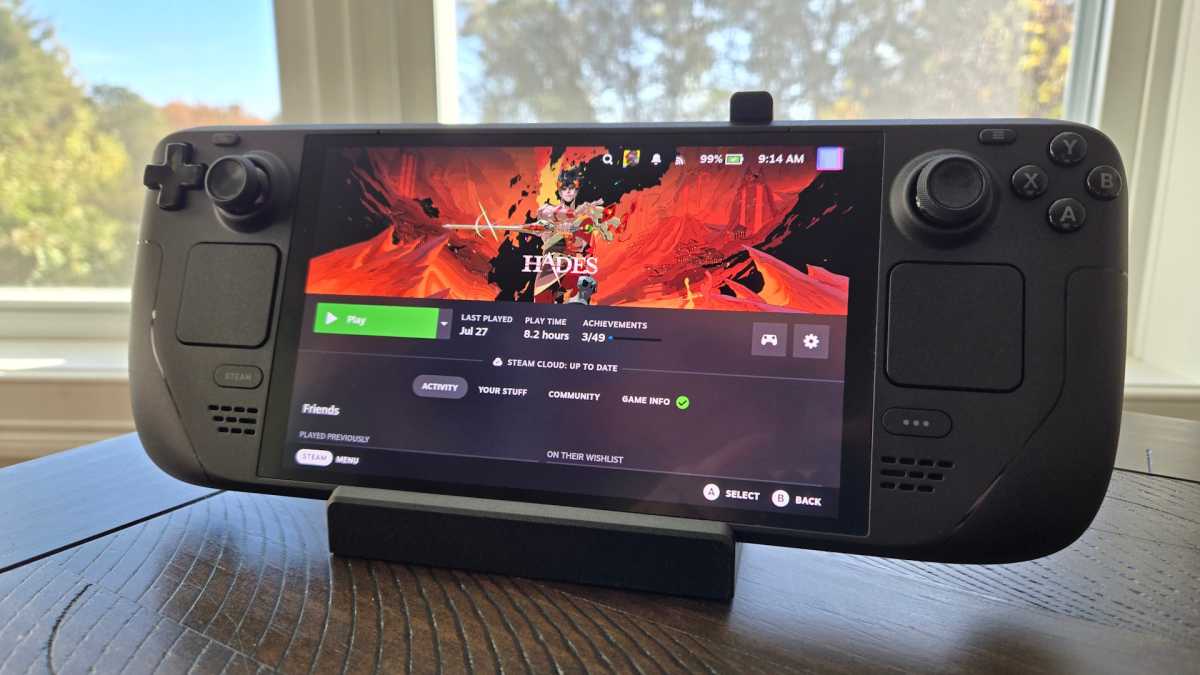
Proton continued to improve, and in 2022 Valve released a portable Steam Deck powered by SteamOS. To work on the Steam Deck, game developers needed their Windows games to run well on Valve Proton's Linux environment. Currently, most of the games in my Steam library run on Linux. This happens automatically and I don't have to configure anything.
PC games often run better on Linux than on Windows
The industry tends to gloss over how crazy this is: most Windows PC games now run on Linux, and the biggest name in PC gaming is promoting Linux as an alternative to Windows! Microsoft never expected this. And former Linux users like me never expected Wine to be so useful.
Tests now show that PC games often run better on SteamOS than on Windows 11.. I got similar results when I used a Windows laptop like Lenovo Legion Go S next to my Steam Deck. I've reviewed Lenovo Legion Go 2and Windows really held it back. Microsoft is struggling to catch up with Valve, struggling to release Full-screen Xbox gameplay optimized for Windows portable PCs.
PC games are now bigger than Windows
The secret to success often lies in persistence. As of 2022, Valve was directly paying more than 100 open source developers to work on Proton and other important parts of the Linux-based SteamOS operating system, according to Valve's Pierre-Loup Griffet. told The Verge. While Microsoft was testing a crypto wallet for EdgeI'm worried about metaverseand, turning to artificial intelligence, Valve seriously worked on SteamOS as a gaming platform.
Anti-cheat software is one of the last strengths of Windows. Many multiplayer games require kernel-level access to block rogue software. Proton can't allow this, but game developers often want to support Steam Deck, and Proton already supports anti-cheat programs such as Easy anti-cheat and BattlEye.
Chris Hoffman / Foundry
Plus, let's be honest: many gamers don't want anti-cheat programs to have deep access to their computers anyway. These programs are similar to rootkits in many ways, and now Steam requires developers to disclose this on their store pages. If SteamOS doesn't support this, it may be an advantage, even if it won't be able to run all games.
But beyond that, Valve has made huge strides. While Microsoft has focused its efforts elsewhere, much of the PC gaming ecosystem has gone portable—something that can be moved between Windows PCs, SteamOS, and other Linux distributions.
The future: SteamOS is not just for games?
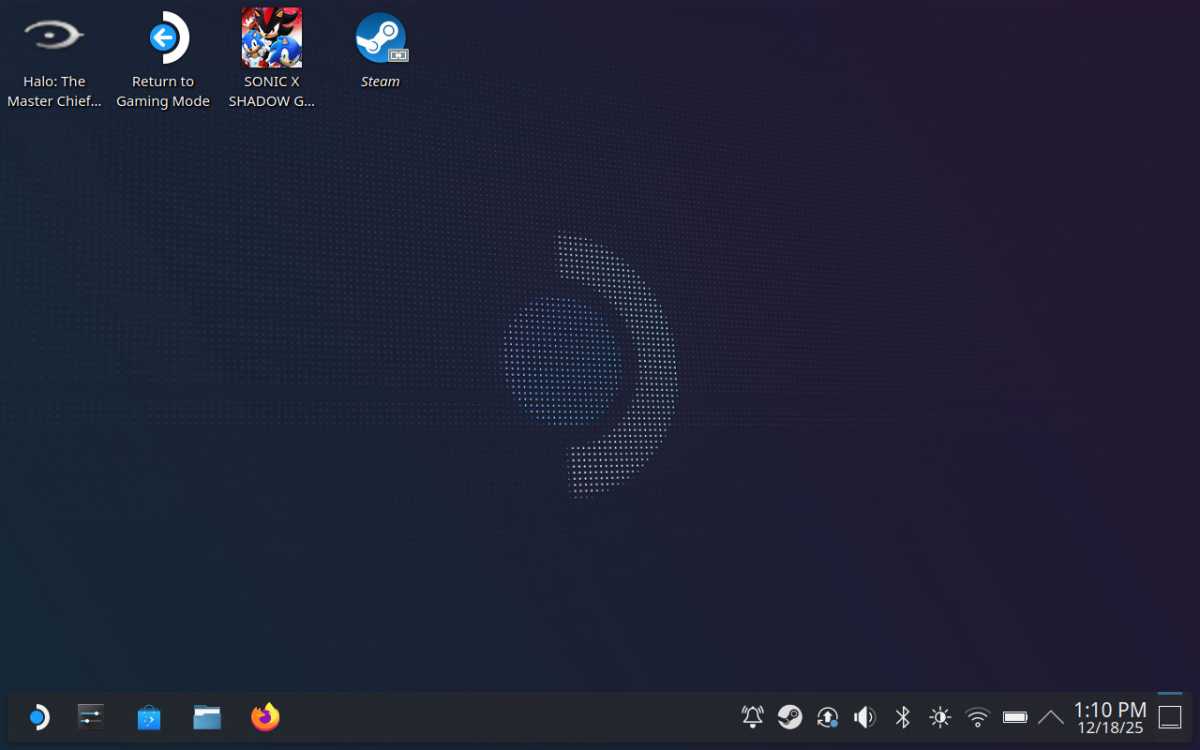
SteamOS is a Linux-based operating system. While Valve has focused on Big Picture capabilities for portable PCs and future Steam Machine hardware, you can use SteamOS as a desktop operating system today.
Valve gets to leverage the entire Linux desktop ecosystem, which is surprisingly mature these days. SteamOS has a desktop environment with KDE Plasma, and you can exit the Steam interface and use it as a desktop PC to run Linux software, including web browsers like Firefox and Chrome. If you wish, you can install it on your gaming PC. You can even use Steam Deck as a desktop PC with a docking station.
Chris Hoffman / Foundry
I bet that when Valve's new Steam Machine releases in 2026, many people will be using the desktop environment to get a Linux-based desktop on their TVs.
There may be laptops and desktops running SteamOS in the future – why not? You can install them on your desktop PC today! In any case, Microsoft is investing less in native Windows apps and investing more in cross-platform web apps.
PC gaming was one of Microsoft's main interests – the reason you chose Windows was because it was compatible with your hardware and could run all those PC games, even if you were interested in Linux. Windows is about to lose this advantage. AND PC manufacturers are starting to install SteamOS on their devices.
SteamOS is ready to compete on Arm PCs
Valve is even ready to use PCs with Arm processors instead of traditional x86 processors from Intel or AMD. Valve Steam frame is the first Arm PC to run SteamOS, and it's a standalone VR headset. Valve funds Fex emulatorand SteamOS devices running on Arm hardware will have a version of Proton with a built-in Fex emulator for running Windows PC games written for traditional x86 processors on Arm-based versions of Linux.
As Valve's Griffe recently said:
“In 2016 and 2017, there was always the idea that eventually we would want [run PC games on Arm hardware]and that's when the Fex compatibility layer was launched, because we knew it would take about ten years of work before it was robust enough for people to rely on it in their libraries.”
Valve is leading the way in portable gaming devices, and now Windows vs SteamOS looks like the next great console war.
For now, Microsoft can't put the genie back in the bottle. Microsoft could take Windows gaming seriously by improving the portable gaming experience. increased productivityAnd turning the next Xbox into a PC which can run PC games from Steam. Microsoft will compete with Valve in any case. Windows is no longer the only choice for PC gaming. It's funny: Windows 8 seemed to be designed to cement Microsoft's position over Windows as an application platform, and now Microsoft has less control over it than ever.