

 Getty Images
The Covid-19 inquiry has begun hearings into measures taken to support workers' incomes and keep businesses afloat when the pandemic struck.
It follows the publication of an investigative report into policy-making which said the response was “too little, too late”.
Between March 2020 and May 2023, when the World Health Organization declared the “global health emergency” to be over, just under 227,000 people died from Covid in the UK.
What is a Covid public inquiry?
Former British Prime Minister Boris Johnson launched a Covid-19 investigation in June 2022.more than a year after he said the government's handling of the pandemic would be put “under the microscope”.
The announcement came after campaign group Bereaved Families for Covid-19 Justice said it was considering a judicial review over a “waste of time”.
The investigation covers decision-making by the UK government, as well as the administrations of Scotland, Wales and Northern Ireland. The first public hearings took place in June 2023.
Public inquiries are organized and funded by the government and chaired by an independent chair. They can force witnesses to testify.
No one is found guilty or innocent, but the investigation publishes findings and recommendations. The government is not obliged to accept them.
The Covid inquiry is chaired by former judge and fellow Baroness Hallett, who previously led the inquiry into the 7 July London bombings.
What evidence will be heard at the business support inquiry?
The third phase of the investigation will look at the unprecedented economic steps taken since the first lockdown was announced in March 2020.
More than £140 billion has been spent on helping businesses, much of which has gone towards paying people's wages while they were forced to stay at home. The largest program, furlough, affected 11.7 million jobs between March 2020 and September 2021.
There was also a support scheme for self-employed people, business lending schemes and reduced business rates.
However, questions have been raised about the extent of financial support and the strength of safeguards against fraud and error.
More than 8,000 submissions have been received from the public at this stage of the investigation, which will run until just before Christmas. Business owners say they cried when they were forced to lay off staff or close a store, and employees said they feared for their jobs.
Rishi Sunak, who was Chancellor of the Exchequer during the pandemic, confirmed he would give evidence.
What does the Covid policy inquiry report say?
The inquiry's second report, looking at policy-making, said the lockdown could have been avoided if voluntary steps such as social distancing and isolation had been taken earlier on 16 March 2020.
The week's delay resulted in 23,000 more people dying in the first wave in England than would otherwise have been seen, the report said.
It also describes the “toxic and chaotic” culture underlying the UK government during its response to the pandemic, which it says has affected the quality of advice and decision-making.
More than 7,000 documents from that time have been made public, including WhatsApp chats and emails, personal diaries and confidential files.
What did the readiness investigation report say?
The first Resilience and Preparedness Report was published in July 2024.
In it, Baroness Hallett stated that Great Britain was “ill-prepared for a catastrophic emergency, let alone a coronavirus pandemic”.
“Never again can a disease be allowed to cause so many deaths and so much suffering,” she added.
The 217-page report states that Britain planned the wrong pandemic – mild when the spread of the new virus was inevitable – and this led to an “untested” lockdown policy.
It said the UK government and devolved countries had “failed their citizens” and that ministers had not sufficiently challenged scientific experts.
He made recommendations to reform the government's approach to emergency planning.
What else is the investigation focused on?
The investigation is still looking into other aspects of the pandemic:
- impact on health systems across the UK
- vaccines, therapy and antiviral treatment
- public procurement and PPE
- care sector
- testing and tracing
- impact on children and young people
- impact on society
Final public hearings are due to begin in February 2026.
During the course of the investigation, several reports will be published, including the findings of each module.
Scotland holds separate request during a pandemic.
Who testified at the investigation?
Hundreds of witnesses were heard during the investigation. They include current and former politicians, civil servants, government advisers, public health experts and representatives of bereaved families.
Many have been extremely critical of Johnson, who has been prime minister throughout the pandemic.
He began his first deposition in December 2023 with an apology for the “pain, loss and suffering” during the pandemic.
Johnson acknowledged that mistakes had been made and that there were “certainly things we should have done differently” but insisted ministers had done “the best they can” in difficult circumstances.
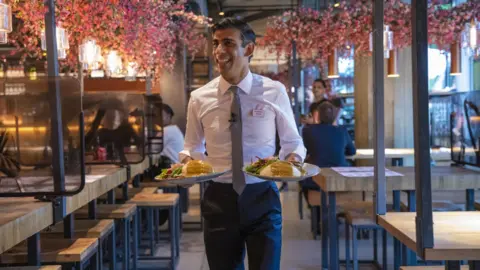
Former prime minister Rishi Sunak has given evidence about his role as chancellor during Covid.
He also apologized to “everyone who was harmed… as a result of the actions taken” but denied that his Eat Out to Help Out program had led to an increase in infections and deaths.

 HM Treasury
The government's chief medical officer, Professor Sir Chris Whitty, and former chief scientific adviser Sir Patrick Vallance previously told the inquiry they were not consulted about the policy.
Sir Patrick, Sir Chris and his former deputy Professor Sir Jonathan Van-Tam also said they were subject to serious public abuse while carrying out their roles.
 Getty Images
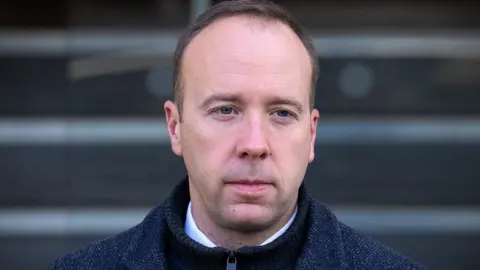
Former Health Secretary Matt Hancock has given evidence on several occasions.
He told the inquiry that the UK's strategy to combat the pandemic was completely wrong, but admitted that the UK should have locked down much earlier.
Hancock also criticized the “toxic culture” in government, which he blamed on Johnson's former adviser Dominic Cummings.
In his evidence to the inquiry, Mr Cummings described a “dysfunctional” government and was highly critical of Johnson's approach.
The hearing also discussed harsh text messages he sent, many of which contained offensive descriptions of ministers and officials.
Mr Cummings said he regretted the handling of his infamous trip to Barnard Castle during the first lockdown, but denied it undermined public trust in the Government.
The inquiry also heard from political leaders from Scotland, Wales and Northern Ireland, including:
- former Scottish First Ministers Nicola Sturgeon and Humza Yousaf
- former First Minister of Wales Mark Drakeford
- current First Minister of Northern Ireland Michelle O'Neill and former First Minister Baroness Foster



