

What is AI? (grades 5-8)
This article is intended for students in grades 5-8.
What is AI?
Artificial intelligence, or AI, is a type of technology that helps machines and computers have human-like “thinking” abilities. Devices using AI can learn words and concepts, recognize objects, see patterns, or make predictions. They can also be taught to work offline. AI is often used to help people understand and solve problems faster than they could do on their own.
It includes:
- Machine learning: This type of AI analyzes large amounts of data and learns to make fast and accurate predictions based on that data.
- Deep learning: This type helps computers work just like the human brain. It uses multiple levels of “thinking” to recognize patterns and learn new information. Deep learning is a type of machine learning.
- Generative AI: Humans can use generative AI to create text, videos, images, and more. It is based on deep learning.
How does NASA use AI?
NASA has found application of AI in many of its missions and programs.
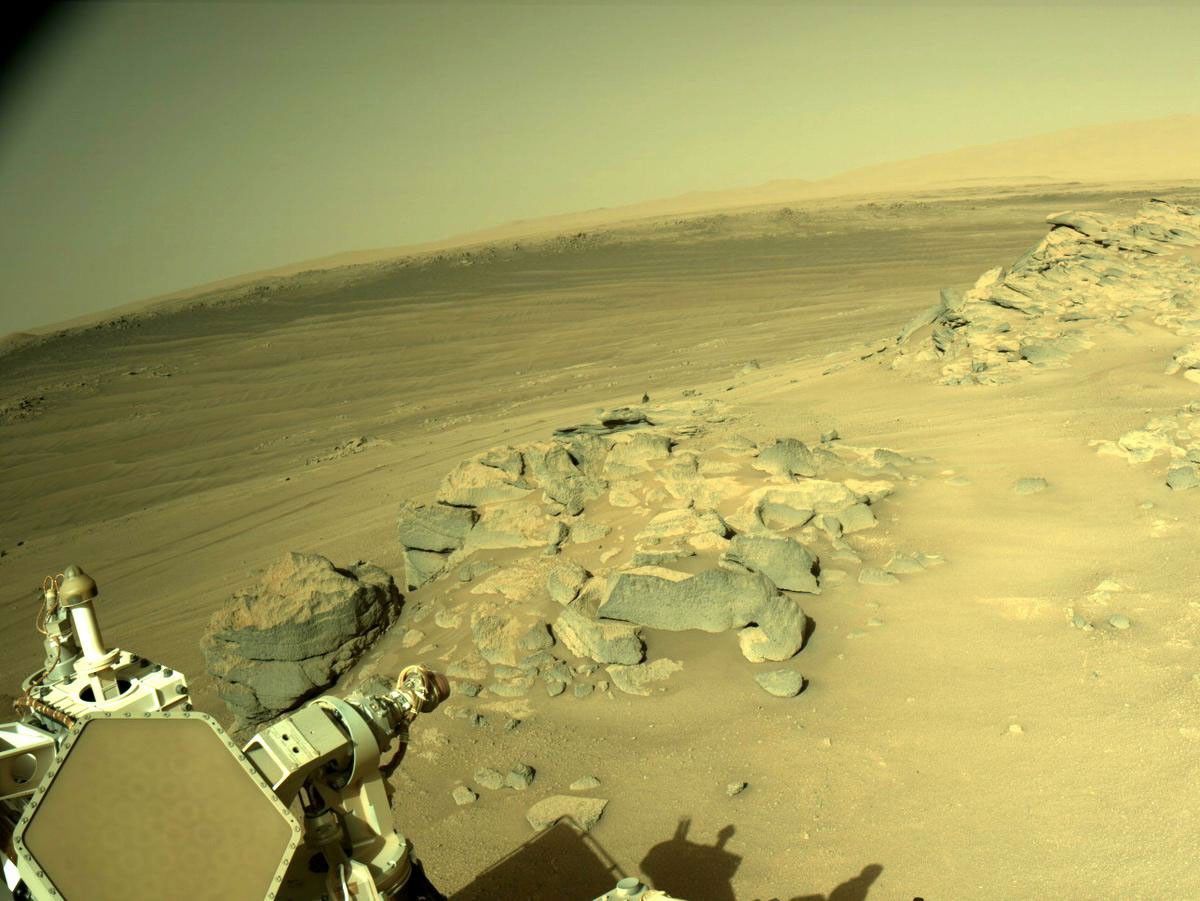
For missions to the Moon, AI could use satellite imagery to create detailed 3D maps of dark craters. The data could help scientists plan missions, identify hazards, and even determine where future crews might find water ice. On Mars, the Perseverance rover uses artificial intelligence to control itself offline. He photographs the area, sees obstacles and chooses the safest path.
AI is also helping NASA search for planets outside our solar system. For example, AI helped citizen scientists find more than 10,000 pairs of double stars. These pairs orbit each other and block each other's light. This information could help scientists search for new planets and learn more about how stars form.
———————————————————————————————
Words you need to know
Autonomous: operating or acting independently without external control. An autonomous Technology can perform its duties without human intervention.
Citizen scientist: a member of the public, often a volunteer, who collects data that can be used by scientists. When members of the public participate in research in this way, it is called citizen science.
———————————————————————————————
NASA is also using AI to support its work on Earth. The agency uses artificial intelligence to provide disaster relief during and after natural disasters such as hurricanes or wildfires. For example, AI can count tarps on roofs in satellite imagery to measure damage after a hurricane. NASA is also supporting flight controllers and pilots by using artificial intelligence to plan more efficient flight routes, making air travel safer and more efficient.
AI is helping NASA explore space, protect people, and make amazing discoveries!
Advice from NASA experts on artificial intelligence
“AI is a great field for people who enjoy solving problems, building things, or asking questions about how the world works. People use AI to help doctors understand diseases, teach robots to explore space, and help communities prepare for things like floods or wildfires. If you enjoy using technology to help people and discover new things, AI could be a great career for you!” – Krista Kinnard, NASA Deputy Administrator for Artificial Intelligence

Career Corner
NASA roles that may include AI include:
Astronauts: Astronauts on the International Space Station could use an artificial intelligence “digital assistant” to get medical advice. This is useful when communication with the Earth is interrupted. It could also be useful in future missions to distant places such as Mars.
Engineers: Engineers can use AI to create designs for things like new spaceships.
Astronomers: AI is helping astronomers analyze data from deep space satellites and telescopes to find stars and exoplanets.
Meteorologists: Meteorologists can use machine learning to make climate forecasts.
Programmers: Programmers can use AI to update the code used in older missions, bringing it up to modern standards.
IT specialists: AI can help IT teams understand disruptions at NASA, allowing them to get programs back up and running faster.
Program Managers: Program managers can use AI to plan and simulate NASA missions.
Find out more
Develop your computer science skills with NASA
Increasing activity on Mars
NASA Space Detective: Can you spot a star or galaxy?
Video: Hack Computer Science with NASA
Artificial Intelligence at NASA



