

NEWNow you can listen to Fox News articles!
Doctor-turned-House Republican says there's a direct link between Affordable Care Act (ACA)colloquially known as Obamacare, and the rising cost of healthcare putting a strain on Americans' pocketbooks.
“They have taken away patient choice by limiting and banning health insurance association plans, leaving small businesses at a disadvantage,” said Rep. Mariannette Miller-Meeks, R-Iowa.
“They had authority over how insurance companies' ratings could change—they required basic benefits, so people who are young and healthy and maybe don't want a lot of health care, they just want it in catastrophic situations, couldn't just get catastrophic coverage, so there was no choice in what benefits you had.”
Miller-Meeks said this resulted in people having to pay for health insurance but not being able to afford the deductible to actually go to the doctor – in other words, “You can have insurance but not have health care.”
Senate Republicans Unveil Plan to Replace OBAMACARE Subsidies with Health Savings Accounts
Rep. Mariannette Miller-Meeks speaks at a news conference at the U.S. Capitol in Washington, December 16, 2025. (Alex Wong/Getty Images)
Costs were also increased, she said, by “simple things like not allowing doctors to do anything in their office but paying the hospital more, which led to the development of hospital outpatient clinics.”
“Well, they paid the hospitals more for it, so you didn't have [a simple procedure] done in a doctor's office…it was done in a hospital. So there are a lot of things in the unaffordable care law that health care costs“, she explained.
Miller-Meeks is leading the House GOP bill, the Lower Premiums for All Americans Act, a bill that House Republican leaders say is aimed at lowering health care costs for a broader swath of the country rather than simply extending expanded Obamacare subsidies that are set to expire at the end of this year.
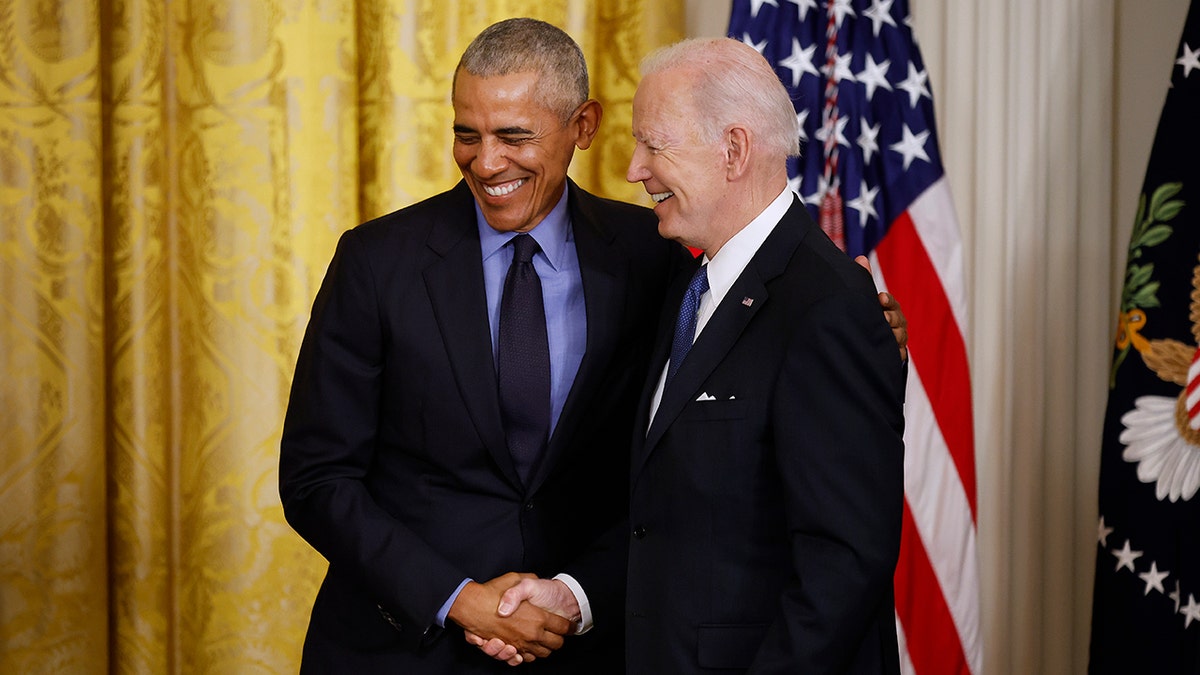
Former President Barack Obama, left, and then-President Joe Biden shake hands during an event celebrating the passage of the 2010 Affordable Care Act in the East Room of the White House in Washington, April 5, 2022. (Chip Somodevilla/Getty Images)
It will be voted on early Wednesday evening, when it is expected to pass along roughly party lines.
As it stands, the plan includes provisions to codify association health plans, which allow small businesses and self-employed people to band together to purchase health plans, giving them access to greater bargaining power.
Republicans also plan to provide funding for cost-sharing cuts starting in 2027, which are designed to reduce out-of-pocket medical costs in the individual health care market. House GOP leadership aides said it would reduce the cost of premiums by 12%.
SENATE DISCUSSES NEXT STEPS AFTER DUEL ON OBAMACARE FIXES, RESTORED FLAMES
New transparency requirements for pharmacy benefit managers (PBMs) are also included in legislation aimed at forcing PBMs to be more forthcoming about costs to employers.
PBMs are third parties that act as intermediaries between pharmaceutical companies and insurance coverage officials, often responsible for administrative tasks and drug price negotiations.
CLICK HERE TO DOWNLOAD THE FOX NEWS APP
“What's important about this bill is that Republicans want to cut health care costs for everyone, for all people, not just a select few. And we certainly don’t want to continue to provide corporate subsidies to insurance companies, who then have no incentive to lower premiums,” Miller-Meeks said.
She said various aspects of it would “result in an 11% reduction in premiums.”
“So this gives patients more choice, it gives more flexibility in what type of coverage they want, but most importantly, it's the first bill that actually lowers premiums,” Miller-Meeks said.



