

In his 15 years of full-time farming, Quentin Connealy has weathered his share of storms—literally.
The first major flood occurred in 2011. Three more occurred in 2019. Water levels rose again in 2024 and destroyed about 20 percent of the crop. Last summer, he encountered at least three hail and wind storms that damaged his corn and soybeans.
For Connealy, whose family has been farming in Nebraska for 131 years, the weather has become even more severe, posing a greater threat to his family's farmland, which stretches across thousands of acres in Burt County about an hour north of Omaha. He tries to plan as much as possible and relies on many sources of scientific information to do this.
“The weather is so unpredictable that we need as many resources as possible,” Conneely said.
But one of the resources he and others rely on is slipping away.
Last month University of Nebraska Board of Regents Votes to Dissolve Department of Earth and Atmospheric Sciences and three other programs at the University of Nebraska-Lincoln (UNL).
The move means the university system's flagship campus will no longer be able to produce homegrown meteorologists and geologists, professions that monitor severe weather and study groundwater that are critical in a state where agriculture remains the mainstay of the economy. The cuts have caused alarm both within and outside the soon-to-be-closed department.
” [department] …it is a nationally recognized program,” wrote nine professors from the University of Wisconsin-Madison. in a letter of support. “In particular, the state located in the center of Tornado Alley needs trained meteorologists and climatologists who contribute to the safety of Nebraskans. Nationally, the need for geologists to secure domestic sources of critical minerals is a stated national security concern. Closing this program disrupts the critical pipeline of skilled workers for all of these areas.”
Recognizing the pain caused by the cuts, regents and university officials said action was needed. UNL, the largest of the four campuses of the University of Nebraska system and the largest college in the state, will face a structural budget deficit of $21 million.. Liquidation of the Department of Earth and Atmospheric Sciences, estimated to save $1.85 million.was part of a larger effort to eliminate the shortage.
“My family, we have received 26 degrees from this institution, so to say this decision was made lightly is about as far from the truth as it can be.” Regent Tim Clair made the announcement at the Dec. 5 meeting. where the board voted to eliminate the department. “We are facing a serious budget challenge that threatens the long-term stability of our university system.”
But supporters of the Department of Earth and Atmospheric Sciences say eliminating it would cause long-term harm to Nebraska.
“Besides agronomy or animal science or plant pathology, I don’t think there could be another department in a university that is more important to agriculture, because it’s your groundwater, it’s your weather,” said Eric Hunt, an assistant professor of agricultural meteorology at the University of Nebraska. “We just cut back on something that is vital to the long-term viability of agriculture in the state.”
Loss of local knowledge and experience
Adam Houston is blunt about the importance of his students' work when they leave UNL, especially those who become forecasters for the National Weather Service, the federal agency responsible for issuing warnings about extreme weather.
“The work we do is to train these students to go out and save lives,” said Houston, a professor of atmospheric sciences in the soon-to-be-departed department.
Other universities in Nebraska offer courses similar to those in the department, but the Earth and Atmospheric Sciences program is the only one of its kind in the state. according to the documents of the regency meeting.
While weather forecasts are readily available these days, there is a human element to the data and forecasts, says Martha Durr, a faculty member at Nebraska Indian Community College and a former government climatologist.
“There is still a person at the forecasting table, and they are using their local knowledge and experience to push the results of that forecasting model in a certain way or issue a warning,” Darr said.
Nebraska is no stranger to extreme weather conditions. In the last few years alone there have been floods, droughts, tornado outbreaks and severe thunderstorms. Weather events of this type they are expected to become more frequent due to climate change. — increasing the value of domestic local experience. Nebraska already Today is 2.3 degrees warmer than in 1970.and rains we now throw away 24 percent more water. The state also tested Disasters costing 36 billion dollars since 2005, up from four in the previous 20-year period.
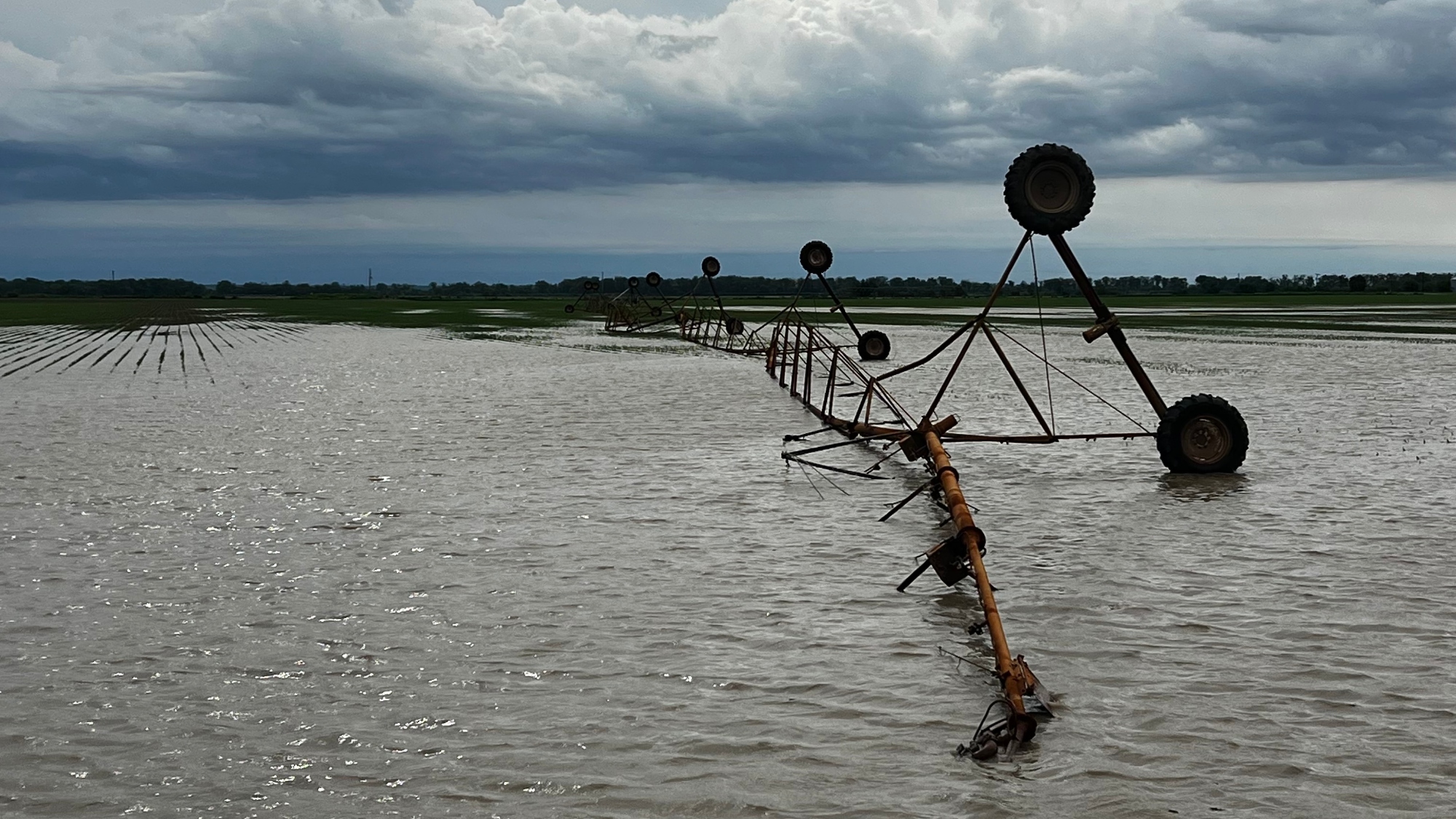
Courtesy of Quentin Connealy via Flatwater Free Press
“What next puts our [Earth and atmospheric sciences] “What sets the graduates apart is their deep knowledge of Nebraska’s regional climate and weather patterns,” KLKN-TV Chief Meteorologist Rusty Dawkins wrote in a letter of support to the faculty. “Their localized knowledge allows them to offer context-specific forecasts and risk assessments that experts in other states may miss.”
This need for local expertise extends to other subjects taught in the department, including geology, Hunt said.
The department's geologists worked with local natural resource districts to monitor groundwater, Nebraska's primary source of drinking water and an important resource for the state's agricultural economy.
At a news conference earlier this year, Gov. Jim Pillen called water the lifeblood of the state and called for Ogallala Aquiferlargest aquifer in North America, “our pot of gold,” the Nebraska Examiner reported.

Asked specifically about cuts to the Department of Earth and Atmospheric Sciences, spokeswoman Laura Strimple said the governor applauded “university leadership for having the courage to make difficult decisions to eliminate bloated and duplicative programs to achieve cost savings. More is needed.”
The department works on the same topics as other UNL programs, particularly the Institute of Agriculture and Natural Resources. But state climate scientist Deborah Bathke, who has worked in both departments, said the focus of each program is very different. “I can say without any doubt that they are not the same thing.”
Faculty graduates have gone on to serve in important roles across the state: the current leaders of the Nebraska Climate Office, the National Drought Mitigation Center, the Division of Conservation and Research, and the Nebraska Aquatic Center are graduates of the faculty. According to department documents.
Others went to work for local natural resource districts, the Air Force, the Army Corps of Engineers, the National Weather Service and television stations across the state.
“We are losing the ability to train the next generation of scientists who want to serve Nebraska … and serve the country the way we all do with our scientific expertise,” said Bathke, an earth and atmospheric sciences graduate.
Far-reaching research
The Department of Earth and Atmospheric Sciences has about 17 faculty members, Houston said. Their research makes a difference locally, nationally and internationally.
Department Chair Clinton Rowe spoke about the department's ongoing research into federal carbon capture opportunities. This topic is of national interest.
“Things like this are important to Nebraska’s economic future,” Rowe said.
And the department gained national fame. Sherilyn Fritz, a professor in the department, was elected to the National Academy of Sciences this past April for her research reconstructing “environmental history.”
Fritz is also the lead investigator of the Trans-Amazon Drilling Project, an international research project studying the evolution of the Amazon rainforest over geological time.
David Harwood studies the climate and environment of the past within the department. He is the director of the Antarctic Drilling Program, or ANDRILL, an international research initiative designed to understand how ice sheets behaved in the past so we know what to expect from current global warming.
And then there are climate and weather studies. Huston led the TORUS project, in which his team chased storms to understand their internal structure using drones, mobile mesonets and radar. Houston and his department's work in meteorology is recognized nationally and internationally, Fritz said. Houston even consulted about the 2024 film Twisters.
Johannes Eisel/AFP via Getty Images
The department's research also feeds into the work of other UNL departments, including the Institute of Agriculture and Natural Resources. Associate Professor Andrea Basch is among the institute's researchers who have benefited from research from the Department of Earth and Atmospheric Sciences in the past.
“Getting rid of this department reduces the state's ability to predict and adapt to weather and extreme weather events that determine the success of our agriculture,” Bache said.
Some teachers say they have been offered alternative positions at the university. It's unclear how many will accept them or stay in Nebraska.
As a government climatologist, Batke was the lead author Climate Change Impact Assessment Report 2024detailing how a warming planet is affecting Nebraska. Members of the Department of Earth and Atmospheric Sciences served as consultants on the report, and one faculty member was also the lead author.
There were plans for further actions, such as using regional climate modeling with crop modeling to determine specific impacts on agriculture and natural resources in Nebraska. Now Batke is unsure whether those follow-up studies will happen.
“We're going to have to delegate this to someone who doesn't have local Nebraska experience,” Bathke said. “Every time you order something, it costs more than if you did it at home.”



