

December 9, 2025
Since the start of the war, the Ukrainian government has stepped up measures to suppress trade unions and workers' rights. But gradually the public mood is changing.
On June 5, shortly after ten in the morning, officers dressed in black burst into the House of Trade Unions. The symbolic building on the Maidan – Independence Square in Kyiv – is the headquarters of the country's largest federation of trade unions – the Federation of Trade Unions of Ukraine (FTU).
About 30 officers ordered union workers to pack up. The Trade Union House, they said, had been confiscated. Employees and journalists were stopped outside and prevented from entering the building, by force if necessary.
The president of the trade union “Profbud”, a member of the FPU, representing the rights of workers in the construction industry, Vasily Andreev, speaks of a completely new level of escalation. Despite the government's aggressive campaign against trade unions, the move came as a surprise to everyone, he recalls. Until this day, the Profbud office was located in the House of Trade Unions.
Behind the operation was the Asset Recovery and Management Agency (ARMA), a government body responsible for the security and management of assets linked to corruption. In tow that day were heavily armed security forces and a new private property management company chosen by ARMA.
The raid was not an isolated incident, but part of a deepening confrontation between the government and the country's trade unions. International trade union federations criticized that the arrest was part of a wider pattern of repression, including intimidation, criminal investigations and legislative attacks.
ARMA justified its actions with allegations of corruption. Between 2016 and 2018, union representatives allegedly appropriated FPU real estate and personally profited from it. On this basis, the department seized not only the House of Trade Unions, but also many other buildings of the FPU. In April, law enforcement agencies arrested the president of the FPU, Grigory Osovoy, and four other officials. Since then, Osovy has been under house arrest.
Current number

Vasily Andreev says he cannot comment on the ongoing proceedings. However, he is not aware of any evidence to support the allegations. The FPU and numerous trade unions at home and abroad criticized the arrest as politically motivated. The goal, in their opinion, was to destabilize the country's largest federation of trade unions. The General Secretary of the International Trade Union Confederation, Luke Triangle, called for the immediate release of Grigory Osovoy and the cessation of all proceedings.
Even if the corruption charges are substantiated, says labor lawyer Vitaly Dudin, the government's approach is disproportionate. Dudin, leading figure in Ukrainian public organization Social Rukh (Social Movement) adds: “Legal actions against individuals cannot justify measures that affect the entire organization.” He also suspects political motives are behind the escalation. “Our ruling party is pursuing a clearly neoliberal course. Until now, our trade unions have been the only ones who have seriously opposed this.”
With my party He listens to people (“Servant of the People”) Vladimir Zelensky won an unprecedented victory in the 2019 elections. His faction holds almost 60 percent of the seats in the Verkhovna Rada, Ukraine's parliament. Long before Russia's full-scale invasion, the government repeatedly attempted to reform labor laws in ways that would benefit employers. Each time he was forced to retreat due to major union-led protests.
The situation changed radically with the outbreak of the war. Martial law does not allow any demonstrations or strikes. Many union members fight at the front or live in exile. “The authorities did not create this situation, but they undoubtedly took advantage of it,” says Dudin.
In March 2022, just weeks after the start of the war, parliament passed the first labor and trade union law reforms, including highly neoliberal bills that had previously repeatedly failed due to union resistance.
The new rules make it easier to fire employees, increase the maximum weekly working hours from 40 to 60 hours and allow weekend shifts without additional pay. While some emergency measures can be explained by wartime conditions, Dudin argues that many of them go far beyond what the situation requires. “They are weakening the role of collective agreements and collective bargaining. This is Stage 101 of market liberalization.”
Popular
“swipe left below to view more authors”Swipe →
Further “reforms” followed. The government has introduced so-called “zero contracts”: on-call employment with payment only for the time worked. Although the law guarantees a minimum of 32 hours a month, lawyer Vitaly Dudin warns that the reform risks creating a two-tier workforce – secure contracts for obedient employees and unstable ones for union members.
The government's “reform” madness is not over yet. Last year, the Ministry of Economy published a draft of a new Labor Code. It contains 329 articles, which, according to the government, are designed to reduce bureaucracy and bring Ukraine closer to European standards. Critics see this as further shifting the balance of power in favor of employers.
Without explanation, companies could decide on new work schedules and wages within a week. Employees may be suspended without pay during ongoing termination negotiations. Unions will lose their voice in operational decisions. “All this,” says political economist Yulia Yurchenko, a senior lecturer at the University of Greenwich, “will not bring Ukrainian labor law closer to the EU, but will instead push it further back as deregulation continues.”
However, after the initial shock at the start of the war, the trade unions regained their position. So far they have managed to prevent the bill from being brought to a vote in parliament. Observers suspect there is a direct link between the restoration of union strength and the escalation of government repression. But Dudin believes the government underestimated how strong the obstacles associated with this escalation would be. Harsh criticism did not only come from international trade unions; According to him, discontent among the population is also growing.
In early November, frustration flared on the sidelines of a summit in central Kyiv that was really supposed to focus on Ukraine's EU accession process. “How can we discuss joining the EU here when trade union buildings are being seized?” – asked one of the spectators. Another criticized the government's reforms as neither progressive nor EU-compliant, but somewhere between “neoliberal and libertarian”. The invited Ukrainian deputies looked visibly tense and were unable to give answers.
The invitation came from the Social Democratic Group in the European Parliament. In their speeches, several members of the European Parliament warned (without directly naming attacks on trade unions) that the current course is heading in the wrong direction. Yulia Yurchenko was also invited as one of the panelists, and she became much more outspoken. If policies are aimed solely at companies rather than workers, she asked, who will benefit from the promised progress?
We need policies for the majority, not just the oligarchs, that address retraining and upskilling, child care, flexible parenting and affordable housing, Yurchenko says. Nation. At the summit she makes one final, unmistakable rebuke: the government's attitude towards trade unions, she says, is authoritarian and completely unacceptable. “We are not Russia. We are Ukraine.”
The audience applauded, although most Ukrainian deputies had long since left the chamber. On the ground, immediate tensions gradually eased by the time of the summit. The FPU found a new headquarters less than two kilometers from the House of Trade Unions. And since July, Sergei Byzov became the new president of the federation. The government knows that it has crossed a red line with the arrest of Grigory Osovoy and the confiscation of the House of Trade Unions, says Dudin.
For several months the government took a more conciliatory tone. The FPU's 35th anniversary celebrations in October were attended by several ruling party members who publicly praised the union's work. “After all the campaigns against trade unions, it was a strange sight,” recalls Dudin.
According to parliamentary sources, the planned Labor Code will also not be submitted to parliament – at least not this year. But Dudin, of course, does not believe in a real change of course. “They will try again. I have no doubt about that.”
More from Nation
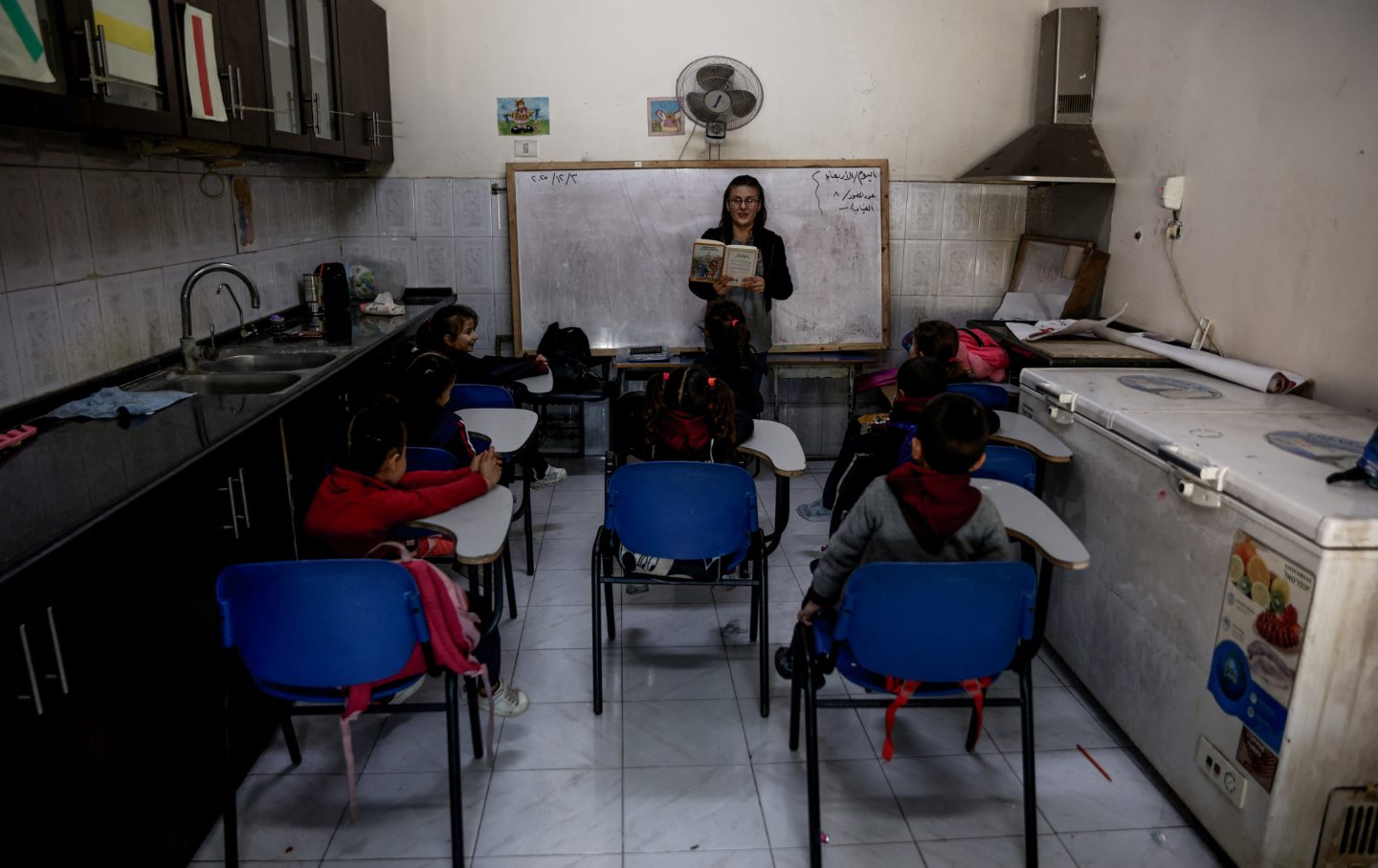
Between grief, trauma and years of being away from school, the children I teach face enormous challenges.
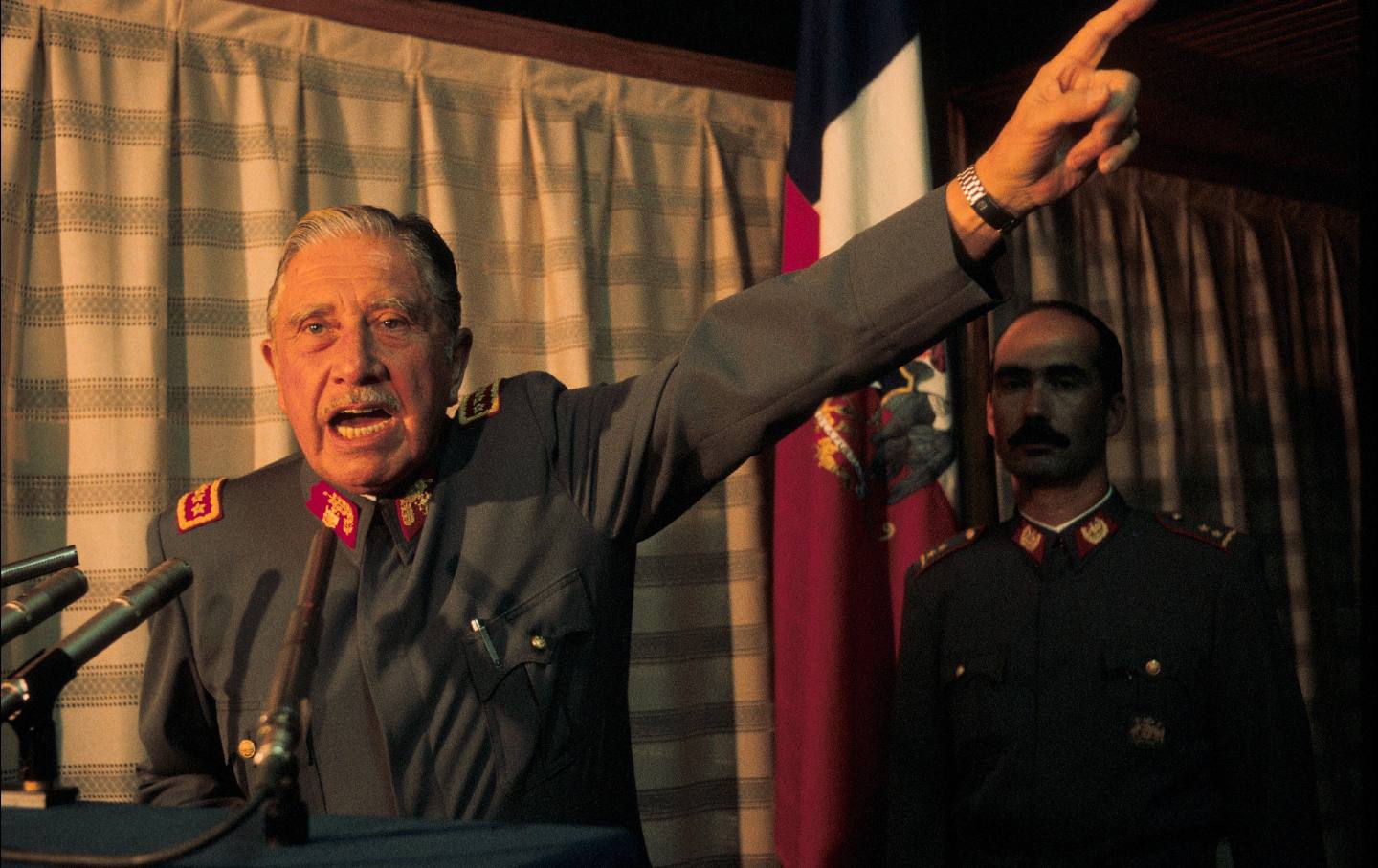
How Condor launched a wave of cross-border murders and disappearances in Latin America.
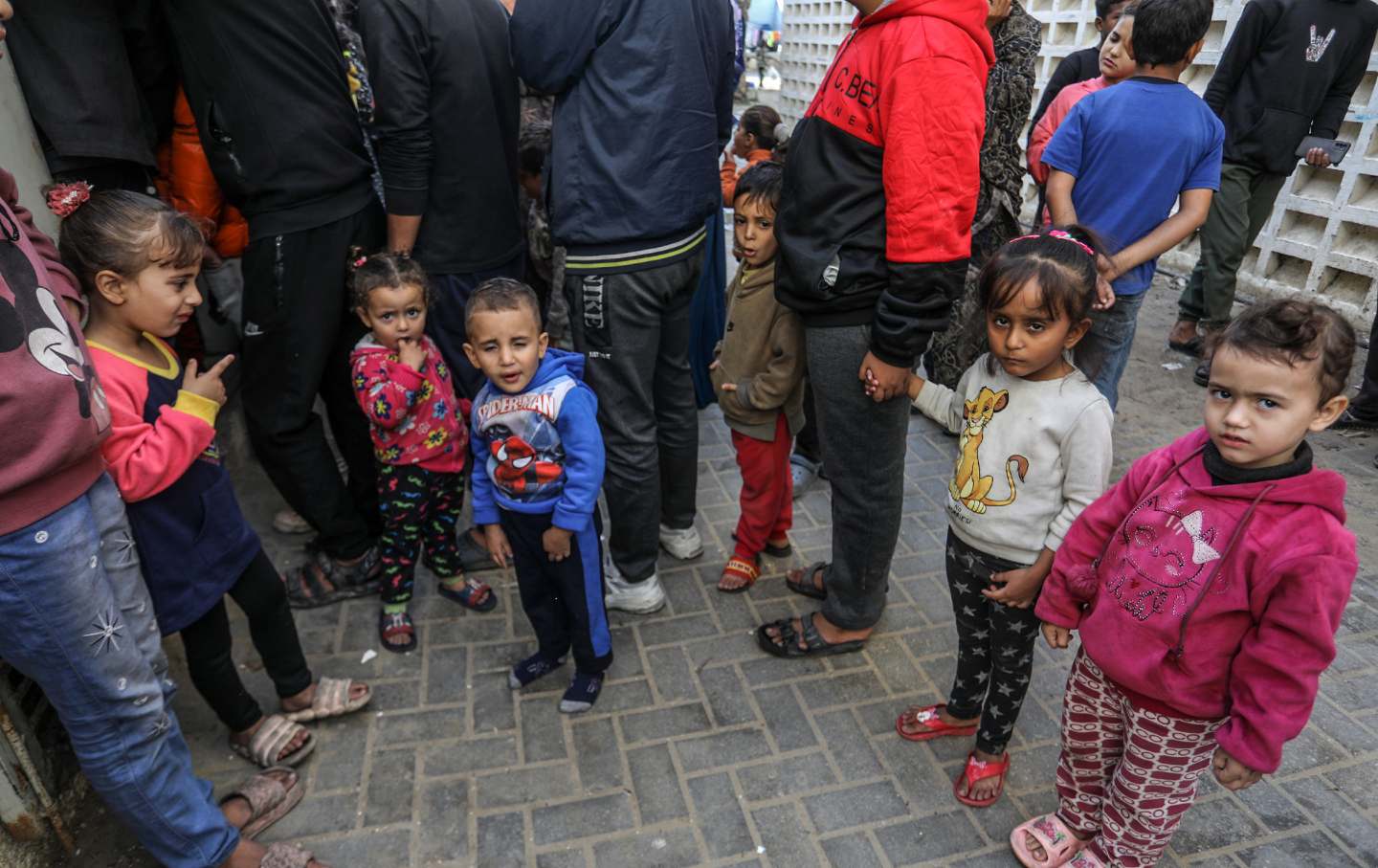
A real ceasefire would mean opening borders, rebuilding what was destroyed, and restoring life. But this doesn't happen.
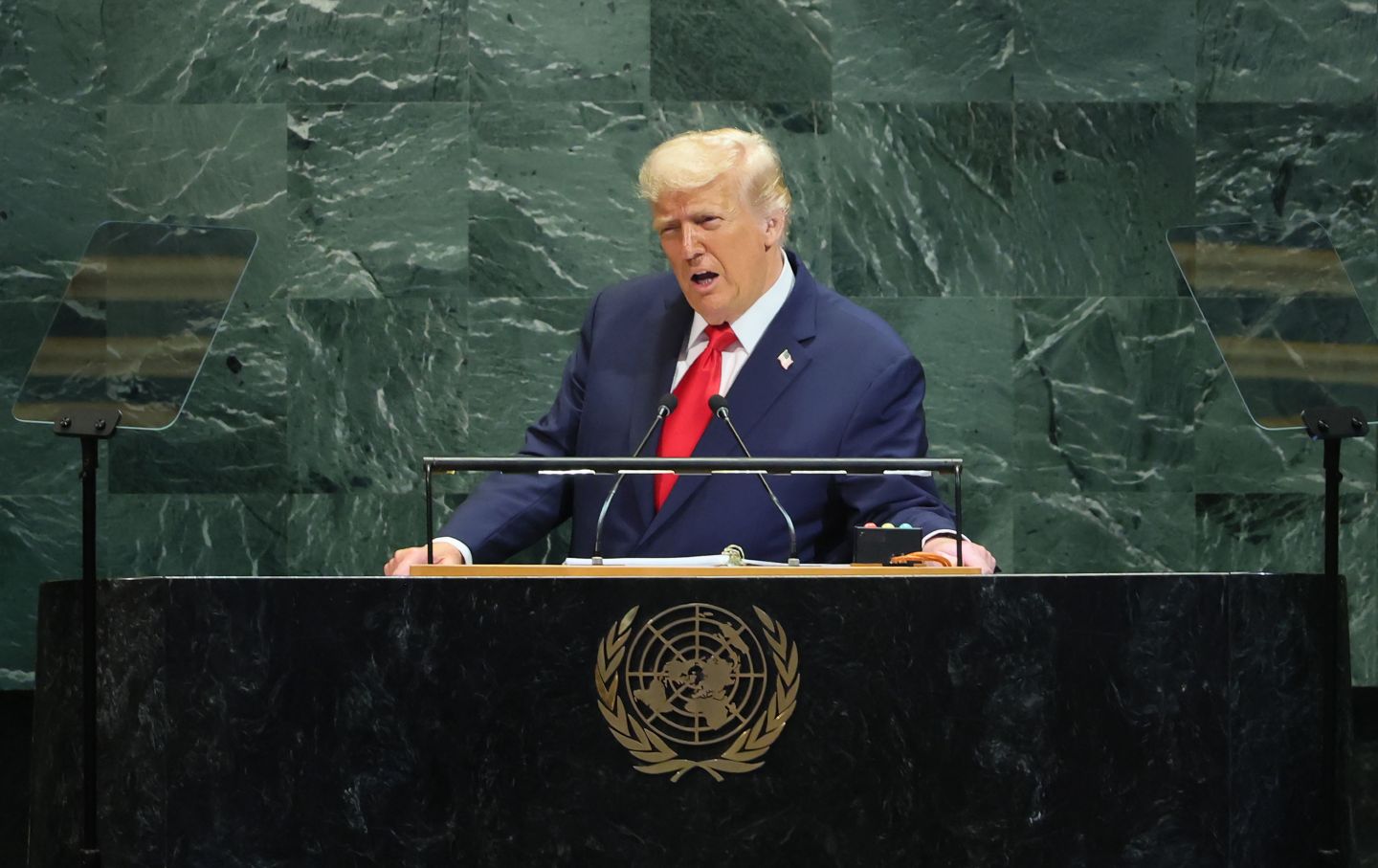
Trump's desire to suppress free speech may be about Israel today, but be prepared for one thing: it will be about something else tomorrow.
So far, Gold Dome looks more like a marketing concept designed to enrich arms suppliers and improve Trump's image than a carefully thought-out defense program.
Not only is the resolution a possible violation of UN rules, but it also holds the administration directly responsible for the oppression of Palestinians.



