
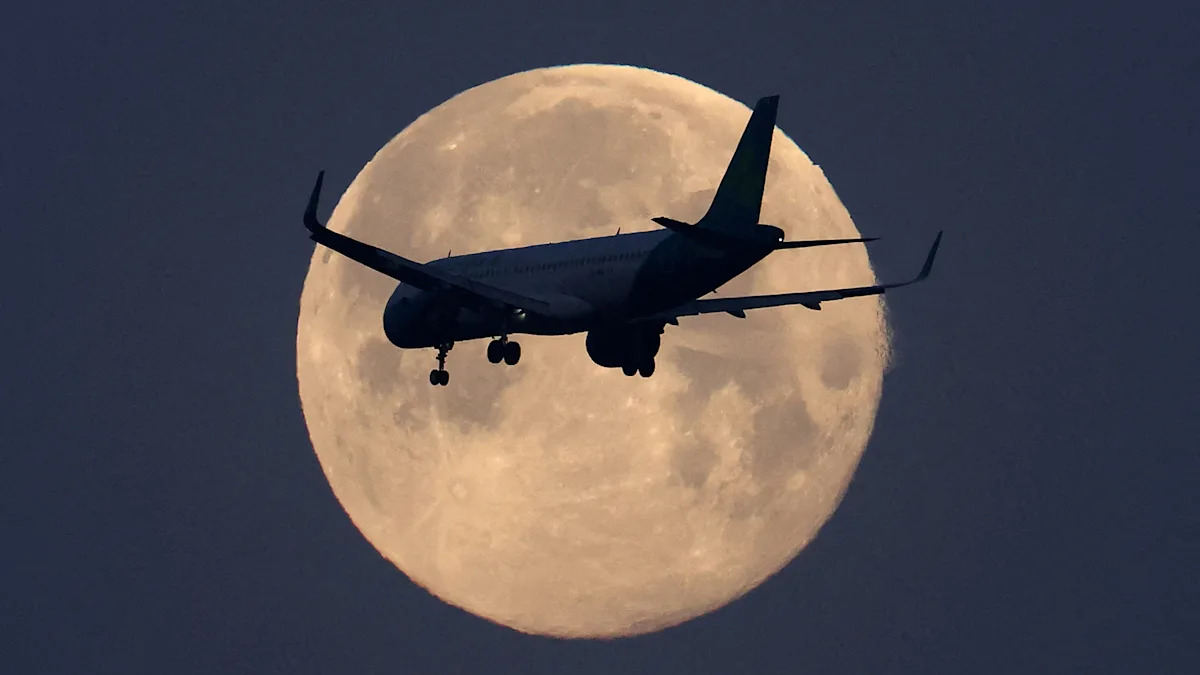
The new year will bring with it an unusual lunar event: the first full moon of 2026, known as the Wolf Moon, will also be the first supermoon of the year – it will be noticeably larger and brighter than usual as the moon reaches its closest point to Earth.
A supermoon is when the full moon reaches perigee, the point in the Moon's elliptical orbit when it is closest to Earth. When this happens, the moon may appear 14% larger and shine 30% brighter than a normal full moon. according to NASAcreating a spectacular spectacle for observers.
This phenomenon is theatrical because the Moon's orbit is not perfectly circular, but elliptical, meaning the distance between the Earth and the Moon will vary throughout the month. But when these orbital mechanisms coincide, we get a stunning picture of a supermoon.
Folklore about the wolf moon
The name “wolf moon” comes from Native American and European traditions. according to The Old Farmer's Almanac. This reflects the time of year when the howling of wolves was often heard outside the villages in the depths of winter.
While folklore says wolves howl from hunger during the colder months, modern scientists have learned that wolves use their voices to mark territory and communicate with pack members. However, the sound of wolves howling has become so closely associated with the January full moon that the name “wolf moon” has persisted across all cultures.
When and where to watch the show
The Super Wolf Moon will peak on Saturday, January 3 at 5:03 a.m. ET. But stargazers should not limit themselves to just this moment.
For the most spectacular and memorable views, observers should look to the eastern horizon at sunset on Friday, January 2 or Sunday, January 4. Watching the moon rise or set can cause what is called the “moon illusion,” a perceptual phenomenon in which the moon appears significantly larger when it is positioned near familiar objects such as trees, buildings, or the horizon line.
At this time, the Moon will be in the constellation Gemini and will be close to Jupiter, which will be at its brightest point of the year. According to In-the-sky.org. This celestial combination adds additional visual interest to those scanning the night sky.
Viewing Tips:
-
Find an unobstructed view of the eastern horizon during moonrise.
-
Look west for opportunities to watch the moon set.
-
The moon illusion works best when the moon is close to the horizon.
-
No special equipment is required—the supermoon is easy to see with the naked eye.
-
Binoculars or a telescope can reveal stunning surface detail.
More supermoons to come
January's Wolf Moon is just the first of three supermoons in 2026. Although the next major lunar event will be several months away, the year will end with a pair of back-to-back events:
Beaver supermoon: November 24, 2026
Cold supermoon: December 24, 2026
The December event is particularly notable: it is expected to be the closest and brightest full moon in 2026, reaching its closest point to Earth since 2019. The supermoon on Christmas Eve will be a brilliant finale to the lunar calendar of the year.
For skywatchers, 2026 offers the perfect bookend, from the wintry brilliance of a super wolf moon to the festive spectacle of a cold super moon.



