After concerns about whether the Federal Reserve will cut interest rates for a third time this year, the consensus is that the central bank is likely to continue its 25 basis point cut on Wednesday – even if it is a split decision.
“This is a tough call,” said Alan Blinder, a former Fed vice chairman and professor of economics at Princeton. “[But] “I really think they’re more likely to cut it than not… It wouldn’t surprise me if it was the hawkish option.”
In other words, this week's rate cut could be a warning to markets not to expect the Fed to continue cutting meeting after meeting. Blinder said he also believes there may be disagreements on both sides of the interest rate decision, given existing divisions within the committee.
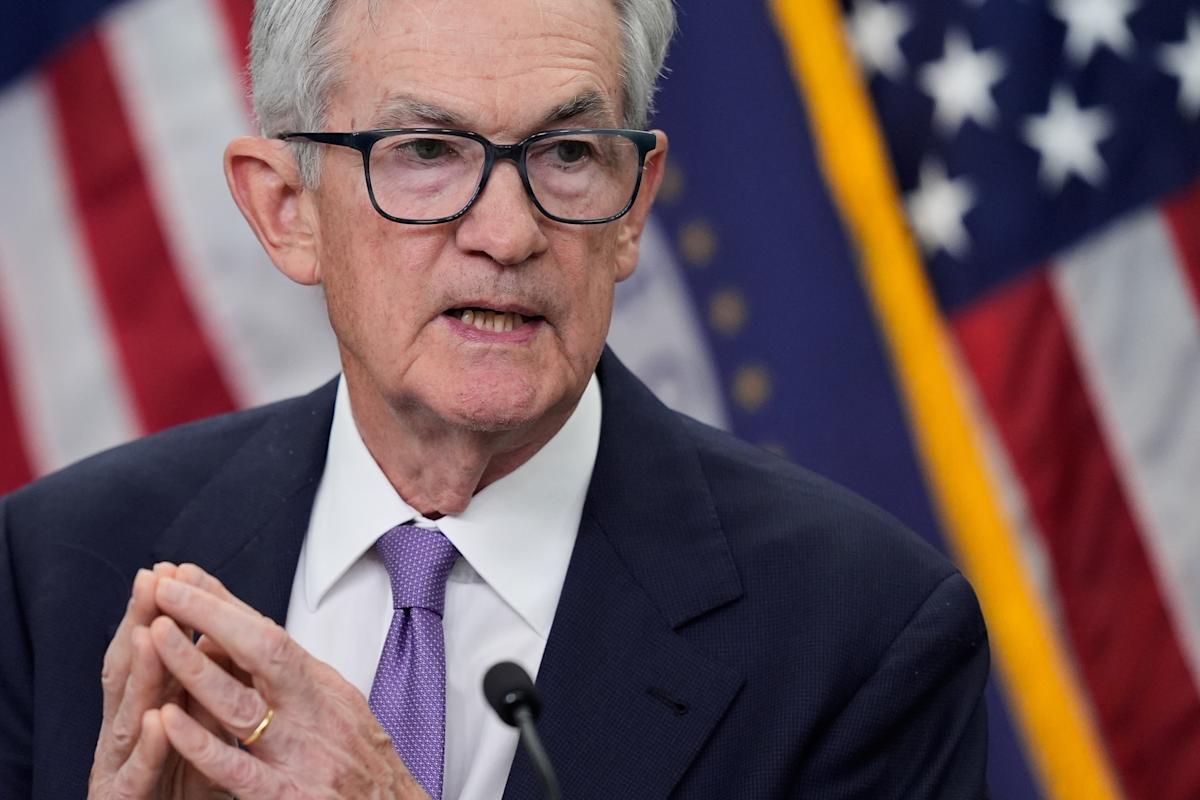
Luke Tilley, chief economist at Wilmington Trust, who also believes the Fed will cut rates on Wednesday, predicted that Fed Chairman Jerome Powell will frame the rate cut the same way he did at his last news conference: highlighting the differing views on further rate cuts and cautioning against speculation that the central bank will continue to cut rates.
Ahead of this week's meeting, several Fed officials said there was no urgent need to cut rates given concerns about inflation, which remains a full percentage point above the Fed's 2% target. These include Boston Fed President Susan Collins and Kansas City Fed President Jeff Schmid.
Chicago Fed President Austan Goolsbee also expressed doubts about the “initial” rate cut being too large, citing inflation. On the other hand, New York Fed President John Williams, vice chairman of the Federal Open Market Committee and a member of the Fed leadership, strongly signaled several weeks ago that he might support rate cuts.
“I continue to see room for further adjustments in the near future to the target range for the federal funds rate to move the policy position closer to the neutral range,” Williams said Nov. 21.
That comment alone increased the odds, according to some Fed watchers.
“Vice Chairman John Williams doesn't typically make such strong statements in a speech unless he has the support of the Fed chairman,” said Loretta Mester, former president of the Cleveland Federal Reserve. “So I believe they are going to take another 25 basis point cut in December.”
While Mester says she doesn't think the Fed is necessarily wrong to cut rates, it wouldn't support it at this point and would like to see how the economy fares early next year and then adjust course if necessary.
“I don't really see a compelling case for a rate cut this time, other than the fact that it was in interest rate forecasts for September,” she said. “I think it’s more immediate than a good economic argument.”
Blinder warned that if the central bank cuts rates again this week, policymakers risk making it difficult to bring inflation down.
Blinder says “we could be” at risk of unleashing persistent inflation if the Fed continues to cut rates.
“The question is whether we are there right now,” he said. “I think we can be.”
Read more: What the Fed's rate cut means for your money
The release of inflation data continues to be delayed by the government shutdown that lasted throughout October and November. The latest data from the personal consumption expenditure index, the Fed's preferred measure of inflation, was released with a two-month lag. In September, on a “core” basis excluding food and energy prices, inflation rose 2.8% in September, a tenth of a percentage point lower than in August. Fed officials expect inflation to end the year at 3.1%.
A stronger-than-expected, if dated, September employment report showed that wage growth rebounded in September, adding 119,000 jobs compared with a loss of 4,000 in August. This contributed to an unsustainable trend: job creation turned negative in June, increased in July, fell again in August and rebounded again in September.
More recent anecdotal reading about the job market from Fed Beige Book showed that in the first two weeks of November layoffs increased, employers suspended hiring and adjusted work hours. Several firms noted that AI is replacing entry-level positions or making existing workers productive enough to limit new hiring.
Fed officials will receive new data in real time a week after the meeting.
Fed watchers will be watching this week to see what officials say about the future course of policy. Powell will hold his usual news conference after the meeting, and policymakers will present their latest quarterly interest rate forecasts, which will include a forecast for 2026.
“I hope he talks about how they really think about economics,” Mester said.
She said she would be cautious about further rate cuts because she believes inflation is caused not only by tariffs (which she views as one-time price increases) but also by service prices.
While the Fed tries to ease the situation worsening situation on the labor marketMester said she believes much of the easing is driven by longer-term changes that the Fed can't control, such as immigration policy changes that lead to fewer workers. At the same time, she acknowledged weakness due to uncertainty over tariffs and companies' desire to protect their profits from tariffs, as well as labor costs.
“So the labor market is kind of stagnant, and I'm not sure that lowering interest rates will really do anything to help that,” she said.
However, Wilmington Trust's Tilly predicted three more rate cuts over the next three Fed meetings as he believes the labor market is weakening and expects it to weaken further.
Tilley estimated that the 154,000 government workers who took buyouts and took pay cuts in October could push the November unemployment rate up nearly a tenth of a percentage point to 4.5%. He also noted that, with the exception of health care jobs, private sector job growth was negative, according to the BLS.
“There are federal employees, as well as new entrants to the workforce, who are having a hard time finding work,” Tilley said. “So all of this combined reflects a very weak labor market.”
Aditya Bhave, Bank of America's senior U.S. economist, predicts two more cuts in June and July next year, not because the economy needs them, but because of the new Fed chairman. As a result, rates will remain in the range of 3.0 to 3.25%.
“Our forecast of additional cuts next year is driven by leadership changes, not our economic forecasts,” Bhave said. “In fact, we think that by cutting rates next week, the Fed will increase the risk of policy moving into accommodative territory once fiscal stimulus takes effect.”
Amir Bagherpour, global managing director at Accenture, predicts the Fed will cut rates one or two more times next year after cutting this week. This forecast assumes that inflation, as measured by core PCE, will range from 2.5% to 2.7% next year; GDP will be in the range of 1.5-1.8%; the unemployment rate will end next year in the range of 4.4-4.6%; and monthly job growth will average 75,000–125,000.
On Wednesday, Fed officials will release new forecasts for inflation, GDP and unemployment.
Jennifer Schonberger talks about the Federal Reserve, Congress, the White House, the Treasury, the SEC, the economy, cryptocurrencies, and the intersection of Washington politics and finance. Follow her on X @Jenniferisms and further Instagram.
Click here for the latest economic news and indicators to help you make informed investment decisions.
Read the latest financial and business news from Yahoo Finance.