 Essex and Suffolk Water
A water company boss says plans for two new reservoirs and a water treatment plant in Suffolk are needed to ensure the county's water supply for “generations”.
Essex & Suffolk Water supplies water to around 1.8 million households in parts of the two counties and parts of Norfolk.
In an effort to meet growing demand, the company recently launched a water treatment, transport and storage project in Suffolk.
Company spokeswoman Monisha Gower said the county's long-term water security was at risk but the scheme could be the answer.
“East England is one of the driest parts of our country,” she said.
“We therefore need to plan carefully ahead to secure and maintain existing supplies – and this project represents an important step forward in securing water for the future.”
Suffolk was recently designated as a Severe Water Stress Area by the Environment Agency, meaning its long-term water security is at risk.
In September, Essex & Suffolk Water reported that Suffolk had experienced its second driest March to May spell since 1921.
It is hoped the scheme – part of a wider £1.5 billion investment in water projects in the east of England – will ensure a “secure water supply for future generations”.

 Northumbrian Water Group
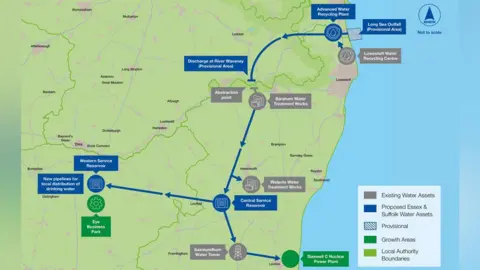
If approved, a water treatment plant capable of producing 11 million liters (2.4 million gallons) of purified water would be built near Lowestoft.
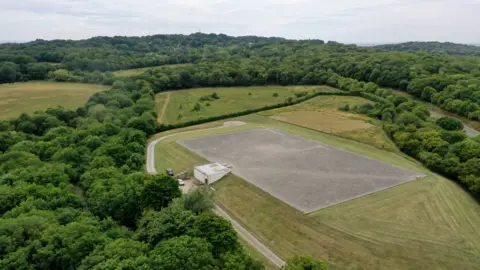
Two partially buried reservoirs will also be built – one near the existing Lodgewood water tower at Sibton, near Saxmundham, and one near Eye Airfield – to store water for use during dry periods. About 50 miles (80 km) of pipelines will be installed.
“We currently have enough water supplies to support our existing households and business customers, so this is normal and safe,” Ms Gower said.
“We are challenged to meet additional demand from new commercial developments and commercial customers who want to connect to our water supply.
“We need to build supply and connectivity capabilities to be able to do this.”
 Essex and Suffolk Water
Ms Gower spoke to the BBC after a seven-week consultation period during which around 1,000 residents attended public meetings to share their views.
“Initial feedback has been generally favorable and positive, so the community understands the need for this investment and what it will unlock,” she said.