

WARRENTON, MO. Distributing food stamps could soon become even more difficult for Missouri's food assistance system, which a federal judge has already called “broken and unaffordable.”
States rely heavily on federal funds to operate their food stamp programs, which help feed about 42 million people nationwide. But a new federal law restructured the nation's food assistance, requiring more people to work to qualify for aid and shifting most of the program's costs to states over the next decade. Meanwhile, many Americans are struggling to afford groceries, and state governments are trying to help them.
For example, more than a year ago, a federal judge ruled that Missouri's food assistance system was “overwhelmed,” wrongly denied aid to applicants, and forced many to go hungry as a “direct result of the system's inadequacy.” Judge Douglas Harpool ordered the state to fix the problems.
Despite the court ruling, little has changed, according to a KFF Health News analysis of state performance.
Missouri's ongoing problems foreshadow problems ahead for government food assistance programs across the country. Food aid advocates say Missouri is just one example of a nationwide problem that has left overstretched state systems struggling to provide timely aid. For example, low-income people in Alaska have faced chronic delays while the state has spent years trying to solve this problem.
Last year, then-US Agriculture Secretary Tom Vilsack sent letters to 44 governors urging them to speed up application processing and improve the accuracy of benefit determinations.
The administrative disputes are compounded by concerns over funding during the recent federal government shutdown. The Trump administration refused to use emergency funds to continue the food assistance program, and food benefits for millions of people, including in Missouri, expired on Nov. 1 as the shutdown dragged into its fifth week. Two federal judges have ordered the Trump administration to provide emergency funds for the program.
The closure ended Nov. 12, and Missouri reported that SNAP recipients began receiving their full benefits three days later. Meanwhile, as Thanksgiving approaches, payment delays some states were still reporting.
Even after the shutdown, states will have to do more with fewer resources. The Republicans' One Big Beautiful Bill Act cuts billions in federal funding for the food assistance program and places greater administrative and financial burdens on states.
The bill, signed by President Donald Trump in July, would allocate $187 billion over the next decade from the Supplemental Nutrition Assistance Program, commonly called food stamps, or SNAP. That represents a 20% cut, according to the Congressional Budget Office.
One of the most significant and immediate changes requires more people to work to qualify for assistance. The change will cause at least 2.4 million Americans to lose aid, according to the data. analysis from the Bipartisan Congressional Research Service. The analysis predicts that many people will lose their benefits as work requirements make it more difficult to apply.
Expanding employment requirements would harm some of the country's most vulnerable people, he said. Ed Bolenwho heads food aid strategies at the left-leaning Center on Budget and Policy Priorities.
But conservative Government Accountability Funda group that has worked to push similar policies in states says the requirement is necessary to preserve aid for those “truly in need.”
'Undeniable Strains in Missouri
Some Missourians were already struggling before Trump signed the bill.
Kelly Thwitt, 64, said she received a notice in the mail that her food benefits had been cut. She didn't understand why because her income hadn't changed, she said recently outside a SNAP office 60 miles west of St. Louis.
After she pays for a space at a mobile home park in Warrenton, she'll have about $300 a month left over from Social Security, she said. The roughly $300 in SNAP benefits she received each month kept her afloat.
Tweet will be subject to new federal employment requirements because she is under 65.
More than 150,000 Missourians are at risk of losing some of their food aid due to new work requirements that went into effect on November 1.
For Twitter, finding a job can be challenging. She hasn't worked for almost 20 years.
Food assistance is a lifeline for more than 650,000 Missourians – more than eight sold-out stands at Arrowhead Stadium in Kansas City, where the NFL Chiefs play. The program helps feed 20% of Missouri children each month, according to the Missouri Foundation for Health, a nonprofit charity. (The Foundation provides financial support to KFF Health News.)
Recent federal changes will require more seniors, parents, veterans, homeless people and former foster care youth to overcome additional administrative hurdles to receive food assistance. according to the US Department of Agriculture.
For years, thousands of Missourians have struggled to receive food assistance, largely because applicants must undergo an interview over the phone or in person. But many Missourians can't get a government official on the phone.
According to the lawsuit filed in 2022 in federal court, claimants waited or stood in line for hours outside state offices. At times, there were so many people on hold that the phone system began to freeze, the lawsuit says.
Under Harpool's May 2024 order, some SNAP offices in Missouri have just one employee, adding to the workload.
In a statement provided to KFF Health News, the Missouri Department of Human Services said that because demand varies by location, having one employee may be appropriate in some locations.
In Warrenton, makeshift phone booths line the walls of a food assistance office. People sit in booths at desks and use phones to interview officials elsewhere. A sign hanging on the floor encourages applicants to “please be patient with our progress” as the state works to improve technology.
According to Harpool's order, “the evidence is overwhelming” that Missouri's food assistance system has “unacceptable wait times” and that thousands of calls “cannot be completed.” These problems put Missourians at risk of losing aid “every time” they apply for food benefits, the judge wrote. To remain in the program, most households must apply and undergo periodic interviews.
A KFF Health News analysis of Missouri SNAP reports found the same problems persist more than a year later. According to data the state submitted to the court as part of the order, within 16 months of the judge's order, nearly half of all denied applications were denied, at least in part, because an interview was not completed. This indicates that the state's system is failing the most vulnerable groups of the population, the judge said.
In an order issued in May of this year, Harpool found that Missouri had failed to make significant improvements and that its performance on some measures had worsened. The state has not documented any staffing or investing any additional resources to speed up the processing of applications, Harpool said.
The Missouri Department of Human Services said the state Legislature has allocated money to hire temporary workers in other areas, freeing up staff to process SNAP applications.
To conduct the necessary interviews for food assistance, the agency says it makes several attempts to contact applicants after receiving an application.
Katie DieblerAn attorney for the National Center for Law and Economic Justice, which represented Missourians in the case, said, “It's your neighbors, it's your children's classmates who are going hungry when the system fails.”
Problems ahead
About 68% of the state's food assistance recipients are children, adults over 60 or people with disabilities, according to the Missouri Health Foundation. Many of those who can work are already working.
Christine Woodyfood security policy manager for Empower Missouri, an organization working to end poverty in the state, said Missouri lacks the money and will to fix its food assistance system.
Woody and other advocates fear the federal changes will undermine the nation's most powerful defense against hunger.
“For a state like Missouri that is already struggling to implement a program, these new rules couldn't come at a worse time,” said Bohlen of the Center on Budget and Policy Priorities.
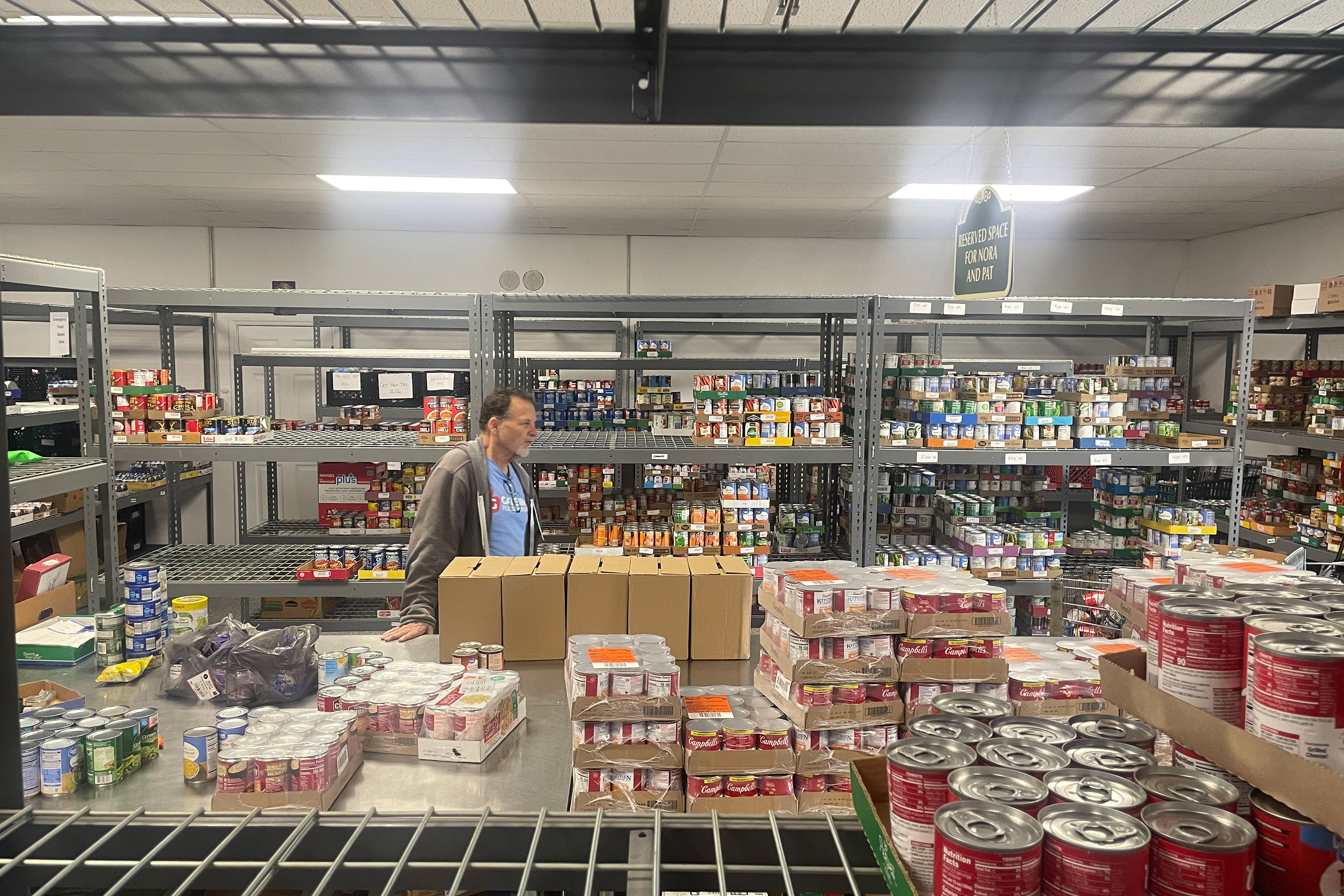
Missouri foreshadows problems ahead for other states, he said. Like Missouri, many states are reluctant to fund their food assistance programs. And now they will be forced to use state dollars to fill gaps left by federal cuts, which are “setting states up for failure,” Bolen said.
Proponents of change see it differently. US House Speaker Mike Johnson previously called the shift in spending to states “modest” and said it was necessary to reduce fraud. States 'don't have enough skin in the game' he said on CBS' “Face the Nation.” before the adoption of the budget bill.
However, Bolen said if states don't find the money to fill the gap, they will be left with two options: make it harder for people to qualify for SNAP or end the program entirely.
For Twitter, the changes come at a particularly difficult time. A few months ago, she lost her life partner of three decades, leaving her reeling and struggling to afford basic necessities. She doesn't turn 65 until April, meaning she's subject to expanded work requirements until then and may have to prove she has a job to maintain her remaining $220 in monthly food benefits. The state will apply work rules to her case when she is ready to renew, state officials said. She said Tweet's car was in need of repairs and her license plates were about to expire. She doesn't have the money to solve both problems.
She says she sells everything she can, including an antique bedroom set, to afford everything she needs.
“I can satisfy myself with a bag of chips a day,” Twitt said. “So if this is what I need to do, then this is what I need to do.”



