
Ireland, Spain, the Netherlands and Slovenia will boycott the Eurovision Song Contest 2026 after it was decided that Israel could participate.
They were among a number of countries that called for Israel to be expelled over the Gaza war and allegations of unfair voting practices.
But at a meeting in Geneva where a vote was taken on the new guarantees, the “vast majority” of members agreed that there was no need for a further vote on participation and that Eurovision 2026 could go ahead as planned, the EBU said.
Spanish broadcaster RTVE, which initiated a secret vote on the issue, said the decision increased “mistrust in the organization of the festival.”
Spain is one of the “big five” of Eurovision, along with France, Germany, Italy and the UK.
Their artists qualify directly for the finals as their broadcasters are the largest financial contributors to the EBU.
Around 50 broadcasters, including the BBC, attended a meeting of the European Broadcasting Union (EBU) on Thursday to discuss the future of the competition, which is watched by more than 150 million people each year.
They were asked to support new rules designed to dissuade governments and third parties from organizing campaigns to vote on their actions, following accusations that Israel unfairly favored its contestant Yuval Rafael this year.
BBC News understands that the vote to pass the measures was linked to a clause whereby members agreed not to vote on Israel's involvement.
“This vote means that all EBU members who wish to participate in the Eurovision Song Contest 2026 and agree to abide by the new rules are eligible to take part,” the EBU said.
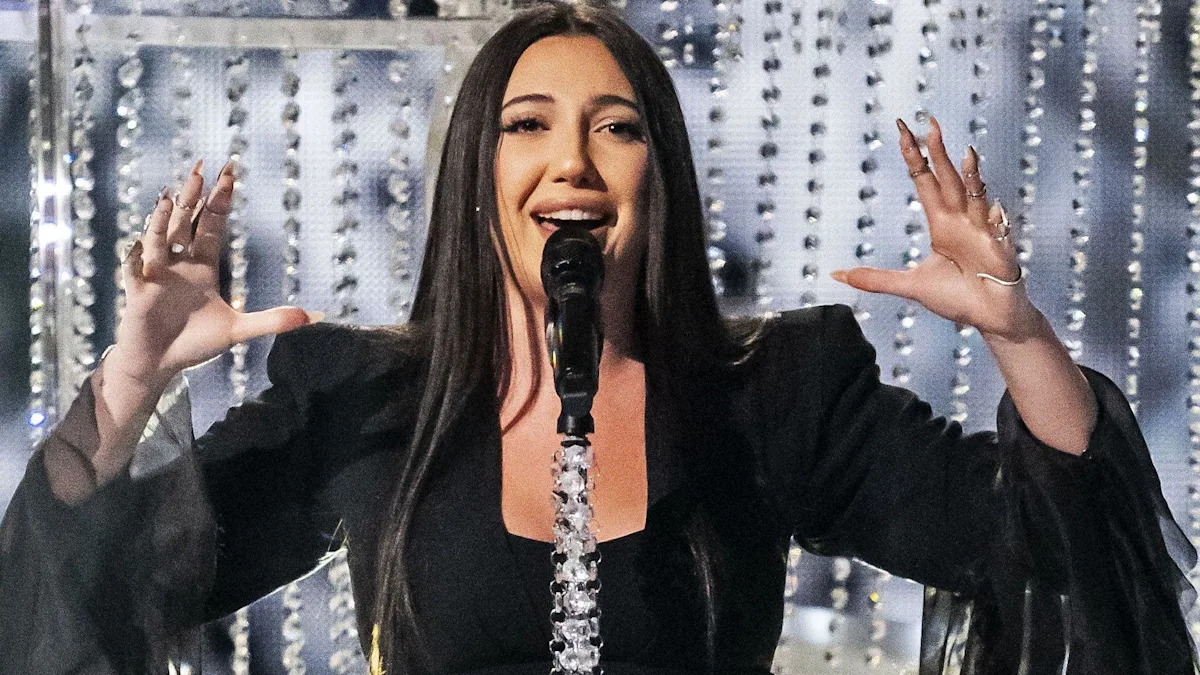
Singer Yuval Rafael, a survivor of the Hamas attack on October 7, 2023, represented Israel at Eurovision this year. [Reuters]

Austrian singer JJ won the May competition in Basel, Switzerland, beating Israel from pole position at the last minute. [Getty Images]
Martin Green, director of the Eurovision Song Contest, said he was “delighted” that contestants were given the “opportunity to discuss” Israel's place in the competition before voting.
“It was a full, frank, honest and very moving debate, but as we can see from the compelling result, it really came down to the belief that Eurovision should not be used as political theater, it should retain some sense of neutrality.”
Israeli President Isaac Herzog praised the decision allow the country to compete, calling it “a valuable gesture of solidarity, brotherhood and cooperation, symbolizing victory over those who seek to silence Israel and sow hatred.”
He said he was “delighted that Israel will take part in Eurovision again, and I hope that the competition will remain one that celebrates culture, poetry and friendship between peoples, as well as cross-border cultural understanding.”
He added that Israel “deserves to be represented in every arena in the world, and I am fully and actively committed to that.”
The CEO of Israeli broadcaster KAN said the attempt to disqualify her participation “can only be understood as a cultural boycott.”
“The boycott may start today – with Israel – but no one knows how it will end and who else it might harm,” Golan Yohpaz said.
“Is this what we really want this competition to be remembered for on its 70th anniversary?”
The BBC, which broadcasts Eurovision in the UK, said in a statement: “We support the collective decision taken by EBU members. This is about respecting EBU rules and inclusivity.”

Spanish singer Melody, representing Spain at the May competition, with the song Esa diva. [Getty Images]
However, this decision revealed a deep divide in the Eurovision community.
In a statement, Dutch broadcaster Avrotros said that “participation in the current circumstances is incompatible with the social values that are important to us.”
Spanish broadcaster RTVE added: “The board of directors of RTVE agreed last September that Spain would withdraw from Eurovision if Israel were part of it.”
“This refusal also means that RTVE will not broadcast the Eurovision 2026 final… and the preliminary semi-finals.”
Slovenian broadcaster RTV added that their position also “remains unchanged.”
“Recent changes to the rules do not change our point of view. As a public broadcaster, RTV Slovenia is committed to ethical principles and expects equal rules and standards to be applied to all EBU members and all participating countries.”
Ireland's RTÉ said it believed his “participation remains unconscionable given the appalling loss of life in Gaza and the humanitarian crisis there which continues to put the lives of so many civilians at risk.”
The Belgian broadcaster said it would “take a position in the coming days.”
Among those applauding the changes were Nordic broadcasters from Norway, Sweden, Finland, Denmark and Iceland, who issued a joint statement saying they “support” the EBU's decision to “address critical shortcomings” in the voting system.
Despite this, Iceland's RÚV said it would not make a final decision on its participation until next week.
Germany, which had threatened to pull out of the competition if Israel was excluded, also welcomed Thursday's decision.
Broadcaster ARD said it “looks forward to taking part” next year, “seeing it as a celebration of cultural diversity and solidarity.”
It added: “At the same time, we deeply regret the decisions of individual EBU members to withdraw from Eurovision 2026, but of course respect the choices made by the respective broadcasters.”



