

Like previous generations of Core Ultra, Core Ultra 3 chips use a chiplet-based approach, combining multiple individual silicon tiles on a basic “base tile” using Intel's Foveros packaging technology. The compute unit houses the CPU cores and a neural processing unit (NPU), and is built using 18A – there are two versions of this piece: one with a maximum of 16 CPU cores, and the other with 8. The platform controller tile, which handles most of the I/O, is still being built at TSMC, as is a high-performance 12-core version of the graphics tile. The simplified quad-core version of the GPU is built using the older Intel 3 process, which until now has been primarily used for Intel Xeon server processors.
Comparison of three different Panther Lake configurations.
Intel
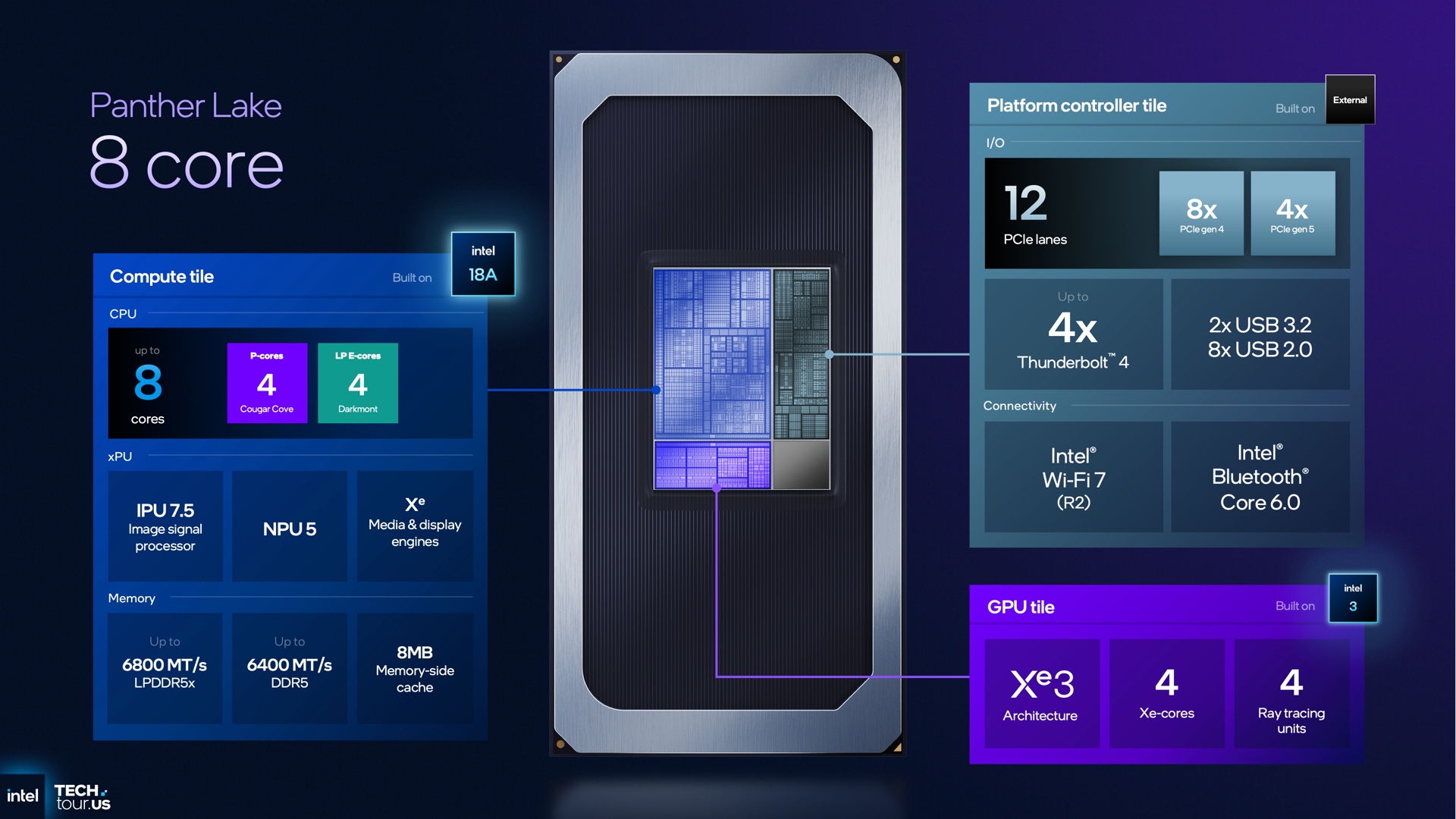
8-core Panther Lake processor.
Intel
8-core Panther Lake processor.
Intel
Comparison of three different Panther Lake configurations.
Intel
8-core Panther Lake processor.
Intel
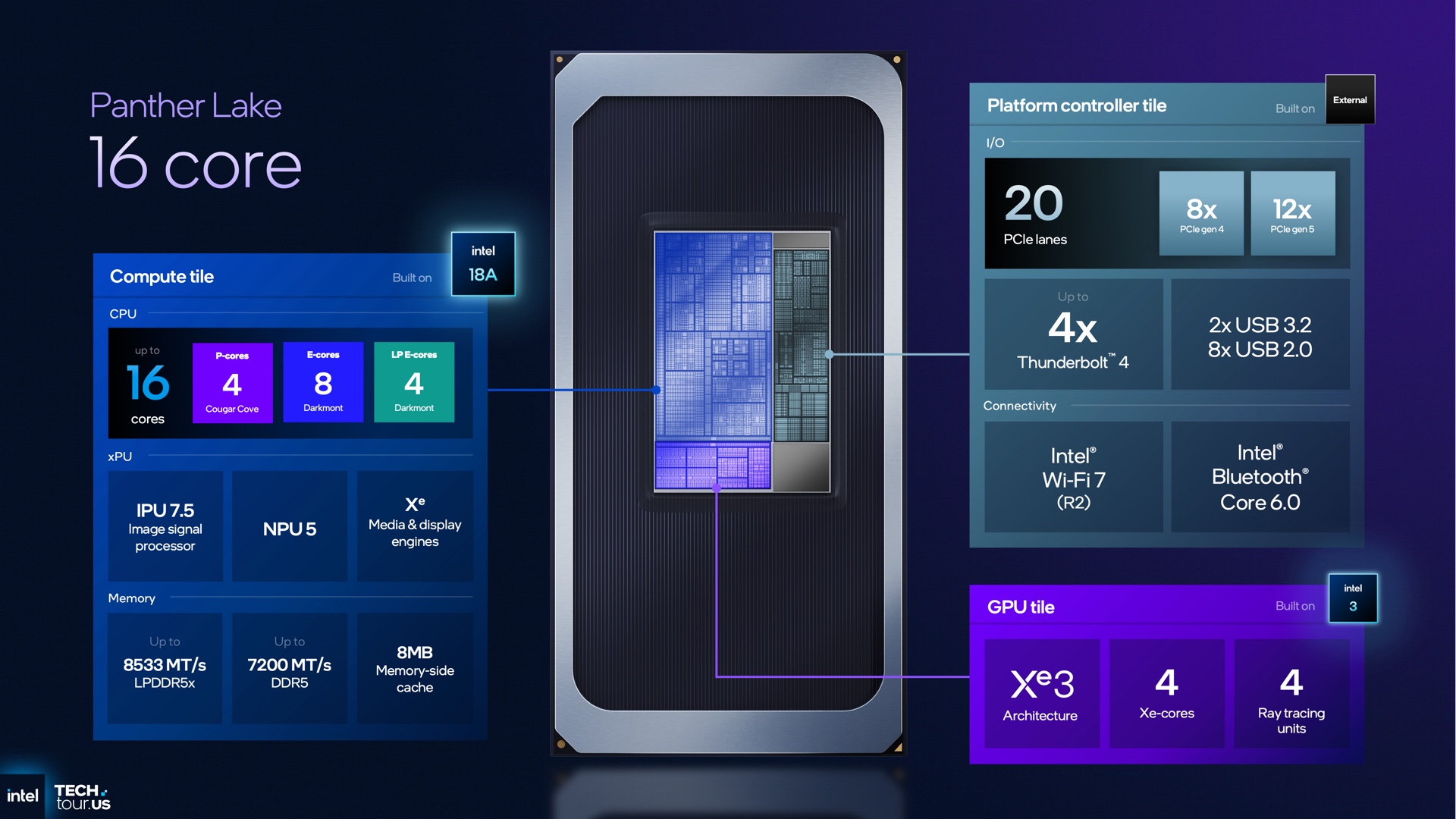
16-core Panther Lake processor.
Intel
16-core Panther Lake processor.
Intel

A version of the 16-core chip with fewer I/Os but a more powerful GPU.
Intel
A version of the 16-core chip with fewer I/Os but a more powerful GPU.
Intel
16-core Panther Lake processor.
Intel
A version of the 16-core chip with fewer I/Os but a more powerful GPU.
Intel
The chiplet-based approach allows Intel to combine these tiles to offer three different versions of Panther Lake: 16-core CPU and 12-core GPU, 16-core CPU and 4-core GPU, and 8-core CPU and 4-core GPU. Versions of these chips with some CPU and GPU cores disabled make up the rest of the Core Ultra Series 3 lineup.
Intel is making big claims about the performance of its top-end Core Ultra Series 3 processors: multi-core processor performance is up to 60 percent faster than previous Core Ultra 200V chips, and integrated GPU performance is up to 77 percent faster. Intel also says that the “Lenovo IdeaPad reference design” using the Core Ultra X9 388H processor could stream Netflix at 1080p for 27.1 hours, although battery life on actual laptops will vary widely depending on other specs and settings.
All Panther Lake chips will also include the same neural processing unit (NPU), capable of up to 50 trillion operations per second (TOPS). That's well above the 40 TOPS requirement for Microsoft's Copilot+ label for PCs, although slightly less than the 60 TOPS that AMD claims for its product. Ryzen AI 400 Series and 80 TOPS, which Qualcomm says its Snapdragon X2 chips are capable of. Wi-Fi 7, Bluetooth 6.0 and up to four Thunderbolt 4 ports round out the most important connectivity features.
It remains to be seen whether the Core Ultra Series 3 chips will be a turning point in Intel's fortunes or a temporary recovery between years of missed deadlines (Panther Lake launches a month later than Intel). said it will be in Octoberalthough by modern standards this is not bad). But their launch later this month suggests the company's 18A capacity is up and running, opening the door to third-party chip manufacturing that was handled by former CEO Pat Gelsinger. started stalking almost five years ago.



