Okay, everything is ready, I turn off the Internet. Personally, I've gotten over the algorithms, the horrors of genius AI, and the shenanigans of online gaming, so I treat myself to retro 90's games. As someone who specializes in creating modern ways to use classic consoles and using old hardware in general, I already have a battle plan and I thought I'd share what I'll be doing before I finally log in again in 2026.
Yes, I'm going to be completely unplugged for a few days this Christmas. This means no social media scrolling, no music streaming, and of course, nothing with artificial intelligence shoved in my face. Even if you prefer to use the best retro consoles rather than a PS5, a PC, or even a gaming laptop like the Steam Deck, actually unplugging can be difficult if you rely on the Internet for everyday life.
Old consoles, new tricks
I covered how to connect retro consoles to a modern TV or monitor repeatedly over the years, but proper setup is key. If you're lucky enough to have a working CRT with all the necessary connections on the back for your console of choice, don't let me stop you from having an ultra-authentic Christmas. I'll no doubt be using one of my tube TVs during the holidays too, but I'm also spicing up my '90s consoles with newfangled gadgets and screens.
At the heart of my modern retro rig is the Open Source Scan Converter (OSSC for short), a device that enhances the signal quality of compatible retro consoles via HDMI. Technically it's a line doubler and not a basic scaler, meaning it duplicates horizontal pixels to increase resolution with zero latency, something cheaper scalers can't do.
OSSC has several disadvantages compared to more expensive upscalers, depending on the console you choose. Specifically, it's only compatible with RGB signals, meaning you're limited to SCART, component, or VGA. This means that if you only have this yellow composite connector for your Sega Genesis, SNES or PS1, you'll have to buy new cables, and the Nintendo 64 is especially difficult to use since it's locked to S-Video at best.

If your console is limited to composite video or S-video, I have workarounds for using OSSC. The first is to use a transcoder that converts the signals to RGB, and although I'm using a fairly old Sony devices, there are new optional boards for OSSC. Alternatively, you can opt for an upscaler such as Retrotink 2x, which converts these types of input signal to HDMI, but the results are underwhelming in terms of colors and sharpness.
My personal plan is to start another playthrough of Final Fantasy IX on PS1, using OSSC for a nice visual glow. The results will look much better than modern ports with their distractingly crisp character models standing out from the background, a hallmark of many new versions of games from that era. I'll also be diving into some of my favorite Sega Mega Drive (Genesis) games using the same RGB SCART setup on a 4K display, ultimately achieving crisp images with authentic levels of brightness and color.
That said, it wouldn't be a '90s Christmas gaming session without the N64, and since getting the console to work with OSSC is such a hassle, I'll likely end up accepting the new version. Analog 3D. This is undoubtedly the best way to play old Ninty cartridges on modern screens today, as it's practically a 4K Nintendo 64 with full compatibility with games and accessories, but I'm fully aware that this isn't an option for most of you right now.

My backup alternative to Analogue 3D is still the original N64, but rather than trying to convert the console to RGB and use OSSC, I'd cut out the middle man with an HDMI mod. Yes, you'll have to do a bit of soldering for this option, but it's worth it as it will allow you to take the video signal from the system and upscale it to 720p via HDMI, meaning you can connect directly without all the upscaling nonsense.

Trick? Well, the N64 hasn't aged too well, so you'll be scattering questionable textures across the 4K display, warts and all. Analogue 3D combats this by using neat CRT filters that help visuals look as if they were on a '90s display, whereas the HDMI mod lacks such overlays. You can pick up an optional scanline generator that will add basic pixel separation for a budget-friendly effect, and while I'd call the results subtle, I'd say it makes all the difference when using the original console.
Again, you can just try using a CRT and play on any old console you can think of, while avoiding devices that connect to the Internet. Grabbing right Old TV is a minefield, though, and since we're so close to Christmas, I want to focus on the easiest ways to prepare for the holidays. If you already have an emulation-based setup that covers systems like the SNES, Genesis, and PS1, you can replace that as well, but I believe most such devices will still have online temptations.
When you're on the road
As much as I'd love to lock myself in the playroom attic for Christmas, going outside for the holidays is inevitable. This comes with the danger of accidentally ending up online via your smartphone in between socializing or turkey-growing, but you can combat this by choosing an old or new laptop with zero internet connectivity.
Technically speaking, you have hundreds best retro pockets, both modern and original, to choose from. If you so choose, you can use one of the many excellent portable emulators, such as Anbernic RG Cubebut I'm giving myself the extra challenge of sticking with something with physical game support.
I'm not going to lie, I'm still trying to decide between a few different portable devices, and I'll likely make a decision as I'm running out the door to the family Christmas party. I'm currently leaning towards the wonderful Analogue Pocket, as it is capable of becoming any Game Boy and a bunch of other handheld consoles with the help of additional adapters, while perfectly replicating the original hardware using an FPGA chip.

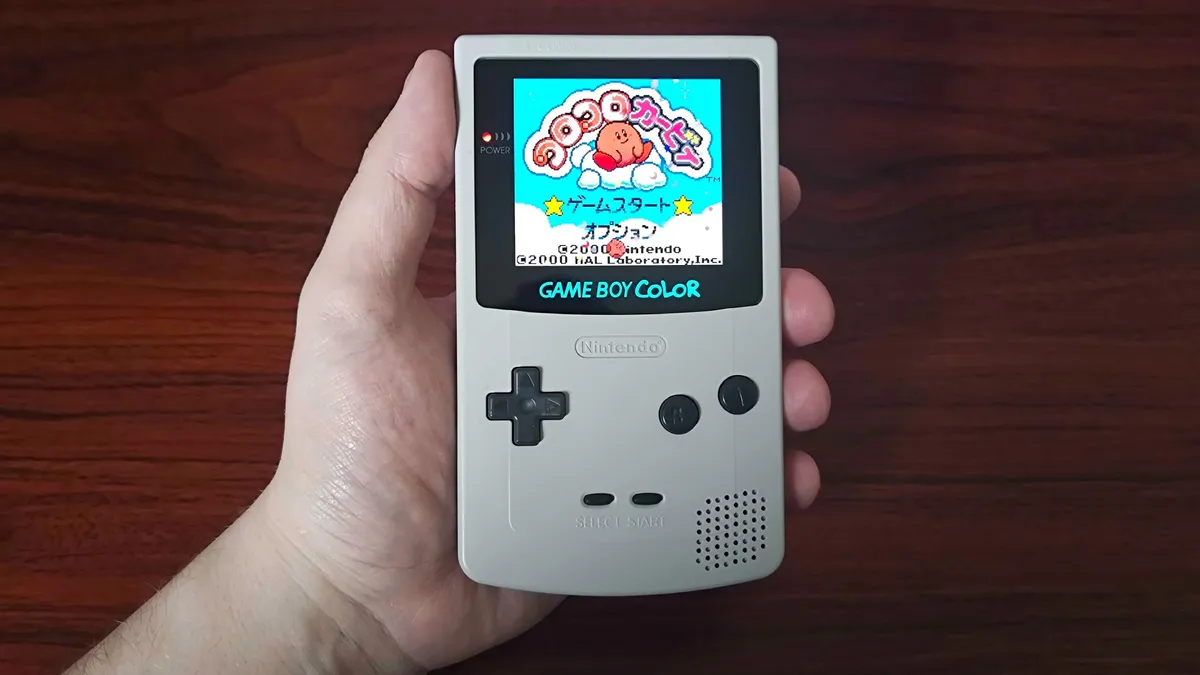
Pocket could easily allow me to decide on a whim whether I'm going to tackle my GBC backlog or return to some of my favorite Sega Game Gear games, not to mention I can dip my toes into 2000s GBA classics if I want to switch decades. At the same time, I'm tempted to choose my original Game Boy Color with AMOLED screensince it might help my brain imagine that this actually happened in 1998. This particular mod isn't all that difficult if you have the original laptop, especially if you choose a replacement case with the right cutouts, and it really helps the Ninty laptop look stupidly bright.
Not all of my options are Nintendo-centric, as I also constantly have Super pocket in my backpack. Blaze's budget Evercade console uses cartridges to run over 500 different arcade classics, from NES ports to indie releases and even 3D adventures like Tomb Raider and Soul Reaver, thanks to beefier Giga carts. If I get the urge to play some of the latest Eidos greats, I might even consider bringing the Evercade EXP-R since its horizontal design is better suited to that era of gaming, but will be harder to hide behind the dinner table.
It's worth noting that I won't just take my laptop to any parties or parties. At the risk of sounding disgruntled, I've attached a Tamogitchi to the carabiner (I have matching trousers for the Starry Night version, don't judge) and I've got an iPod Classic ready to replace Spotify. I've actually been discussing turning the Abnernic portable into an MP3 player since that's an option, but I haven't experimented with it enough yet. Let it be known that I was going to stick with the 90's theme even with the music and bring along my Sony Discman, but alas my CD collection is in storage.

Ultimately I'll go with either the Analogue Pocket or the AMOLED Game Boy Color, and that's partly because I want to take the Game Boy camera with me (mostly for the sake of time). There's nothing more 90s than the annoying life of my parents trying to take their terrible 2-bit photos, and I can't imagine anything more off-grid than printing photos on thermal paper using a Ninty printer.
There is no right way to spend Christmas offline.
Trust me when I say that my holiday anti-Internet ramblings don't have to be the Bible. All I want to do is inspire you to experiment with modern ways of using retro consoles and give yourself a break from online, especially as gaming moves towards an all-digital future.
I also want you to implement some of these ideas in 2026, as going back to old technology may help you start a hobby in the new year. I'll be diving deep into retro console building from parts old and new here, covering everything from the latest mods to shiny new handheld emulators, and even giving tips on how to look for older hardware like CRT TVs (watch this space).
If you do end up spending your free time over the holidays using offline technologies, or you already have plans, I'd love to hear all about them. Just be sure to wait until after the holiday season to leave a comment, lest you be sucked back into the modern world of the internet.
Merry Christmas and may all your PS1 games load smoothly.
Stick to modern devices? Swing by best gaming pocket pc options for powerful portable PCs and new consoles. If you already have Valveportable, check out best accessories for steam deck And best steam decks for inspiration when setting up.