

 Indianapolis Zoo
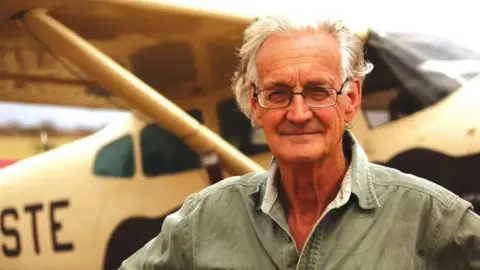
The Prince of Wales paid tribute to elephant conservation pioneer Iain Douglas-Hamilton, who died aged 83 at his home in Nairobi on Monday.
Douglas-Hamilton has dedicated his life to studying and campaigning to protect African elephants, becoming the world's leading expert on their behavior in the wild.
His pioneering research revealed the devastating effects of poaching – often at great risk to one's own safety – and was instrumental in banning the international trade in ivory.
Prince William praised the zoologist as “a man who has dedicated his life to conservation and whose work has had a lasting impact on our understanding and understanding of elephants.”
“Memories of my time in Africa with him will stay with me forever,” added Prince William, who is royal patron of the African wildlife charity Tusk, of which Douglas-Hamilton was an ambassador.
“Today the world has lost a true conservation legend, but his extraordinary legacy will live on,” charity founder Charles Mayhew said in a statement.

 Oriya Douglas-Hamilton
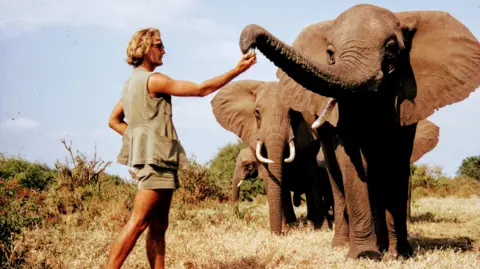
Douglas-Hamilton was born in 1942 into an aristocratic British family in Dorset, England. He studied biology and zoology in Scotland and Oxford before moving to Tanzania to research the social behavior of elephants.
It was there, in Lake Manyara National Park, that he began documenting every elephant he encountered, eventually becoming so familiar with the herds that he could recognize them by the unique shape of their ears and the wrinkles on their skin.
“Elephants have a lot in common with humans,” he said in the 2024 documentary about his work, Life Among Elephants.
Friend and fellow conservationist Jane Goodall, who died in October, was featured in the documentary and said she showed the world that elephants were capable of feeling just like humans.
“I think his legacy will be that of a man who did so much to help people understand how majestic and wonderful elephants are and to learn more about their way of life,” Goodall said.
 Oriya Douglas-Hamilton
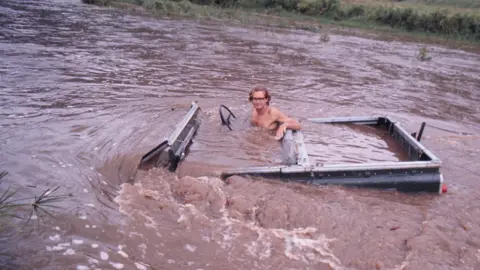
But the job wasn't always easy: he was attacked by elephants, nearly killed by a swarm of bees, and shot at by poachers. In 2010, a flood destroyed his research center in Kenya and years of work were lost.
Despite the challenges, Douglas-Hamilton remained steadfast in his mission to raise awareness of the plight of Africa's elephants, becoming one of the leading voices warning the world about the ivory poaching crisis, which he called an “elephant holocaust.”
He later advocated for an international ban on the commercial trade in ivory, and in 1989 the Convention on International Trade in Endangered Species, an international agreement between governments, was signed.
After the agreement failed to completely eliminate the trade, Douglas-Hamilton turned his attention to China and the United States, the two main markets for ivory. Chinese President Xi Jinping and then-US President Barack Obama agreed to a near-total ban on its imports and exports in 2015.
In 1993, Douglas-Hamilton founded the charity Save the Elephants, which aims to protect animals and increase people's understanding of their behavior.
The organization's chief executive Frank Pope, who is also his son-in-law, said: “Ian has changed the future not only for elephants, but for countless people around the world. His courage, determination and rigor inspired everyone he met.”
In his own words, Douglas-Hamilton expressed optimism about the future of his life's work.
“I think my greatest hope for the future is that an ethic of human-elephant coexistence will be developed,” he once said.
Ian Douglas-Hamilton is survived by his wife Oria, children Saba and Dudu and six grandchildren.



