

Paris – French politicians were divided on Monday over how to pay tribute to the late Brigitte Bardot, who, despite her on-screen legend, sparked controversy and condemnation in later life for her far-right views.
Movie star died on Sunday at the age of 91 houses in the south of France. Following this announcement, media outlets around the world circulated her iconic images and tributes.
Bardot rose to fame in the 1956 film And God Created Woman and appeared in some 50 films, but turned away from acting in 1973 to devote herself to animal rights activism.
But her links to the far right have sparked controversy.
Bardot has been convicted five times of inciting hatred, mostly against Muslims but also against residents of the French island of Reunion, whom she called “savages.”
She died before dawn on Sunday morning with her fourth husband, Bernard d'Ormal, a former far-right adviser, by her side.
“She whispered a word of love to him… and disappeared,” Bruno Jacquelin, a spokesman for her animal welfare fund, told BFM TV.
French President Emmanuel Macron called her a “legend” of 20th-century cinema who “embodies the life of freedom.”
MIGUEL MEDINA/AFP via Getty Images
Right-wing politicians praise Bardot
Far-right figures were among the first to mourn her.
Marine Le Pen, whose National Rally party is leading in the polls, called her “incredibly French: free, indomitable, whole.”
Bardot supported Le Pen for president in 2012 and 2017 and called her a modern-day “Joan of Arc” who she hoped could “save” France.
Conservative politician Eric Ciotti has proposed holding a national farewell similar to the one organized for French rock legend Johnny Hallyday.
He launched an online petition that had just over 7,000 signatures on Monday.
AP 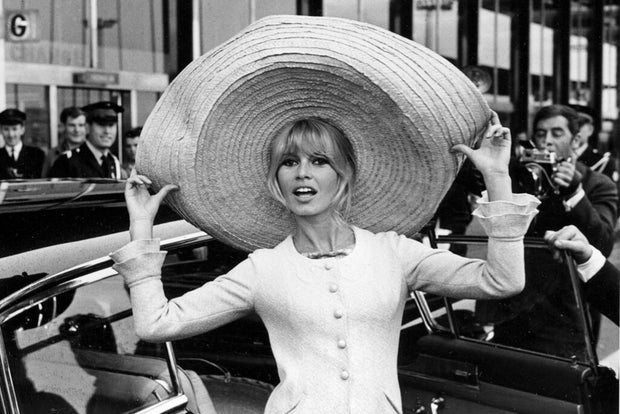
Leftist politicians temper praise, some harshly criticize
However, few left-wing politicians spoke about Bardot's demise.
“Brigitte Bardot was an extraordinary figure, a symbol of freedom, rebellion and passion,” senior Socialist Party lawmaker Philippe Brun told Europe 1 radio.
“We're sad that she's gone,” he said, adding that he doesn't mind national veneration.
But he hinted at her controversial political views.
“As for her political commitments, there will be plenty of time to talk about them in the coming days and weeks,” he said.
Communist Party leader Fabien Roussel called Bardot a divisive figure.
But “we all agree that French cinema created BB and made it shine around the world,” he wrote on X.
MP Sandrine Rousseau of the leftist Green Party was more critical.
“Moved by the plight of dolphins, but remaining indifferent to the deaths of migrants in the Mediterranean – what level of cynicism is this?” she joked on BlueSky.
Bardot's remarks at her funeral raised some eyebrows.
Bardot said she wanted to be buried in the garden with a simple wooden cross over the grave, as was the case with her animals, and wanted to avoid “a crowd of idiots” at her funeral.
Such burial is possible in France if local authorities give permission.
Saint-Tropez officials said Monday that Bardot will be buried in a seaside cemetery, without giving a date.
Bardot was born on September 28, 1934 in Paris and grew up in a wealthy, traditional Catholic family.
Married four times, she had a child, Nicolas-Jacques Charrier, with her second husband, actor Jacques Charrier.
After retiring from acting, Bardot returned to her home in Saint-Tropez to devote herself to animal rights.
Apparently her calling came when she encountered a goat on the set of her latest film, The Cautionary and Joyful Story of Colino. To save him from death, she bought the animal and kept it in her hotel room.
“I'm very proud of the first chapter of my life,” she told AFP in a 2024 interview on the eve of her 90th birthday.
“It gave me fame, and that fame allows me to protect animals, which is the only cause that really matters to me.”



