

Katie WatsonAustralia Correspondent, Perth
 Getty Images
Wednesday evening became a ritual for 15-year-old Sadmir Perviz. It's a long walk from his home in Perth to Fiona Stanley Hospital, but he says it's worth it to sit down to play Dungeons and Dragons with people he may not know but has a lot in common with.
Sadmir and his fellow board gamers are just some of the 300 patients at the gaming disorder clinic, Australia's only public facility of its kind that helps patients wean themselves off excessive online gaming habits.
The room where they meet is a simple room in a faceless hospital, but there is a pile of board games on a chair in the corner. Jenga, Uno and Sushi Go are also popular choices in the informal group, attended by both patients and doctors.
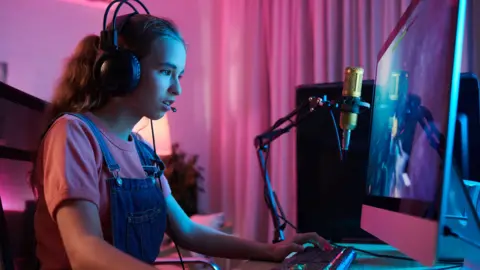
This is a little different from the 15-year-old who, just a couple of months ago, preferred to play games with friends online for 10 hours a day.
“It’s a completely different feeling,” says Sadmir. “Instead of pressing a button, you can roll the dice. You can interact with people so you actually know who is there rather than just talking to random people on the phone.”
Dr. Daniela Vecchio, the psychiatrist who opened the clinic, says that while the games themselves are not bad, they can become a problem – even an addiction.
Gaming platforms and social media pose similar risks for children: excessive time spent online and potential exposure to predators, harmful content or bullying.
So she questions why gaming platforms were not included in Australia's “world-first” social media ban for under-16s.
The ban, which came into force on Wednesday, would prohibit teenagers from having accounts on 10 social media platforms, including Instagram, Snapchat and X. Children would still be able to access platforms such as YouTube and TikTok, but without accounts.
For Vecchio, the lack of gaming platforms is strange.
“It doesn't make much sense,” she says.
“Gaming and social media are so interconnected that it is very difficult to separate them.
“A person who spends too much time playing games also spends too much time on social media, where they can see other players or live stream games, so that’s a way to communicate.”

Sadmir, for example, spent most of his time on the gaming platform Steam, as well as on YouTube. Dr Vecchio singles out the Discord and Roblox platforms as being of particular concern – a concern shared by many experts and parents the BBC spoke to in its coverage of the ban and its consequences.
Both Roblox and Discord have been dogged by allegations that some children are being exposed to explicit or harmful content through them and are facing child safety lawsuits in the US.
Roblox new age assurance features introduced in Australia and two other countries weeks before social media bans come into force, with checks due to be extended to the rest of the world in January. The checks “will help us ensure a positive, age-appropriate experience for all Roblox users,” the company said.
Discord age checks have also been introduced announced some features earlier this year, and on Wednesday said it was introducing a new “teens by default” setting for all Australian users.
“The Wild West of Internet Use”
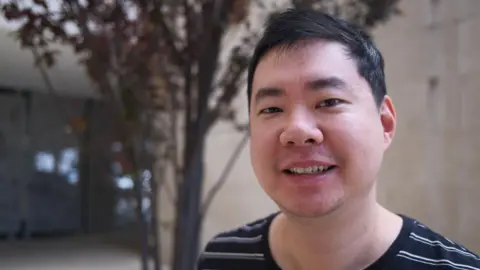
Former gaming clinic patient Kevin Koo, 35, wonders whether the social media ban could have affected the access he gained at a younger age.
“I grew up in the Wild West of Internet use, so there were no restrictions,” he says. “Essentially, I was given complete freedom to operate on the Internet. So I think for me the damage is already done.”
A former quantum finance intern with an interest in artificial intelligence, Mr. Koo lost his job shortly before the pandemic. Living in Sydney, he had no family nearby and no regular job. He says he lost confidence and ended up getting addicted to online gaming, likening his experience to substance abuse.
Dr. Vecchio agrees with the comparison: If she had her way, she would be tempted to not just extend the social media ban on gaming, but also raise the age to 18.
Gaming disorder is now recognized as an official diagnosis by the World Health Organization and, according to a 2022 Macquarie University study, affects around 2.8% of Australian children. Vecchio believes the number of people at risk is higher.
The Australian government says its ban is aimed at protecting children from harmful content, cyberbullying, online surveillance and “predatory algorithms”, among other things – some or all of which could arguably be said to exist on gaming platforms.
The Australian Federal Police are among those who have warned that chat rooms on these sites are breeding grounds for radicalization and child exploitation.
But as the eSafety Commissioner said last month, the legislation enforcing the ban meant the platforms were not selected according to an “assessment of safety, harm or risk”.
Instead, platforms were selected based on three criteria: whether the sole or “important purpose” of the platform was to enable social interaction between two or more users; whether it allows users to interact with some or all other users; and whether it allows users to post messages.
Exceptions have been made for games, for example, since their primary purpose is not social media-style interaction.
The law, according to some experts, makes no sense.
“It's incompetent and reactionary,” says Marcus Carter, professor of human-computer interaction at the University of Sydney.
“Social interaction is not a bad thing… There are a lot of probably valid concerns about these big tech platforms and what they provide children with and what they expose them to, which is why we said we are banning social media as a result.
“I just wish the government would try to figure out how to help instead of putting a Band-Aid on a bullet wound,” he says.
Tama Leaver, professor of internet studies at Curtin University and principal investigator at the ARC Center of Excellence for Digital Children, also says social media bans are too blunt a tool – a more nuanced approach is needed instead, including targeting gaming platforms.
“There is such a wide range of games in incredibly positive, caring, fun, creative and expressive spaces – something like Minecraft comes to mind, where it has had so many positive uses.” However, platforms like Roblox are at the other end of the spectrum, he says.
“Roblox is not a game. It's a series of tools that allow other people to create games. And we know that some of the games that are being made that clearly feel like they're aimed at adults are accessible to very young people.”
On Professor Leaver's desk at the university are three plush toys with ChatGPT built inside. The box says it's for three people and up. According to him, this has gone too far.
“I think there needs to be age-appropriate regulation,” he says, referring to young people going online. “I do think we've reached a point, and it's not just Australia, if you look across the EU, there's a huge appetite for all kinds of regulation.”
A treatment plan, not a cure
In the case of Ku, for example, his vice was not only about games. These were artificially intelligent chatbots, another feature of online life that has come under scrutiny for everything from making things up to allegedly incites children to commit suicide.
There is evidence that they are designed to manipulate users into prolonging their interactions, and their use has even led to a new phenomenon called AI psychosisin which people increasingly rely on artificially intelligent chatbots and then become convinced that something imagined has become real.
Mr Koo also began Googling information about his mental health problems and relying on artificial intelligence to confirm his diagnoses.
“You Google things that you think you already know, and then you check a box after that and say, 'Oh, I've already done my work for today, my therapeutic work with ChatGPT,'” he says. Mr Koo had a psychotic episode and after extensive therapy with a professional, he is now taking a different approach.
“I might Google something or chat on ChatGPT and then check it out with my GP in person,” he says. “I really think being able to read people's emotions and talk to someone face to face is completely different.”
The government has said it will continually review the list of banned platforms and in late November added Twitch, a streaming platform where people typically play video games while interacting with viewers.
Communications Minister Anika Wells also told the BBC last week that the eSafety Commissioner is “definitely keeping an eye on Roblox.” And, she said, banning social media “is not a cure, it is a treatment plan” that will “always evolve.”
The demand for platforms that will perform better is growing. The same goes for families waiting for help at the gaming disorder clinic, but Vecchio has to turn them away.
“[The legislation] eliminates platforms where children interact with many other people, some of whom may be people who could harm them,” Vecchio says. “Children need to be protected, they need to be protected.”



