

When it comes to apocalypses, Hollywood tends to be more interested in what happens next than in the grimness of the actual event that led to the destruction.
From George Miller (Mad Max) to George Romero (Dawn of the Dead), films fixate on humanity's brutal antics after a nuclear holocaust/zombie outbreak/pandemic somehow turns Earth's landscapes into devastated wastelands.
Kathryn Bigelow (Zero Dark Thirty) takes on the challenge of tackling the event itself in her film House of Dynamite, currently streaming on Netflix. At a time when the world is heading toward even greater instability, Bigelow is here with a sober reminder: Guess what? Nuclear annihilation is still on the agenda.
Crisis? The nuclear missile was launched under the radar of American observers. The bomb is headed for the heart of the United States, and there is little time to try to intercept it, and even less time to find out who exactly launched it.
The film is divided into three parts, covering the same countdown from three different perspectives.
Captain Olivia Walker (Rebecca Ferguson), the duty officer at the White House Situation Room, Secretary of Defense Reed Baker (Jared Harris), and finally the President of the United States (Idris Elba) take turns dealing with the situation. Each character takes center stage, allowing the ramifications of one flying missile to ripple through their worlds.
Unlike Bigelow's Zero Dark Thirty, which depicts the hunt for Osama bin Laden after the 911 attacks, it is a work of fiction. But Bigelow's approach is the same, in which the general crisis is interspersed with smaller personal dramas – pregnancy, a sick child, separation.
The fact that Bigelow doesn't give us the usual resolution is a little shocking, like someone forgot to do a third act. It doesn't quite work, but it's a jolt that forces us to think personally about the issue, starkly asking the question: Where can we go next?
1964 was a banner year for films about the madness of nuclear war. In January, Stanley Kubrick's classic satire Dr. Strangelove premiered (streaming on Prime), followed nine months later by Sidney Lumet's drama Insecurity (available on Apple TV and YouTube), adapted from the novel of the same name by Eugene Burdick and Harvey Wheeler. Strangelove was inspired by the serious book Red Alert by Peter George, but Kubrick and satirist Terry Southern turned it into a dark comedy.
Fail Safe bombs, which shouldn't be held against it. This is a terrifying thriller in which Lumet skillfully builds tension as a technical glitch causes American bombers to attack Russia. It's safe to say that this is something of a template for a Bigelow film, including scenes in which members of the inner circle use information to try to save loved ones from danger. The film's conclusion, in which the US President (Henry Fonda) sacrifices the American homeland to avoid all-out war, is devastating. But the devil is in the details, namely the unearthly screech of a melting plastic phone that, to those on the other end of the line, is a sign that a bomb has gone off.
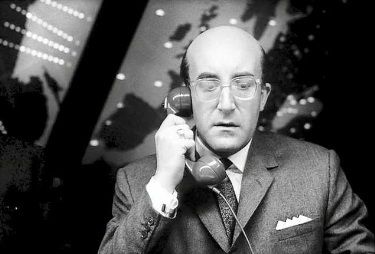
Dr. Strangelove tells much the same story through a comic filter: mad General Jack D. Ripper (Sterling Hayden) orders bombers to attack Russia to end a Communist fluoridation plot. The President and the Joint Chiefs of Staff meet in the war room to prevent disaster, but once again a lone bomber breaks through to carry out his mad mission.
But, of course, this is a farce, in which most of the characters are depicted as caricatures of political and military figures. Note the outstanding performances by George C. Scott as General Buck Turgidson and Slim Pickens as bomber commander Major Kong. But it is Peter Sellers who takes charge in the three roles. In Terry-Thomas mode, he plays the British exchange officer Mandrake, almost directly playing the role of US President Merkin Muffley, an old-school liberal, and, finally, the former Nazi Dr. Strangelove, an adviser to the President, fighting with his own hand. (This is Sieg Heil against his will and even trying to strangle himself – a brief metaphor for the gravitational pull of the entire film towards self-destruction.)
With a powerful madman driven by belief in a conspiracy theory and a crazy Russian military scheme that guarantees mass destruction, Dr. Strangelove may still be the most realistic scenario of the three.



