

To predict what Android phones will look like in 2026, I'm not looking at last year's phones. I'm looking at the best phones of 2024. Typically the development cycle for phones is 18 months, so this year's new phones will be based on the best phone of the second half of 2024 – iPhone 16 pro. This iPhone brought us a major innovation from Appleand I hope this year Android finally steals the huge feature that Apple screwed up.
The iPhone doesn't change often, so adding or removing a button is important. Major iPhone redesigns usually occur at least five years apart. iPhone 4 improved the design. iPhone x (ten) finally removed the Home button. Then iPhone 15 pro changed the mute switch to an action button.
None of these changes excited me as much as the 2024 rumors. The iPhone 16 Pro now has a camera control feature. I've been hoping for a proper camera button on my phone for years—decades, even. I'm sure the right shutter button will help improve your phone photography.
Unfortunately, what Apple gave us in 2024 did not live up to my expectations. Camera control is a failure. I never use it, not on purpose. I accidentally press it every day. If it worked the way I hoped, I would use it often, but Apple failed to create a proper shutter button.
Here's How the Camera Control Button Would Work If Apple Did It Right

When you use a real camera, the shutter button works like this: First, you hold the button halfway until you feel a little resistance. Pressing the button halfway forces the camera to focus. Then you squeeze the remaining part to take the photo.
This is exactly how the Apple camera control button is supposed to work. It doesn't, so you don't get the biggest benefit of the shutter button: stability.
Hands move and shake. Cameras take photos in a tiny fraction of a second – 1/30th of a second is relative slow camera shutter speed – so slight movement is not noticeable. Pressing the camera button moves your phone significantly.
Instead of a shutter button, we get… zoom controls? On an iPhone?!
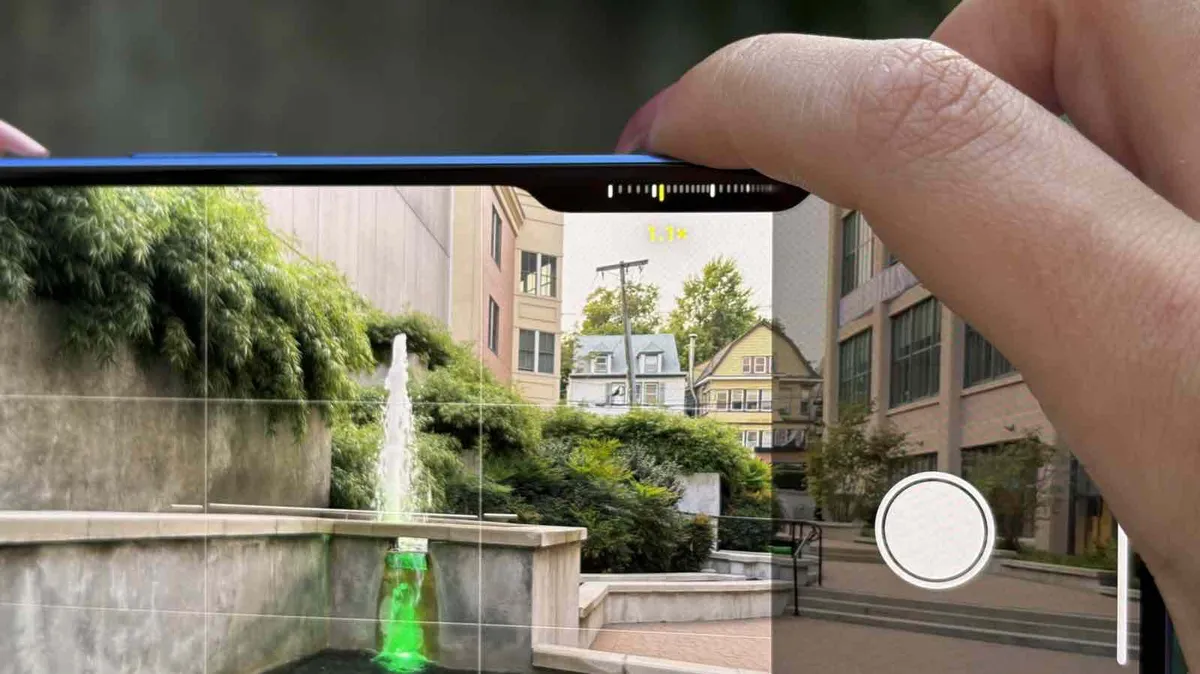
Let's return to the iPhone 16 Pro. There had been rumors of a camera control button for months before, and I was hoping it would be an actual shutter button—press to focus, then press a little more to take a photo. It wasn't even close. At launch, focusing was not one of the camera control functions; it was added later. By that time I had already given up on the unsuccessful Apple button.
What does Camera Control do instead? Nothing that worries me. It can zoom in and out, adjust exposure settings, or switch between camera lenses. It can change the style in strange, Apple-specific ways that are hard to explain. All these tools are useless nonsense compared to a real shutter button that helps me stabilize focus.
I really hope Android phone makers get this right. Google surprised us this year by adding MagSafe compatible magnets to its kit. Google Pixel 10. I really wish they took inspiration from Apple and stole the camera button, but did it right. I can also imagine OnePlus making the shutter button a key feature in the upcoming OnePlus 16although we won't see this phone until late 2026.
Samsung should bring back its iconic phone-camera combos

I hope so even more Samsung will come with the camera buttons because Samsung knows how the phone and camera can work together. When Samsung had its own Camera division making standalone cameras (it still makes sensors and other camera parts), the company created a combo device that put a real camera with a long zoom range on the back of a Galaxy S phone.
The first of them was Samsung Galaxy Camera. It was big and clunky, but it was an incredibly innovative way to share digital photos in the early days of social media. The next stage was Galaxy S4 Zoom. It was overpriced, but still a cool concept. Galaxy owners got a real zoom camera with a large pop-up lens that could be carried in their pockets.
Image 1 from 3


Samsung knows how to combine camera and phone, and does it right – better than Apple. I'd like to see Galaxy S26 Ultra with a real shutter button – one that I can press halfway to focus and then press to take a photo. I'd be even more excited to see the Galaxy S26 Zoom, which brings back the concept of stacking, using today's higher-end Samsung Galaxy phones as a base.



