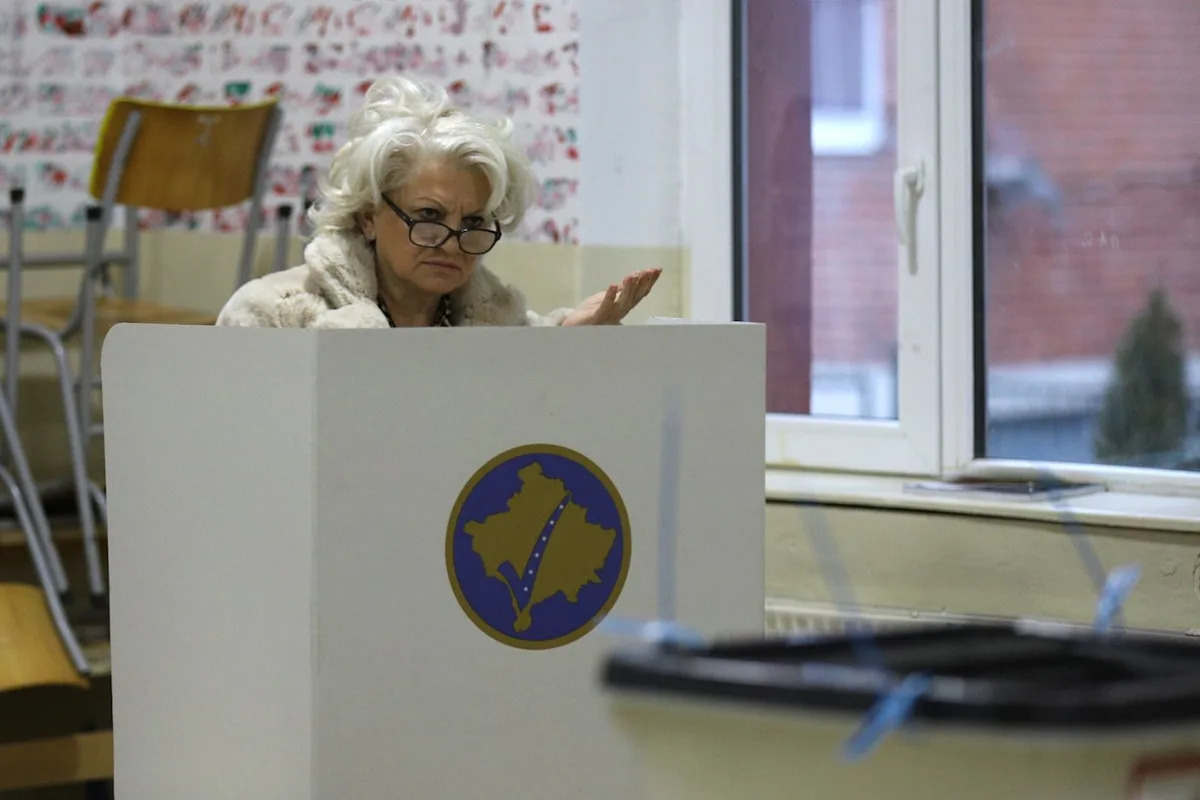
PRISTINA, Kosovo (AP) — Voters in Kosovo cast ballots Sunday in early parliamentary elections hoping to break the political deadlock that has gripped the small Balkan country for much of this year.
The early vote was called after Prime Minister Albin Kurti's ruling Vetevendosje (Self-Determination) party failed to form a government despite receiving the most votes in the February 9 elections.
The impasse marked the first time Kosovo has failed to form a government since it declared independence from Serbia in 2008 following a 1998-99 war that ended with NATO intervention.
The prime minister's party is again the favorite in the race, but it is unclear whether it will win a majority in the 120-member parliament this time after the other main parties abandoned the alliance.
Under Kosovo's election laws, 20 seats in parliament are automatically allocated to representatives of ethnic Serbs and other minority parties.
Another inconclusive vote will further deepen the crisis. Kosovo has not approved a budget for next year, raising fears of possible negative consequences for the already poor economy of the country of 2 million people.
Lawmakers are also set to elect a new president in March, as current President Vjosa Osmani's mandate expires at the beginning of April. If this fails, another early election will have to be held.
The main opposition parties are the Democratic League of Kosovo and the Democratic Party of Kosovo. They have accused Kurti of authoritarianism and alienating Kosovo's allies in the US and European Union since he took power in 2021.
A former political prisoner during Serbia's rule in Kosovo, 50-year-old Kurti took tough position in negotiations mediated by the European Union on the normalization of relations with Belgrade. In response, the EU and the US introduced punitive measures.
Kurti promised to purchase military equipment to improve security.
No reliable pre-election opinion polls were published. Kurti's party had won about 42% of the vote in the previous elections, while the two main rival parties together had about 40%.
Analysts say even the slightest change in Sunday's numbers could prove decisive for the future distribution of power, but nothing is certain.
Ilmi Deliu, a 71-year-old retiree from the capital Pristina, said he hoped the elections would bring change, otherwise “we will be in the abyss.”
“Young people don’t want to live here anymore,” he said.
Tensions with restive ethnic Serbs in the north have risen sharply in clashes in 2023 when dozens of NATO-led peacekeepers were injured. As a positive step, ethnic Serb mayors came to power peacefully this month after a municipal vote.
Kurti also agreed to accept migrants from third countries deported from the United States as part of President Donald Trump's administration's crackdown on immigration. One migrant has arrived so far, authorities told The Associated Press.
Kosovo has one of the poorest economies in Europe. It is one of six Western Balkans countries aiming to eventually join the EU, but both Kosovo and Serbia have been told they must normalize relations first.
Zana Cimili, Associated Press