

In case after case, the judge’s ruling was the same: “appeal dismissed.”
Drivers filed in and out of Justice Lori Anne Thomas’s Toronto courtroom at the end of November, often seemingly confused about why they had been summoned, as officials worked to clear a backlog of traffic cases the likes of which have tied up the justice system for years.
With each case, a familiar pattern emerged: paralegals had entered guilty pleas for their clients’ traffic infractions and then filed appeals that were never advanced, leaving the cases in limbo. As municipal prosecutors pored over the case details, it became clear that many involved the same man: Adelin Mocanu.
It wasn’t the first batch of the Concord-based paralegal’s cases to occupy the courts. For months, Mocanu’s former clients have been summoned from across the GTA by the dozens to address unresolved appeals, while others — some, unknowingly — have been hit with steep fines and suspended licences. In June, a judge in Toronto dismissed more than 200 of the “sham” appeals filed by Mocanu and his company Ticket Justice, calling the scheme an “abuse” of the system.
As the fallout reverberates through the courts — sparking calls for regulatory crackdowns and legislative reform — a Star investigation has uncovered new details of the operation, and what appears to be a cottage industry of unlicensed practitioners charging drivers thousands of dollars to game the system on their behalf.
Interviews with former clients, court documents and regulatory rulings show that Mocanu relied on a network of third parties, including a flashy Instagram account geared to GTA car fanatics, to feed him clients. Among those third parties were two men criminally convicted in similar schemes years prior.
The details suggest Mocanu’s actions are the latest variant of a pervasive legal gambit that, for decades, both regulators and law enforcement have struggled to stamp out.
Ticket Justice and its associates “aren’t the first ones” to operate the scheme, said Jason Davie, a Toronto paralegal. Davie, who works in appeals court and has been hired by Mocanu’s former clients in the wake of the allegations, said Ticket Justice’s operation has “caused harm to (the paralegal) industry and many, many people.”
Mocanu didn’t respond to requests for comment for this story, including questions about his relationships with third-party recruiters. His financial arrangements with them, if any, remain unknown.
‘Don’t pay, call today’
What Ticket Justice’s clients knew about the operation isn’t always clear.
A handful who spoke to the Star said they only recalled making payments, often online, to third parties. Many of them said they never realized their case had been passed off to Mocanu.
According to an August court ruling examining the “sham” appeals, once a client was retained, Mocanu’s scheme took advantage of Ontario regulations dictating that traffic convictions and subsequent demerit points can only be applied to drivers’ records for a period of two years after the date of the offence. Crucially, if an appeal is filed, convictions and points are removed pending the result.
After Mocanu and his associates would enter guilty pleas — often unbeknownst to clients — and file the meritless appeals, all they’d need to do is wait. According to the August decision, Mocanu conceded there was no intention to proceed with the more than 200 appeals the judge ruled on. He was just waiting out the clock.
When all went as planned, it was the courts, not the clients, that suffered the consequences. In many cases, it appears clients were left satisfied, their convictions skirted successfully through the loophole.
It was others, in which Mocanu appeared not to put the plot into effect, that drew complaints. In those cases, Mocanu would seemingly fail to appeal the conviction altogether and clients would be hit with suspensions and fines. It’s unclear what happened differently in these cases than in those where the scheme worked.
Such was the case for Matthew Massa, a 30-year-old plumber from Etobicoke, who told the Star his case ended up being handled by Mocanu after Massa paid an anonymous online persona known only as “Angelo.”
According to multiple sources who spoke to the Star, “Angelo” is well-known to members of the GTA’s car community and a frequent presence at local meetups, where enthusiasts gather to show off and, in some cases, race custom cars. The Star’s messages to Angelo’s numbers weren’t returned.
While the Star was not able to confirm the identity of the user behind Angelo’s Instagram account, which boasts more than 25,000 followers, it’s clear from the content who the target audience is: young men who like fast cars.
Post after post shows images of sporty automobiles and lingerie-clad women, accompanied by messages such as “Call Angelo to make tickets disappear,” “No points. No stress. Just results,” and “Don’t Pay, Call Today.”

According to multiple sources, Ticket Justice operated in conjunction with an anonymous Instagram account, run by someone identified only as “Angelo.”
@trafficticketgone_905angelo
“When you’re into cars and maybe you’re not always observing the laws to a T, it’s beneficial to have somebody in your back pocket that can give you a better chance at making it through a legal challenge,” said Massa, explaining Angelo’s popularity among car buffs.
Facing a traffic infraction, Massa told the Star he hired Angelo in March 2024, thinking he was a legal professional. After he e-transferred Angelo $1,500, Massa said he received a notice from the courts notifying him he’d been convicted and had to pay a fine of $625.
According to a complaint Massa filed with the Law Society of Ontario (LSO), he demanded an explanation from Angelo, who told him that his “manager,” Mocanu, had taken over the case. Massa said Mocanu advised him the charge “was being fixed” and not to pay the fine. He obeyed.
Massa’s licence was subsequently suspended. He said Mocanu promised to have the conviction removed from his record but never did, and eventually stopped returning his messages. The experience left him worse off than if he simply paid the ticket, he said, noting his insurance premiums have risen dramatically.
“I hope the law society will actually do their job and crack down on these characters,” said Massa.
In a September filing with the law society’s disciplinary tribunal, an arm’s-length agency that oversees professional regulation of lawyers in Ontario, the LSO said it was investigating Mocanu for alleged professional misconduct in more than a dozen cases. At least one other client who lodged a complaint said they had been referred to Mocanu through Angelo’s Instagram profile.
Mocanu’s paralegal licence was suspended that same month pending the LSO’s investigation.

In June, a judge dismissed more than 200 of the “sham” appeals filed by Adelin Mocanu and his company Ticket Justice, calling the scheme an “abuse” of the system.
Facebook
Cases referred by men with criminal convictions
Mocanu also relied upon two men who had been criminally convicted in similar schemes to solicit clients.
One of those men, according to at least two complaints made to the LSO, was Nicolino — or Nick — Alessandro. Nick and his brother, Giuseppe Alessandro, have long worked on the peripheries of the GTA paralegal industry, despite never having been licensed.
The brothers entered the industry in the early 2000s, before Ontario required a licence to offer paralegal services. They ran their first company out of an office just across the street from the old Eglinton courthouse.
In 2004, the brothers were charged with forgery for altering government documents to clear convictions from more than 50 of their clients’ records. Three years later, they were sentenced to 18 months of house arrest and handed a temporary prohibition on offering legal services.
Once their sentence was served, Nick and Giuseppe opened a second operation, out of the same office. Since their conviction, the province had introduced regulations requiring a licence to practise. So they pivoted their operations, according to three former employees who spoke to the Star, hiring a handful of paralegals — some fresh out of school — to carry on operations.
Referral agents, paid weekly in cash, would approach people in the Eglinton courthouse, grocery stores and even LCBOs, promising potential clients they would “handle” their traffic tickets, according to LSO filings and accounts of the former employees.
Former client Joseph Briggs said a smooth-talking referral agent who approached him in a Pickering No Frills in 2010 convinced him to retain the Alessandros’ firm. A few days later, when he visited the office, he was taken into a back room, where Giuseppe launched into a presentation.
“He turned the lights out,” Briggs told the Star. “He had a projector. He told me a set price and, at first, I thought it was a lot — but he just kept showing me the convictions I could face and the fines that I was going to have to pay.”
The meeting lasted no longer than 10 minutes, Briggs estimates. At the end, he said, he signed the papers.
Similar to Mocanu’s scheme, paralegals on staff would then enter guilty pleas before launching appeals they never advanced, according to the complaint and former employees.
In 2014, the LSO was granted an injunction against Giuseppe, indefinitely barring him from providing legal services or recruiting cases. An identical injunction against Nick was dismissed.
It’s unclear when Nick began funnelling clients to Mocanu. According to LSO complainants, however, he referred at least one case to Mocanu’s company as recently as 2024.
Lucy Guerrero is among those who said she paid Nick — in her case, $8,000 for help with her daughter’s stunt-driving charge last fall.
While Guerrero said Nick confirmed the ticket had been taken care of and the charge had been dropped, she later found that Nick had referred the case to Mocanu’s firm, and that the offence was still on her daughter’s record.
“We had no clue there was this whole other entity that was taking care of the stuff for (Nick),” she said.
In a copy of an LSO complaint she shared with the Star, Guerrero said Nick took payment from her “under false pretences” and “defrauded” her.
Neither Mocanu nor the Alessandros responded to the Star’s inquiries on Guerrero’s complaint.

Nick Alessandro referred clients to Adelin Mocanu as recently as fall 2024.
Facebook
Meanwhile, Giuseppe, barred from referrals, also appears to have continued his work in the industry through an association called the Law Help Association, or the Law Student Union, which, according to its website, offers legal “information” to members of the public with limited financial resources by connecting them with lawyers and law students.
Giuseppe’s phone number and the address of his former legal office are listed on online profiles for the association. In a review left online for the association this time last year, a client commends her experience working with “Angelo.” The Star was unable to confirm if the Angelo in question is the same person behind the Instagram account referring clients to Mocanu.
As recently as September, the association, which also offers private detective services and plane rentals, was advertising openings for new paralegals on online job-hunting platforms.
The Star reached out to the association to seek further clarity on Giuseppe’s involvement but did not receive a response.
A ‘successor paralegal’
Clientele was also referred to Mocanu by a man named Benito Zappia, who solicited work for many years through a website dubbed “We Win or It’s Free.”
In 2019, Zappia was charged alongside three other paralegals and city court clerk Frank Rizzello in a sprawling scheme in which Rizzello was paid $50 a pop to remove convictions from more than 135 driving records of Zappia’s clients. All told, the operation cost the city an estimated $15,000 in anticipated fines, according to LSO filings.
In the end, only Zappia and Rizzello would be convicted — Zappia of obstruction of justice and fraud, and Rizzello of fraud. The charges against the other three paralegals were dropped.
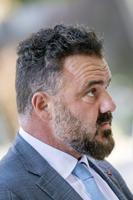
While Mocanu was never charged alongside the three paralegals taking clients from Zappia, the LSO documents state he accepted an unspecified number of referrals from “We Win or It’s Free” beginning in 2016.
The particulars of Zappia and Mocanu’s arrangement remain unclear, and the Star was not able to confirm if clients knew their cases had been referred from Zappia’s firm to Mocanu. At least one of those cases, however, became the subject of Zappia’s regulatory proceedings.
Two years later, in 2018, a fire broke out at Zappia’s office, destroying all client files on-site. As of 2021, the LSO placed his company, websites and all his former cases under trusteeship.
The Star was not able to reach Zappia. Requests for comment sent to former counsel were also unsuccessful.
‘It cannot be a coincidence’
Justin Rochester, a paralegal who teaches at three GTA colleges, said it’s “greatly concerning” that Mocanu appears to have operated his scheme, and seemingly worked with fraudsters who had supposedly been shut down, for so long.
“It cannot be a coincidence that Zappia, the (Alessandro) brothers, and this gentleman all seem to be linked,” said Rochester.
“None of it is right.”
Mocanu’s operation appears to have violated multiple law society rules, according to Rochester.
Under Ontario law, paralegals are required to ensure their clients are “100 per cent aware” if their case is referred to another licensed professional. Licensees are also prohibited from paying unlicensed individuals for referrals, and they aren’t allowed to guarantee successful outcomes, such as promising to make charges disappear.
In a June court ruling, a justice of the peace in Peel wrote that Mocanu’s scheme could constitute grounds for a criminal charge of obstruction of justice. When reached by the Star, Toronto and Peel police said they had no reports filed on Mocanu.
LSO spokesperson Jennifer Wing said the law society has taken action against those allegedly involved in the traffic ticket schemes, citing its successful efforts to bar Giuseppe, strip Zappia of his licence, and suspend Mocanu while he’s under investigation.
According to experts, the provincial government could also discourage meritless appeals by amending regulations to initiate the two-year limit for demerit points from the date of a conviction, rather than the date of the driving offence, removing the incentive to drag out the process.
A spokesperson for Ontario’s Minister of Transportation told the Star in September it was working to address the issue. As of December, no action had been taken.
Against those who aren’t licensed — like Nick Alessandro — the LSO has little recourse in terms of professional discipline. In the Alessandros’ case, for example, regulators have already exhausted many of the options at their disposal, which can include cease-and-desist letters, asking illegal practitioners to sign undertakings or seeking court injunctions. Violating an injunction can lead to fines or imprisonment.
While the LSO was previously denied an injunction against Nick, it can reapply if there are grounds to believe illegal services are being offered. The society can also prosecute illegal practice in court, with convictions carrying “significant” fines, according to its website.
Meanwhile, Wing said, “the criminal justice system is better placed than the LSO to address situations of wide-scale unauthorized practice.”
Mocanu remains prohibited from practising while under suspension. On Nov. 25, however, a former client told a Toronto court that Mocanu continued to provide him with legal advice after he was ordered to stop.
Paralegals like Mocanu “are a blight on (the) profession,” said Rochester, who believes that if the allegations against them are proven, “they should be stripped of their licence.”



