

It may look like a scene from another Jane Austen production, but it is not a set. The British city of Bath recently hosted a celebration of the writer 250 years after her birth.
This historic English town evoked the early 1800s, the period in which Austen's novels were published. Pride and Prejudice, Sense and Sensibility and Emma were among those that Ann Perng grew up reading: “The issues she talks about—economics, class, family, sisters—still resonate so much with us today.”
Matt Cardy/Getty Images
Fifteen thousand tickets were sold for this year's 10-day Jane Austen Festival, and the level of enthusiasm surprised even its organizer, Georgia Delve: “Two of her novels are based here,” she said. “So you can follow in her footsteps through the streets. You have the names of the characters on the streets, you have the places she visited. Just the feeling of being in the world that she inhabited makes it so special.”
Author Devoni Loser said: “She has written books that can be re-read endlessly.”
“Isn’t it enough to read it once?” I asked.
“Well, I don't think so. Every time you can find something new.”
Loser's connection to the author is not just professional: “My husband is also a Jane Austen scholar,” she said. “We met and quarreled over Jane Austen the day we met.”
“What a love story!” I said.
“Yes, he would say that too!”
St Martin's Press 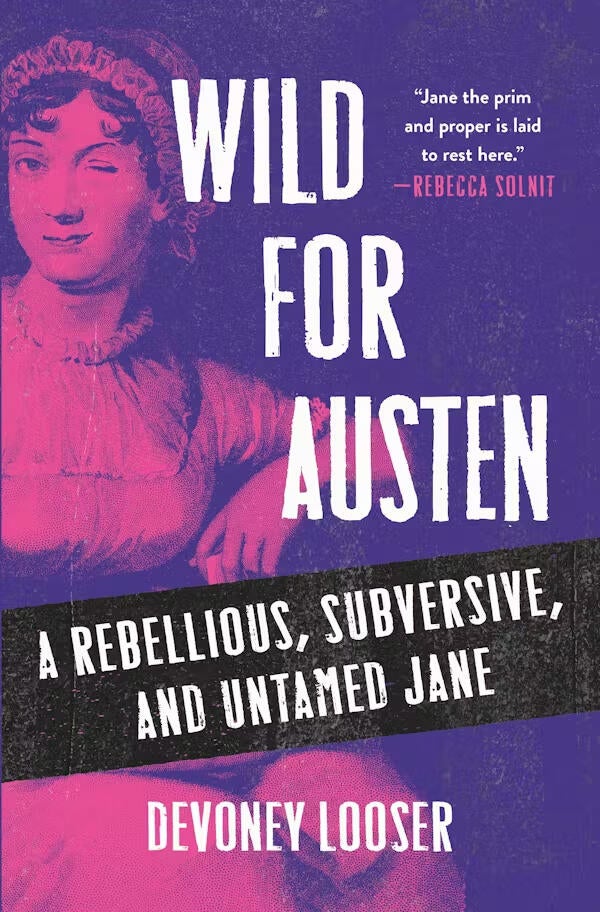
In her book “Wild for Austin” Loser argues that the author can hardly be called simple, prim and proper: “Her work has the idea that women are positively wild. Unconventional, freer, more unsophisticated and ready to combine feeling and thoughtfulness with intellectual ability. thinking“
Austin died at the age of 41 after a series of illnesses. She wrote a total of six novels (two published after her death).
Loser said, “You can read her at the word, sentence, chapter, plot, character level and appreciate what she did in terms of craft. And on top of that, they're funny and incredible pieces of social criticism.”
Last summer, at the University of Southampton in England, scholars and enthusiasts met to discuss all things Austen.
In the university's collections, among the seven million manuscripts and printed books, head of archives and special collections Karen Robson provided us with an excerpt from the first edition of Austen's Emma, printed in 1816:
“Emma Woodhouse, beautiful, intelligent and rich, with a comfortable home and a happy disposition, seemed to combine in herself some of the best blessings of existence; and lived in peace for almost twenty-one years, and little upset or irritated her.”
“Happy Emma,” I said. “You get so much in that first sentence.”
“Absolutely,” Robson said. “She’s a wonderful wordsmith.”
CBS News 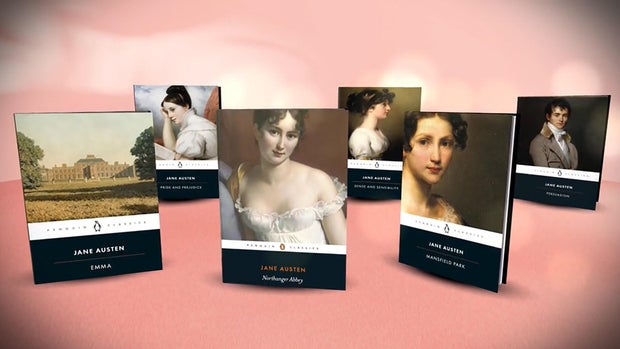
Loser said: “She publishes the first book, Sense and Sensibility, 1811, as a 'woman's book.' And after that, as “the author of Sense and Sensibility.”
“She didn’t put her name in the books? Why?” I asked.
“Because novels were not considered high art in that period. They were still considered kind of a trashy genre,” Loser said.
“So she didn’t want to be associated with it?”
“She died before we knew if she ever decided to put her name on anything,” she said.
Loser compares Austen to Shakespeare, with a staying power that is evident in the many films and miniseries based on her novels. Then there are Austen-inspired works like The Jane Austen Book Club and Clueless (based on Emma).
We visited the set of another spin-off, The Other Bennet Sister, based on Janice Hadlow's 2020 novel, which centers on the oft-overlooked middle sister Mary from Pride and Prejudice. “I think she feels like a very modern heroine,” said Jane Tranter, executive producer of the BBC/Britbox series. “This is not a classic boy-meets-girl story.”
CBS News 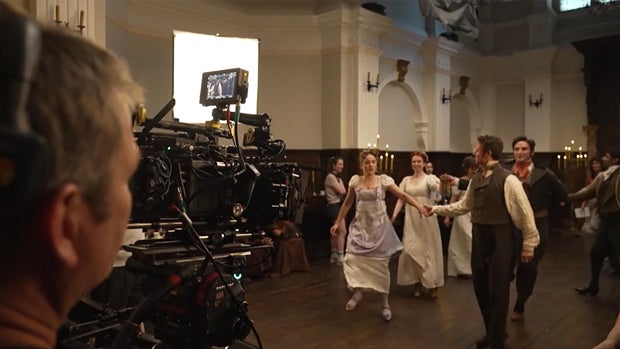
So why do we see so many adaptations of Austen's works? “Jane Austen is an absolute master of the slow-simmering love story, all very appropriate, but sort of simmering beneath the lines of society,” Tranter said. “And we love it. And I think we love the period details.”
This was clear in Bath, where the past was very much alive and where its 250th anniversary was celebrated.
Asked why Austen's work has survived, Loser replied: “Because it's brilliant. Right? I mean, I think that's the glib and simple answer: because they're brilliant.”
For more information:
- Jane Austen FestivalBath, UK
- janeausten.co.uk
- “Wild for Austen: Rebellious, Subversive, and Wild Jane” By Devoni Loser (St. Martin's Press), in hardcover, eBook and audio formats, available online Amazon, Barnes and Noble And Bookstore.org
- Global Jane Austen: Celebrating and Celebrating Jane Austen's 250th Anniversaryat the University of Southampton, England
- The Other Bennet Sister will premiere in 2026 on BBC One and Britbox.
- Jane Austen Society of North America
- janeausten.org
The story was produced by Michaela Bufano. Editor: Georgy Pozderek.
See also:



