

Michelle RobertsDigital Health Editor
 Getty Images
People who get cosmetic filler injections into the face should be warned about the risk of a dangerous complication involving clogged arteries, which can lead to skin loss and even blindness due to impaired blood flow, experts say.
Researchers used ultrasound to study 100 cases of failed filler injections.
Clinics now recommend performing an ultrasound examination before injecting dermal fillers onto the face to avoid damaging nearby arteries.
Lead researcher Dr Rosa Siegrist says that while such cases of “vascular occlusion” – where filler is injected into or too close to blood vessels – are rare, they can have devastating consequences as they can cause tissue death and facial deformation if left untreated.
Dermal fillers are injectable substances commonly used to smooth wrinkles and smooth or “rejuvenate” the skin.
They are sometimes used to contour or shape the nose or lips.
According to Dr. Sigrist, the areas around the nose are particularly dangerous places to inject because the nasal blood vessels communicate with some very important parts of the head.
Damage to these vessels can cause serious complications, including skin damage, blindness and stroke, she said.
Dr. Sigrist's team from the University of São Paulo in Brazil studied vascular complications associated with fillers in 100 patients at four radiology centers (two in Brazil, one in Colombia and one in Chile), one dermatology center in the Netherlands and one plastic surgery center in the United States between May 2022 and April 2025.
Her work will be presented at the medical conference – annual meeting Radiological Society of North America – This week.
In just under half of the cases, ultrasound scans showed a lack of blood flow to the small blood vessels that connect the superficial arteries to the deep arteries of the face.
Moreover, in a third of cases there was no blood flow in large blood vessels.

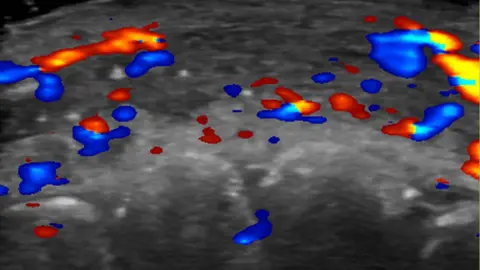 Rosa Maria Silveira Siegrist, MD and RSNA
First and foremost, to avoid complications, she advises clinics to use ultrasound to plan the injection site.
If complications do occur, ultrasound can indicate where to treat.
“If injectors are not guided by ultrasound, they treat based on clinical evidence and inject blindly,” says Dr. Siegrist.
“But if we can see the ultrasound results, we can pinpoint the exact location where the occlusion is occurring.”
Instead of filling the area with a drug called hyaluronidase to dissolve the filler, doctors can do guided injections that use less hyaluronidase and provide better treatment results, she said.
The British Association of Aesthetic Plastic Surgeons (BAAPS) says the use of ultrasound is increasing but is not yet routine or standard care.
Ultrasound is non-invasive, does not use ionizing radiation and has no known harmful effects.
Nora Nugent, president of BAAPS, said the technique has proven to be very useful in many areas of surgery and aesthetic procedures.
“Determining the location of blood vessels certainly provides valuable information before treatment.
“Risks like these associated with dermal fillers are one of the many reasons why we have long campaigned for greater regulation of aesthetic procedures and to limit the provision of medical procedures, such as injectable treatments, to those with medical training.”
The UK government announced this plans to introduce restrictions on cosmetic procedures.
Only “sufficiently qualified” medical professionals would be able to carry out high-risk procedures such as the Brazilian butt lift, according to the proposals.
Clinics using fillers and Botox will have to meet strict standards to be licensed.
The results of the public consultation will be published in early 2026 and will provide views on a range of procedures that should be covered by the new restrictions. Parliament will then decide what to introduce.



