

Jenny ReesWelsh Health Correspondent
Young women say they were taught in school how to open a bank account, but not how to change a tampon or spot the signs of cancer.
“As someone from an ethnic minority, in some communities it's actually a taboo subject and quite a sensitive topic to talk about, so if you can't learn about these things in school, then where will you learn them?” said 23-year-old Atika Ahmed.
She was among young people across Wales involved in the development of new school resources aimed at improving understanding of the most common women's health conditions.
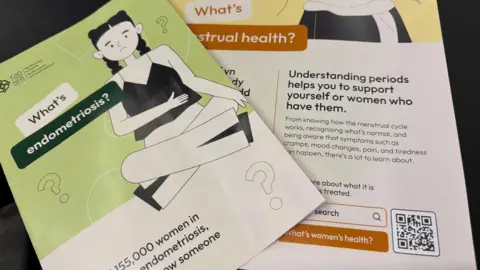
Leaflets and posters covering menstruation, endometriosis, pelvic health and menopause will be available in secondary schools.
As a member of the Cardiff and Vale Health Board's youth committee, Atika said they were able to help shape the information in these resources.
She said she was nervous about talking to her parents when she got her period at a very young age, but not being able to get support at school also left her feeling “one step behind”.
She was left with questions such as when to change the pad, what type of pad you want to use, or what types of products.
“I didn’t know the difference between a pad and a tampon,” she said.
“Simple things like hygiene will help young people sort these things out and become the confident young women they could be.”

The menstrual cycle is already a compulsory part of the curriculum in Wales, but this is the first time the material has been designed to cover conditions such as endometriosis, which affects around 155,000 women in Wales.
The resources include basic information and also direct young people to online resources such as Sexual Health Wales, Brook, Bloody Brilliant and Endometriosis Cymru.
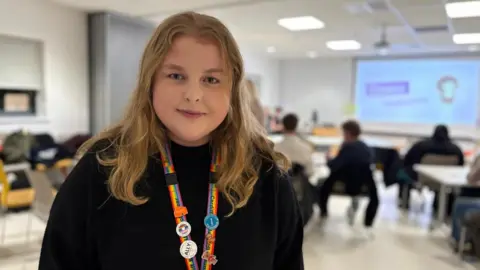
Molly Fenton is also on the youth panel and said her period was an early sign of larger health problems.
“I live with a brain tumor that affects my optic nerve and pituitary gland, the home of your hormones, and my period was one of the first signs,” she said, adding that she had her first bleed when she was six years old, before getting her period at eight.
“They really took over my life and then I lost them when I was 16, which had a huge detrimental effect on every part of my body and I live with long-term damage because of it, so my periods were a huge driving force in getting the diagnosis and support I needed.
“We still hear from so many people who can't even say the word 'period' or 'poo', for example.
“This conversation could be a start. “I have a very unique situation: not everyone will be diagnosed with a brain tumor or something really serious, but being able to have those conversations and advocate for yourself is a huge thing, and these materials should fill the gap for that to happen.”
Natalie McDonald, a public health nurse in Cardiff and Vale, says young people tend to want advice about symptoms rather than specific conditions.
She said school nurses were now receiving training on issues such as endometriosis to better guide young people, as well as reaching out to family members or teachers where necessary to help them understand the impact of the disease on young people.
“Some of the young people we see in schools quite often don't go to their GP or there are barriers.
“So we're trying to develop a therapeutic, trusting relationship so that these new resources will reinforce our message.”
The resources are a result of the Wales Women's Health Strategy, which was published a year ago.
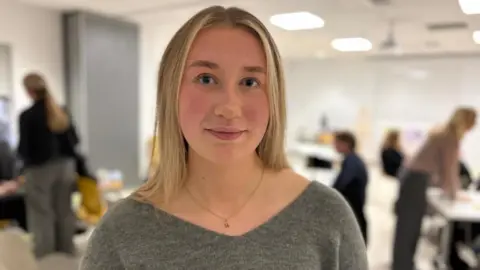
Helen, 17, said boys in the youth group had played a big role in developing the new resources, although boys and girls were still usually separated in these lessons at school.
“It's almost a stigma and you'll be listening in different rooms, which shows you think it only applies to one gender, which of course isn't true,” she said.
“Everyone has relatives who will go through this. Many people around me have endometriosis or are struggling with menopause, so a basic understanding from an early age is important.”
Sarah Murphy, Wales' minister for mental health and wellbeing, said women's health centers were expected to start operating “in the next few months”, building on existing services to “create tertiary support”.
“The biggest change we will see is training (for health workers) and a change in the way women are treated.
“This is a key part of the whole women's health strategy – not to be dismissed, not to ignore our pain and to know that these services exist and how to access them. That’s what every health commission is going to provide.”



