Winter Olympians who sign up to stay at the Cortina d'Ampezzo Athletes' Village shouldn't expect luxury accommodations or a cozy fire pit to cozy up next to after a long day on the mountain.
The temporary village, which will house up to 1,400 athletes and other team members during the Cortina Games, which take place in Milan from February 6 to 22, consists of 377 rented mobile homes located next to each other in a wet valley.
The Associated Press was the first international media outlet allowed an advance look at the site, which is in a deserted area about a 10-minute drive or an hour's walk north of Cortina's center.
The rooms are simple and spartan.
However, in exchange for convenience comes close contact with the Dolomites.
“It is located in a very quiet area of Cortina, where you have the opportunity to hear the sound of the mountains, isolate yourself if you want, concentrate if you want, or go out for a nice workout,” said Fabio Saldini, the Italian government commissioner overseeing the Games' infrastructure.
“The beauty of a village like this is that everything will be cleaned up afterwards. Nothing lasts forever; the environment will not return to its previous state, but will be improved,” added Saldini. “It’s a temporary village, but of high design.”
Providing accommodation for athletes is one of the most important responsibilities of Olympic Games organizers. This is particularly challenging for the geographically dispersed Milan Cortina Games. Cortina Trailer Park is one of the two main Olympic villages, the other being in Milan.
Winter sports hub Norway has decided to house its skiers in hotels rather than in official Olympic villages, according to Norwegian news agency NTB.
Many other countries, such as the United States and Germany, as well as hosts Italy, have said their athletes will remain in villages, although it is unlikely that alpine sports superstars Lindsey Vonn or Mikaela Shiffrin will remain in a mobile home park in Cortina.
During the Games, Cortina will host women's competitions in alpine skiing, curling, bobsleigh, luge and skeleton. The village will also be important for the Paralympic Games, which take place from March 6 to 15.
“Most countries will use the Village both for the residential part and, above all, for common areas such as the gym,” Saldini said. “Even those who live outside the Village will come here.”
Exposure to the elements
Each trailer is divided into two rooms, each of which can accommodate up to two people. Each room has a private bathroom and shower. But open the trailer door, and athletes can be greeted each morning by piercing winds or unforgettable images of the sun illuminating and reflecting off jagged mountain peaks.
Warm boots, rather than slippers, may be the best clothing for walking into a large cafeteria for breakfast. Anyone staying in the caravans on the 1.4 kilometer-long outskirts of the village will be within a 10-minute walk of the common areas, which also include a gym, games room, offices, lounge areas and laundry facilities.
During AP's visit in late November, a blizzard caused blizzard-like conditions with no permanent structures in place to block the wind.
However, February brings more hours of sunshine to the area.
The altitude in the village area is 1,292 meters (4,239 ft) – slightly higher than the center of Cortina.
“There is only forest here,” said Paride Casagrande, the village’s construction manager. “Wind is an element. But it doesn't blow all day every day. It depends on the day. There can be very cold days, but there can also be very comfortable days. But the fact remains that we are in a natural zone where it is cold.”
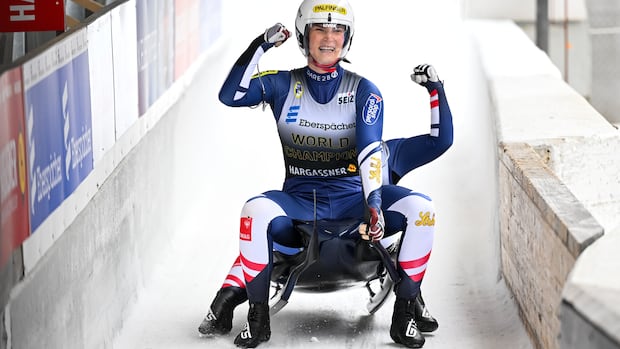
There are only a few months left until the Games in Italy, and here are all the new competitions in which the athletes will take part.
Personalized heating
When organizers of the Summer Olympics in Paris announced they would not install air conditioning in the Athletes' Village, U.S. and international teams brought their own cars, undermining plans to cut carbon emissions.
This time, no one will have to bring their own climate-controlled cars.
Each room in Cortina Village has its own heating control.
The thermostat controls a wall-mounted heating element as well as an infrared panel in the ceiling that helps maintain the temperature, both powered by electricity.
“Without a lot of power, you can get the temperature up to 25-26 degrees Celsius and that will be enough,” Casagrande said.
“But this is all subjective, given that I have seen athletes walking down the street in their underwear even though it is snowing,” Casagrande added, referring to competitors gliding around the city in test events. “The choice is up to the athletes.”
Listen to CBC Sports' video essay by Chris Jones 100 days before the 2026 Olympics.
Sleeping on wheels
Each mobile home has at least two wheels and is used only for positioning, not transportation, Casagrande said.
The houses were transported to Cortina on oversized trucks.
All rooms are approximately 18 square meters (200 sq ft) in size, with one of the two rooms in each mobile home slightly larger than the other to accommodate Paralympians.
Paralympic rooms also have showers, toilets and beds for people with disabilities.
Costs and legacy
The total cost of the village is 38 million euros (44 million US dollars).
While the mobile homes are for rent, purchasing them will cost €80,000 ($93,000).
Following the Olympic and Paralympic Games, the mobile homes will be reused in campsites across Italy, with some already earmarked for a hockey club in nearby Brunico.
The large buildings, also temporary, with a cafeteria, gym and other common areas are already heated by a thermal power plant fueled by natural gas, which also heats the village's water. Air handling units located on the roofs of buildings regulate the air.
Trees were cut down to build the village, sparking protests from climate change activists.
“Most of them were already dead,” Casagrande said. “But we also brought in new factories and [trees]. This is a natural park and we are going to leave it the way we found it.”