


Anthony ZurcherNorth America Correspondent

 BBC
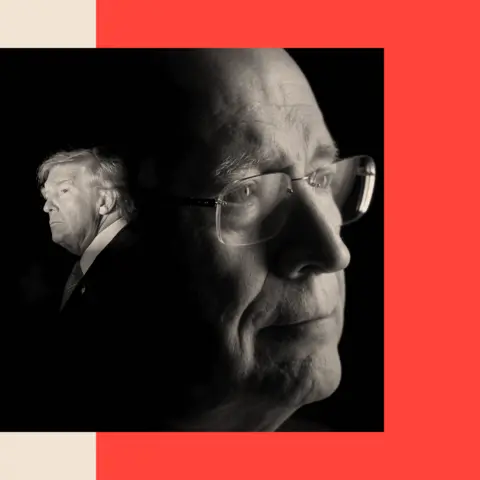
BBCDick Cheney, the former vice president who died on Tuesday, dramatically expanded the powers of the US president after the September 11 attacks. More than two decades later, Donald Trump is using the political leverage that Cheney created as a powerful tool to advance his national priorities, even as the two men have had nasty personal clashes over the leadership of the Republican Party.
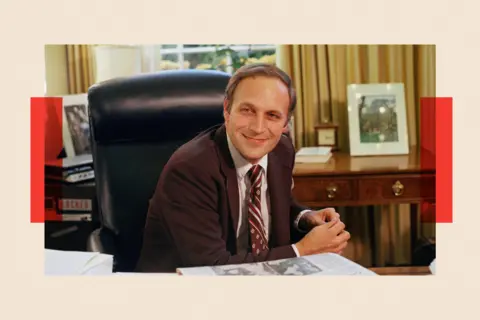
Cheney's experience in the US government dates back to Richard Nixon's White House, and he honed his theories of presidential power through decades of experience in the corridors of power in Congress and during several Republican administrations.
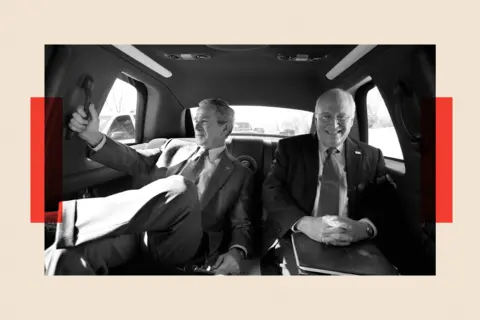
As vice president during the George W. Bush administration, he used al-Qaeda's attacks on the World Trade Center and the Pentagon—the most important moment of American national unity and clarity of purpose since Japan's attack on Pearl Harbor during World War II—to restructure the foundations of the executive branch.
“Cheney freed Bush to pursue the ‘war on terror’ as he saw fit, driven by a shared belief that government must break free from old habits of self-restraint,” writes former Washington Post reporter Barton Gellman in his 2008 book “The Angler,” about Cheney’s tenure as vice president.
 AP
APNow Donald Trump, who inherited these expanded presidential powers, is using them to further his own political agenda. The program shocked parts of the American public, as Cheney had once done, but at times it ran counter to the policies and priorities that Cheney had once espoused.
And while Trump cites “national emergencies” to justify his actions, this has nothing to do with national unity or the sense of crisis that has gripped America since 9/11.
Despite concentrating power in the White House for decades, in his final years Cheney warned of the danger Trump posed to the nation, especially after Trump's attempts to contest his defeat in the 2020 presidential election. In 2024, Cheney said he would support Democrat Kamala Harris.
“There has never been a person who has posed a greater threat to our republic than Donald Trump,” he said. “As citizens, each of us has a responsibility to put country above party affiliation to protect our Constitution.”
Trump, for his part, called Cheney “the king of endless, pointless wars that waste lives and trillions of dollars.”
How Trump is repeating Cheney's script
However, the parallels between Cheney and Trump and their expansive extension of presidential power extend across the American political landscape—in the use of American military power abroad, the ability to detain and transport noncitizens, and the development and expansion of the use of American surveillance capabilities, including a focus on perceived domestic threats.
“The president’s authority to protect our country is very significant and will not be questioned,” Stephen Miller, a longtime Trump adviser who is now deputy chief of staff, said in a television interview in 2017. This phrase could have been uttered by Cheney when he was at the top of American politics.
Although Trump has abandoned Cheney's interventionist foreign policy and the Iraq War, which he oversaw, he – like Cheney – has demonstrated a willingness to use American military power abroad in ways that often defy attempts at oversight.
He launched Bombing of Iran in Junewhich he justified with warnings of a growing nuclear threat from a regional adversary, repeating the same arguments Cheney used at the start of the 2003 Iraq War.
In recent months, the Trump administration has designated drug traffickers as “enemy combatants” and running an ongoing campaign destroying vessels suspected of transporting drugs in international waters. They say deadly military attacks are necessary to protect America's national security.
According to the Washington Post, Trump's Justice Department has informed Congress that the White House does not need congressional approval to proceed with these strikes, despite requirements governing the use of force set forth in the War Powers Resolution of 1974.
Critics have accused the Bush Cheney administration of expanding the scope of a 2001 authorization for the use of military force in the “war on terrorism” to allow U.S. military operations against suspected terrorists around the world. Now Trump is using similar means—drones and missiles—even without that thin veneer of congressional approval.
 Getty
Getty AP
APAnother key aspect of Cheney's foreign policy was his reliance on “extraordinary renditions” of suspected terrorists captured abroad or on U.S. soil to strip domestic U.S. courts of jurisdiction over individual cases.
The Bush administration built a huge facility at the U.S. military base at Guantanamo Bay, Cuba, to hold these individuals indefinitely, and struck agreements with foreign governments to set up “black sites” where interrogations could take place without judges having to assess the legality of the actions.
During his second term, Trump took similar steps to avoid judicial review of his efforts to detain and deport undocumented migrants on U.S. soil. He expanded the detention facility at Guantanamo Bay to include deportees and entered into agreements with foreign governments to accept deportees.
Although some U.S. courts have issued injunctions to halt removals, they have had limited ability to consider the merits of such actions.
“The Constitution gives the President, not the federal district courts, responsibility for conducting foreign diplomacy and protecting the nation from foreign terrorists, including by eliminating them,” Trump’s lawyers argued in one of the US Supreme Court cases.
Trump also threatened to use the U.S. Justice Department's internal surveillance and investigative capabilities, which Cheney strengthened and expanded more than 20 years ago, to fight what he called the “enemy within.”
While the Bush administration used those powers to infiltrate Muslim communities suspected of extremist views, Trump called for a nationwide crackdown on the loosely organized leftist Antifa movement, which he said had resorted to violence in its demonstrations against the president's right-wing policies.
The government's surveillance powers also focused on foreign citizens legally permitted to enter the United States, revoking residency permits and work visas for those the administration determined held anti-American or anti-Semitic views.
 AP
AP Getty
GettyHours after Cheney's death on Tuesday, flags at the White House were lowered to half-staff, a show of national mourning mandated by federal law. But the move obscures the dramatic rift that has formed between the conservative old guard of the Cheney era and the new Republican Party that Trump has modeled in his image.
While tributes to the late vice president have flown in steadily, Trump has maintained a remarkable silence.
However, the current president has not hesitated to criticize Cheney and his interventionist foreign policy views in the past. And he frequently clashed with Cheney's daughter, Liz, who has become an outspoken Trump critic and in 2021 served as vice-chair of a congressional panel investigating his conduct during the Jan. 6 attack by Trump supporters on the U.S. Capitol.
Trump and Cheney have been at loggerheads for more than a decade since the latter last left public office. However, these clashes were about politics and personality. They sang from the same hymn about the power of the president—the scope of executive power and the need for the White House to act decisively when necessary.

BBC: Details it's the place on the website and app for better analysis, with fresh perspectives that challenge assumptions and in-depth reporting on the most important issues of our time. You can now sign up for notifications that will alert you whenever an InDepth story is published. click here to find out how.


:quality(85):upscale()/2025/12/17/803/n/49352476/7c108eda6942f3c8e2c805.24703001_.jpg?w=150&resize=150,150&ssl=1 "Mishel Prada’s Must-Have Products | PS Shopping")
![Streaming in Canada on CBC Gem, Crave and Netflix [Dec. 22-28]](https://i2.wp.com/production-static.mobilesyrup.com/uploads/2025/12/shoresy-season-5-scaled.jpg?w=150&resize=150,150&ssl=1 "Streaming in Canada on CBC Gem, Crave and Netflix [Dec. 22-28]")



