This may seem a little strange, but I've been using my phone as my main computer for almost two years now. My journey started with the Moto Edge+, but then I switched to the Samsung Galaxy Z Fold smartphone. Here's everything I've learned along the way.
If you drop your phone, you're doubly screwed.
Dropping your phone is dangerous. I cringe not only when my phone falls to the floor, but also when I see someone else's fall. Then there is a momentary fear of picking up the device and seeing if there is a nasty crack across the screen.
This anxiety is already quite serious. It's worse when your phone is not only your phone, but also your computer. In my case, it is also a tablet, a game console, an e-reader – you get the idea.
For someone working remotely, this means that if my phone accidentally drops and I can't pick it up, the inconvenience will be worse than simply sticking my SIM card into a new device and waiting for my contacts and photos to re-download. My entire workflow is centered around my phone.
I purchased phone insurance to increase my chances of getting a quick repair, but I also keep a separate phone on hand that I regularly sync all my files to, just in case.
Dual monitor setup is not discussed

When I connect my phone to an external monitor, Samsung DeX makes it feel like I'm using a desktop computer. The experience is fast, and most apps look like simple desktop apps when squeezed into a window.
I connected my phone to a curved FHD monitor and it was great. Sometimes I borrow my wife's 4K monitor and it works fine too, although there are signs that the phone is running a little heavier (even then I'd still say it's smoother than on a cheap Windows PC or Chromebook). But for now I'm limiting myself to only one monitor. DeX doesn't support multiple monitors without resorting to the complex workarounds associated with laptops and virtual machines.
Some monitors are too good for your phone

Connecting to multiple monitors isn't the only limitation. DeX is currently limited to 60Hz, although my Galaxy Z Fold 5 supports higher refresh rates on its built-in displays. This means that if I spent the money on a great gaming monitor like the one pictured above, I wouldn't be able to reap all the benefits.
Why do I want to invest in a gaming monitor? Android games seem more immersive on the big screen, and I now play most games using AR glasses. When I log into NVIDIA GeForceNOW, I forget that I'm not playing games on local hardware most of the time. Android phone can be better gaming rig than you thinkespecially if it supports connecting to external displays.


7/10
- SoC
-
Snapdragon 8 Elite for Galaxy
- Display
-
6.2 inches, 2340 x 1080, Dynamic AMOLED, 120 Hz
- RAM
-
12 GB
- Storage
-
128 GB, 256 GB
Samsung Galaxy S25 is a powerful and compact smartphone with a 6.2-inch Dynamic AMOLED 2X display and a 120 Hz refresh rate. It is powered by a Snapdragon 8 Elite processor, 12GB of RAM, and a 4,000mAh battery with 25W super-fast charging.
It is not good to leave your phone charged at 100% for a long period of time. Lithium-ion batteries do not like to operate at maximum power. For most people, this happens most often when charging at night. When using your phone as a PC, especially one you depend on for daily remote work, this can also happen throughout the day.
This is because when you connect your phone to a dock, there is likely also a power adapter connected to that dock, providing power to your phone. If you don't charge your phone at the same time, you have a more annoying problem: you'll have to unplug your phone from the monitor to charge it every few hours. Desktop modes can be a big drain on your battery.
This is one of the reasons I wanted a Samsung phone. Samsung offers a battery protection feature that allows me to limit the maximum charge to 80%. This way, I can leave my phone plugged in for the entire work day without worrying about completely draining my phone's battery.
Lapdock batteries may die without warning

I have a wireless laptop from UPerfectan alternative to the slightly more famous option from NexDoc. After connecting your phone using a USB-C cable, laptop becomes laptop. The portable dock can even supply power to your phone.
If I don't want to hassle with cable and am willing to deal with both higher latency and lower refresh rates, I might opt for wireless instead.
Either way, the docking station might interrupt me without warning. This is because the battery indicator on the screen shows the remaining charge of my phone. Neither Samsung DeX nor anything else you plug into your laptop can show you how much charge is left inside your peripheral.
I can view the laptop's battery life by opening its own settings by swiping a few fingers in the bottom corner. This works great, but you need to remember it and do it often. Lapdocks don't have the best battery life. I can probably spend three or four hours on this.
You will need a good USB hub

Most phones have one port, a USB-C port. Even the headphone jack was gone. To connect anything that doesn't work via Bluetooth, you'll need a USB hub.
They come in different forms. There is a key key that is convenient to store in your bag. Then, there is access to the docking station. This is preferable if you work in the same place every day.
Hubs typically give you the ability to connect flash drives, external SSDs, and external displays to your phone. This is vital for regular backups to an external drive. Some even come with an Ethernet port for providing a wired Internet connection or troubleshooting your router.
A folding book is worth the investment.

Flip phones like the Moto Razr are the most popular type of folding device, but book-style folding devices are a real powerhouse of productivity. If you're going to center your workflow on your phone, it makes sense to design a phone that's task-oriented.
Ultimately, that's how I settled on the Galaxy Z Fold. It's the only folding book variant in the US that supports desktop mode. I thought I would use DeX most of the time and fall back to the phone's internal screen when necessary, but it turned out to be the opposite. I do most of my work on the internal screen and launch DeX either when the task demands it or when I just want to sit down at my desk. My phone's internal screen makes it easy to type, handwrite, or voice-dictate notes. I can too manage application windows as if I were using a PC.
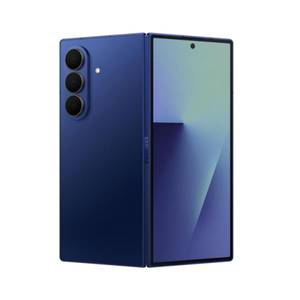
- Brand
-
Samsung
- RAM
-
12 GB
- Storage
-
256 GB
- Battery
-
4400 mAh
- operating system
-
One interface 8
- Connectivity
-
5G, LTE, Wi-Fi 7, Bluetooth 5.4
Samsung's thinnest and lightest foldable phone yet, when closed it feels like a regular phone and when open it feels like a powerful multitasking computer. With a brighter 8-inch display and built-in Galaxy AI, you're ready to work, play, and everything in between.
You Can't Have Enough Portable Monitors

If you've never tried a portable monitor, give it a try. This is one of the most versatile investments you can make. They offer additional work space for any laptop and a large screen for gaming consoles such as the Nintendo Switch or Steam Deck. They are also the perfect complement to a phone with desktop mode.
I keep portable monitors in rooms where we are most likely to want to watch videos. I have two that are about 15 inches in diameter and they only cost me $60 each. Some are over 22 inches in size, approaching the size of a small TV.
I'm not saying everyone should throw away their computers and do everything from their phones, but my experience has shown me that it's not hard to imagine a future in which many of us do this. There's so much power in our pockets that with the right accessories and apps, one day it might be all you need. For me, this day has already come.