

Your Mac is full of surprises, and even many years after you first bought it, you may still be learning new tips and tricks that you didn't know about before.
There are a lot of genius hidden features hidden in macOS, and we're here to highlight eight of our favorites. They range from little-known tricks to forgotten gems, and each of them should help you improve the use of your Mac.
Desktop stacks
Foundry
After using your Mac for a while, it's easy to get your desktop cluttered with files and folders. I get it, I'm not a monastic ascetic with Zen-like calm on a Mac desktop either. Luckily, there's a way to bring order to chaos without having to painstakingly put all those items away one by one.
Let me introduce a function called desktop stacks. When this feature is enabled, macOS automatically groups related files into a pile on your desktop. So, you'll find one stack for images, one stack for PDF documents, one for presentations, and more. If you want to find an individual file, just click on the stack and whatever it contains will open. Click again to hide the clutter again. Swipe two fingers across a stack and you can even view its files.
To get started with desktop stacks, simply right-click your desktop and select the Use Stacks option. To disable it, simply uncheck this option. And thanks to this, your Mac gives your desktop the illusion of calm and order, even if we all know what lies behind the façade.
Menu setup
Foundry
The menu bar is a convenient place to find useful controls for your apps and settings, but you don't have to just rely on whatever Apple decides to put there. Instead, you can dive in and customize it to your liking.
To get started, open the System Preferences app and select Menu bar or Control Center (depending on which version of macOS you are using) in the left sidebar. Here you can review a number of options and decide whether to show them in the menu bar all the time, only when the app is active, or hide them instead.
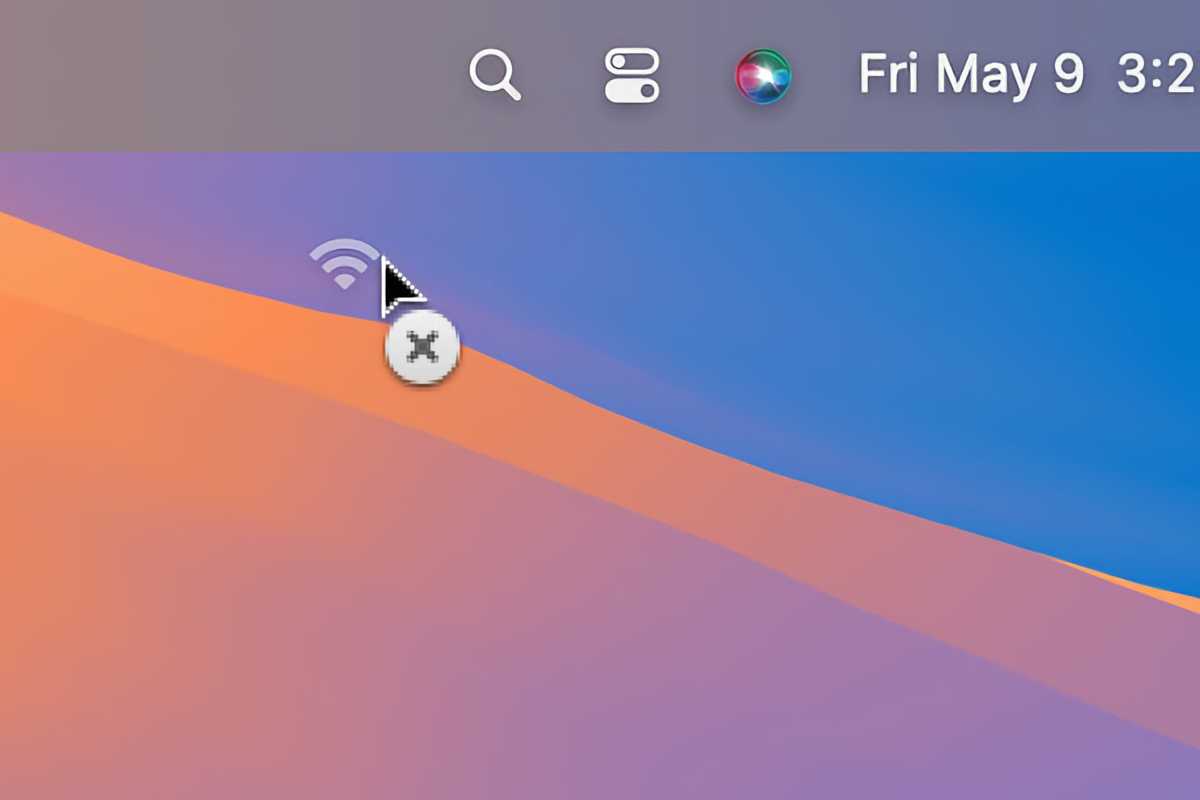
If you want to remove an icon from the menu bar, you have another option other than using the Control Center section of the System Preferences app. Instead, hold down the Command key, then click and drag an item from the menu bar. When an X icon appears next to the pointer, release the mouse button and the icon will disappear.
Hot corners
Foundry
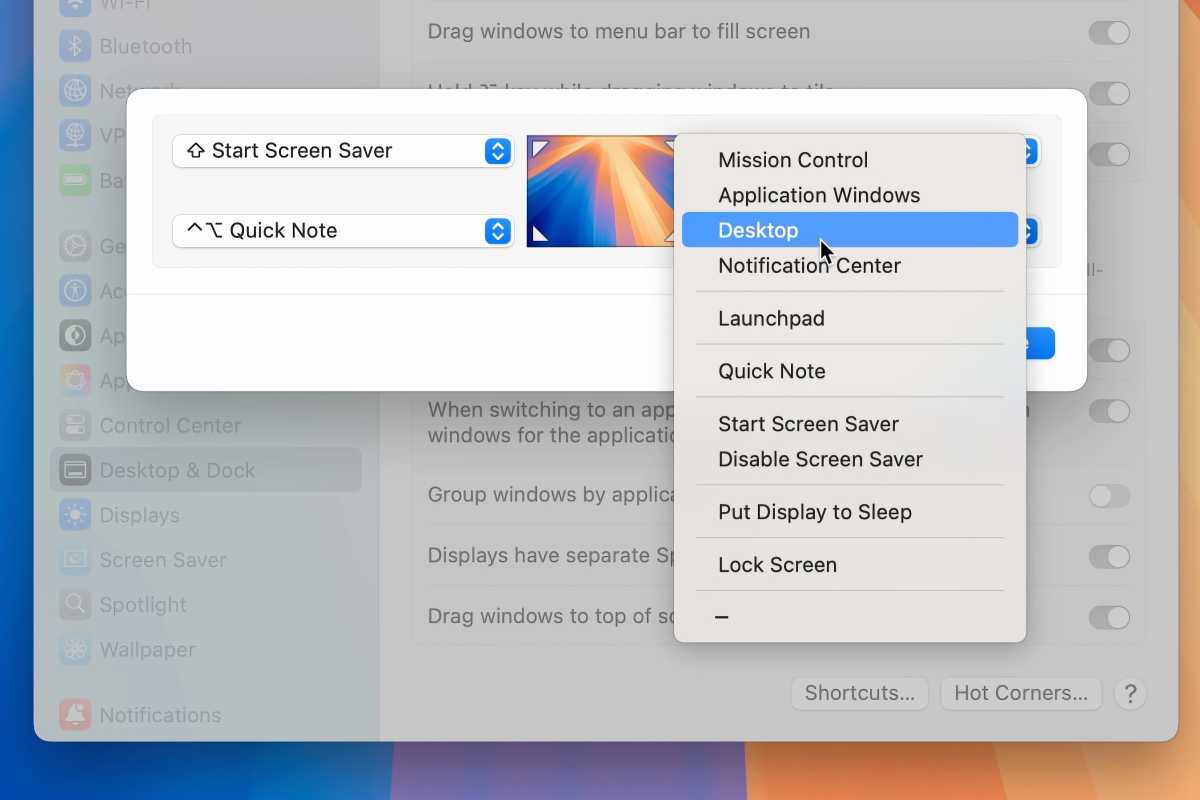
Need a quick way to access system functions such as Mission Control, start the screensaver, or lock your Mac without fiddling with settings and menus? Try Hot Corners for added size. With this setup, you simply move your mouse pointer to a designated corner of your Mac's display and the action you selected will be performed.
Open the System Preferences app and tap Desktop and docking station in the sidebar, then scroll to the bottom and click Hot corners. You will now see a picture of your desktop with four drop-down menus. Select one, choose an option from the menu, then click Done to confirm.
You can use Hot Corners to perform a variety of tasks, from displaying the desktop or opening Action Center to starting a quick note or putting the screen to sleep. This gives the feature greater flexibility to adapt to your needs.
And if you're worried about accidentally activating one of these actions, you can add a modifier key to the mix. Simply open one of the drop-down menus, then hold Shift, Control, Option, or Command. You can combine any number of these keys to open the launcher by holding Option and Command and then moving your mouse to, for example, the bottom left corner of the screen.
Drag and dock
Foundry
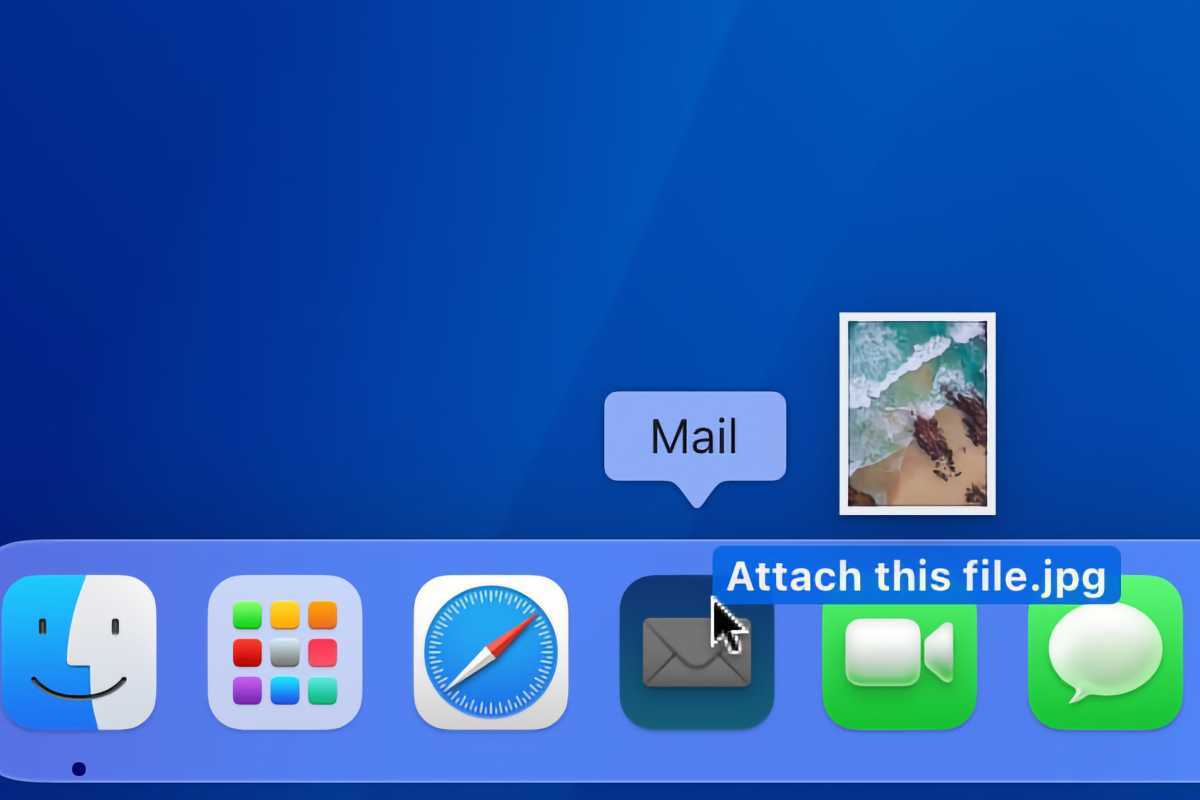
For most of us, the usual way to open a file inside a particular application is to first open the application and then download the file from there. But there is a faster way that does not require downloading the application first.
All you have to do is drag the file onto the application icon.voilathe application starts with the file ready for use. The easiest way to do this is to place the file in the app's Dock, but you can do this wherever the app is stored; it works, for example, with applications located in the Applications folder. This can save you some time if you're working with a folder of files and want to get started quickly.
Quick savings
Foundry
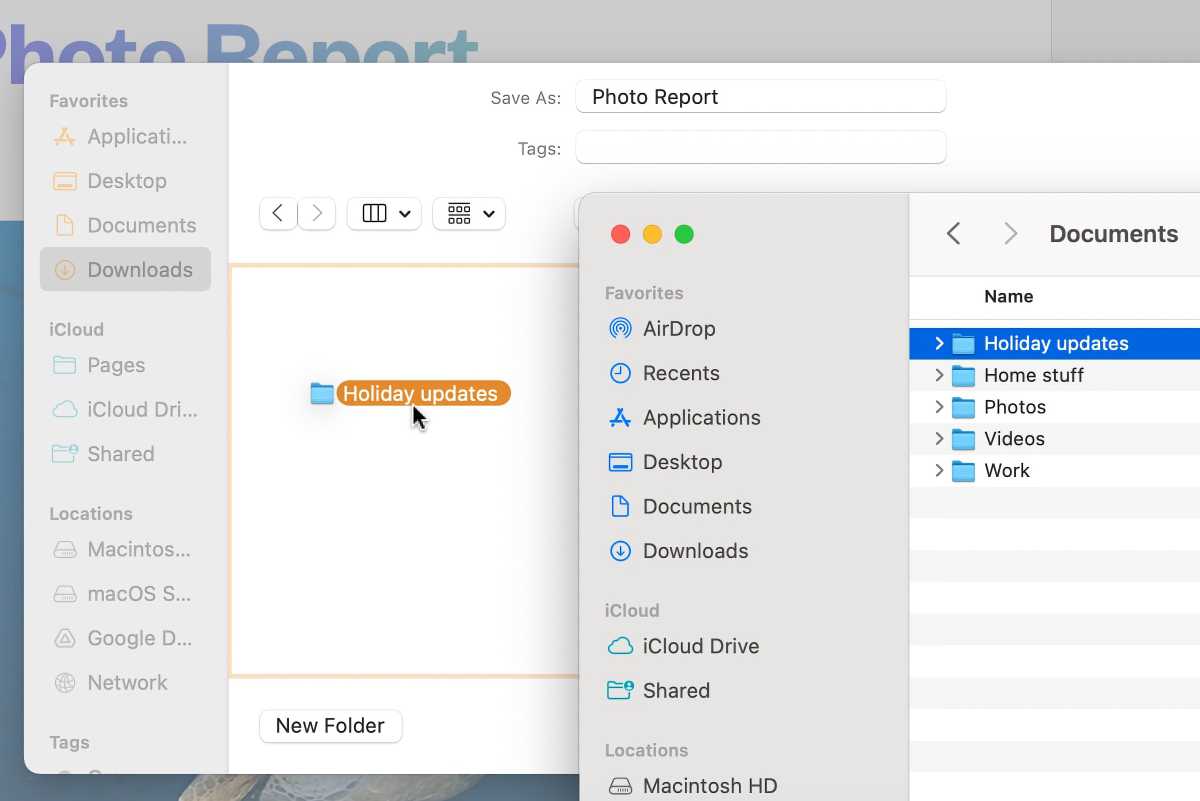
There's another useful drag-and-drop feature you might not know about, and this time it has to do with saving files. Instead of going through folder after folder to get to the save location, there is a much faster way to save files.
The next time the app opens a save dialog, drag the destination folder directly into the save window. The save location will be the folder you just dragged into place. You can drag a folder from anywhere: from the desktop, from the Finder window, and even from the path bar at the bottom of the Finder window.
I'm something of a neurotic organizer on my Mac, with endless subfolders containing my neatly sorted files. Normally it would be difficult to save something in the right place, but using this trick saves me a ton of time every day. Now he can do the same for you.
Find my index
Foundry
You know you're having one of those days where even keeping your mouse pointer on your Mac's screen can feel like a chore. The problem is compounded if you use multiple monitors, where searching for the pointer can feel like a wild goose chase.
Luckily, Apple has come up with a brilliant, elegant solution to the problem: just shake your mouse. When you quickly swing it from side to side, the mouse pointer grows to a gigantic size, helping you find it in one second. As soon as you stop moving, your pointer will return to normal and will be held securely under your watchful eye from that point on.
Quick view
Foundry
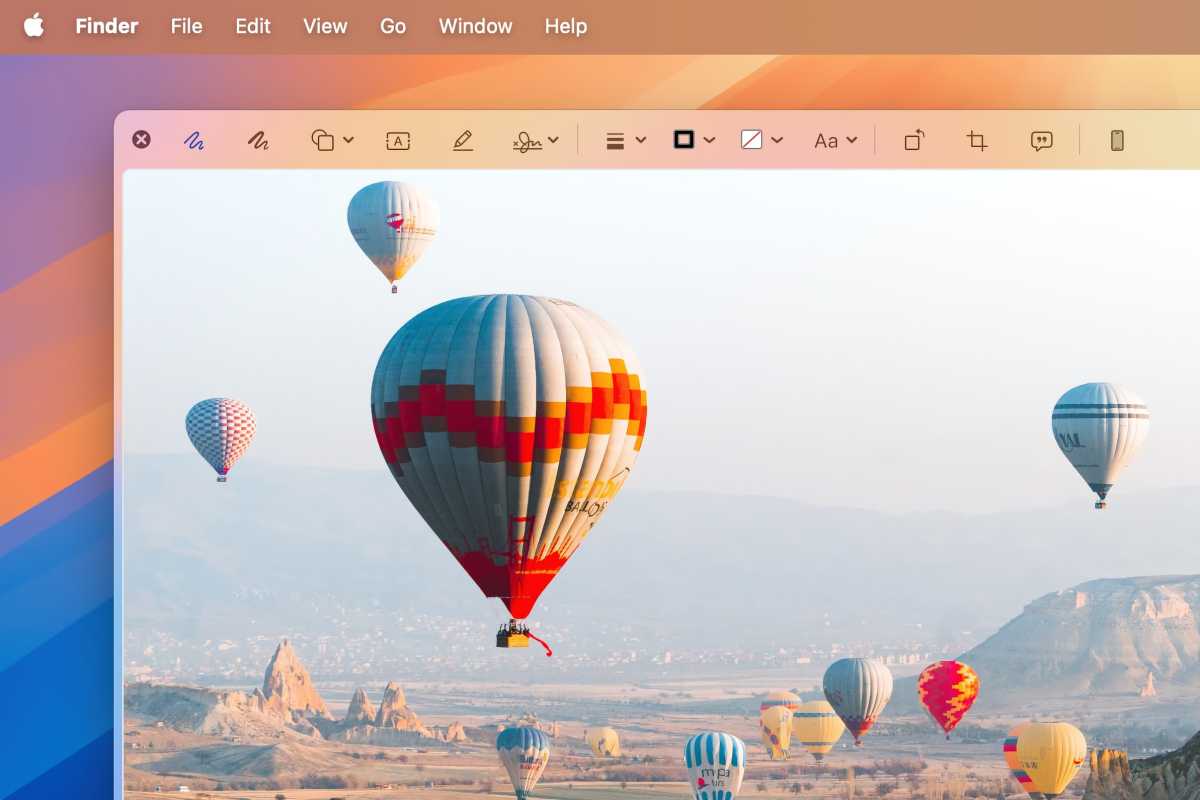
You may already be familiar with the Quick View feature, which allows you to click on a file and press the Spacebar to get a handy preview of the file in question. But did you know that Quick Look can do much more than just view a file?
The next time you open an image using the Quick View feature, go to the top right corner of the preview window, where you'll see several useful editing tools, including a rotate button and a share option. You can open the file in the Preview app, or detect and highlight any text that may be present using the button in the bottom right corner.
But a more useful option is the markup button. Tap it and you can draw on your image, add text, insert a saved signature, crop it, add comments, send to your iPhone, and more without having to open the image in the app. If you just want to make a few simple changes, Quick Look may be all you need.
Unlock with Apple Watch
Foundry
Apple devices are great on their own, but like the advice your high school coach probably once gave you, they work even better as a team. One of the best examples of this is what happens when you connect your Mac to your Apple Watch.
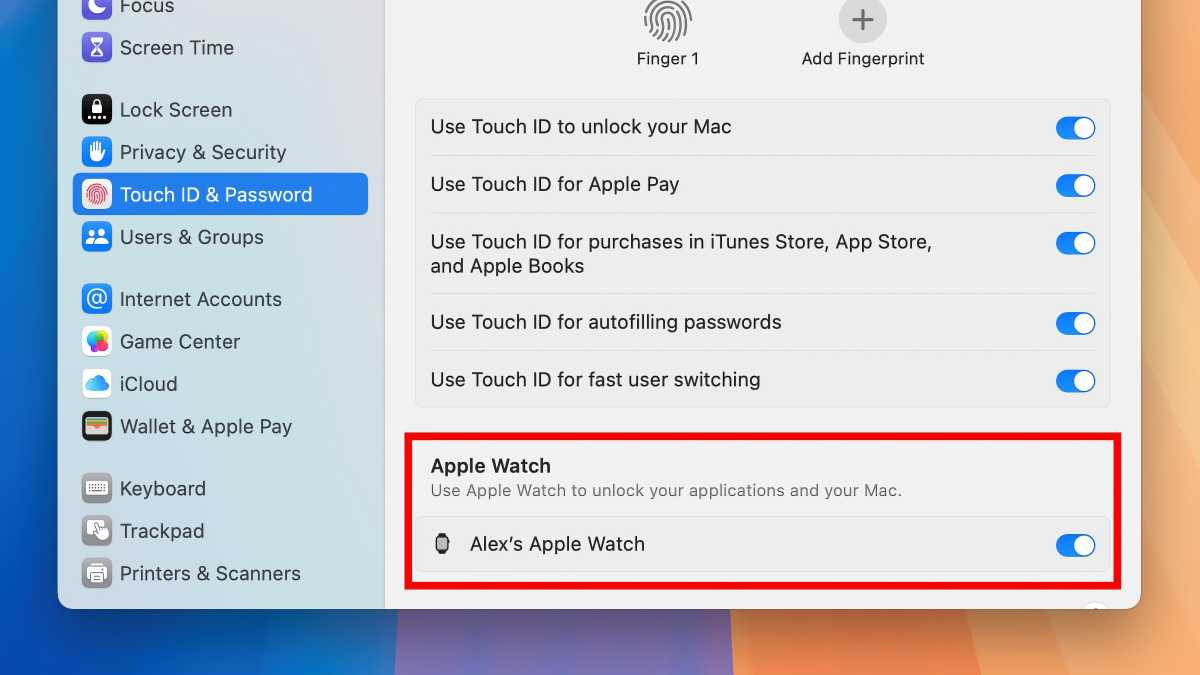
When the two devices are connected, you can automatically unlock your Mac and compatible apps by simply wearing your watch. As long as your Apple Watch is unlocked, you'll be able to sign in to your Mac when it wakes up without lifting a finger (note that this won't work the first time you turn on your Mac; you'll already need to sign in once).
Despite the obvious usefulness of this feature, it is not enabled by default. To enable it, you need to open the System Preferences app on your Mac and go to Touch ID and passcode (or Login Passworddepending on your Mac). There, under the text “Use Apple Watch to unlock apps and Mac,” turn on the switch next to the name of your watch.



